Oral Surgeon
Uses photogrammetry records to confirm implant placement supports the planned restorative outcome and to communicate surgical results clearly to the restorative team.
 Regional Implant Centers
Digital Implant Capture for Full-Mouth Rehabilitation
Photogrammetry captures the exact three-dimensional position of implants after surgery so full-arch restorations can be designed with greater accuracy, passive fit, and long-term predictability.
In full-mouth implant rehabilitation, the final teeth must match the exact position of the implants placed during surgery. Even small errors in implant position, angulation, or spacing can lead to poor fit, uneven bite forces, prosthetic stress, or costly remakes.
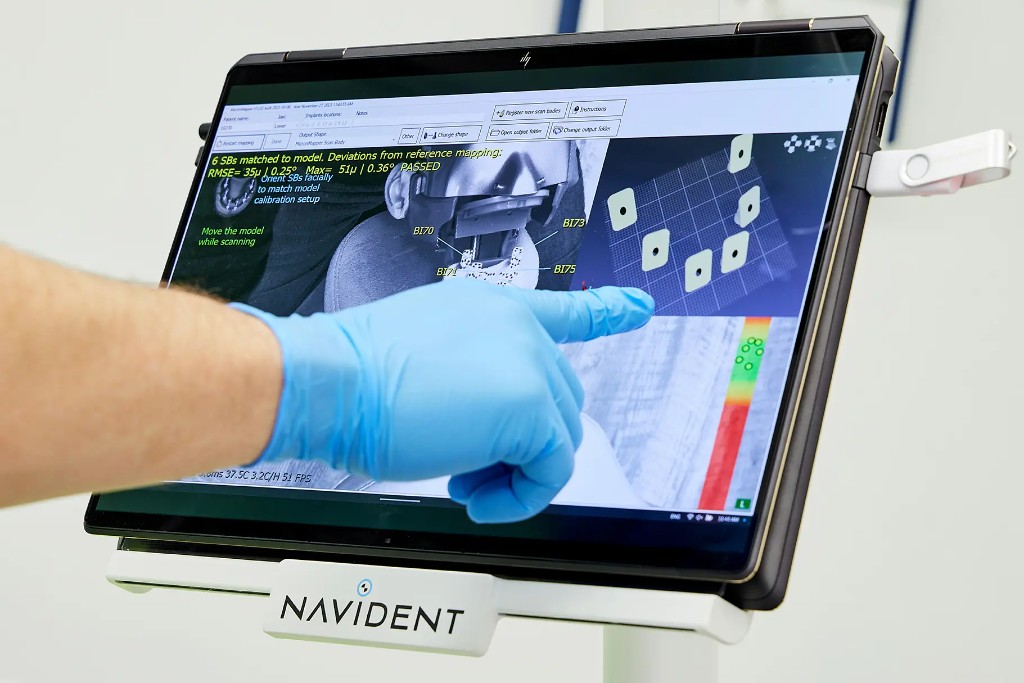
Photogrammetry is a high-accuracy digital capture method that records the three-dimensional position of multiple implants after placement. At Regional Implant Centers, it is used as part of a coordinated workflow so the oral surgeon, prosthodontist, and in-house laboratory can work from the same precise data - not assumptions - when designing a full-arch restoration.
Simple Explanation
Photogrammetry uses specialized scanning technology to create a highly accurate digital map of implant positions after they have been placed. Instead of relying on conventional transfer methods that may introduce distortion, the team captures a three-dimensional record of where each implant actually sits in the mouth.
For patients, the important idea is simple: photogrammetry helps the restorative team know exactly what the surgeon placed. That information becomes the foundation for designing temporary and final full-arch teeth that are intended to fit passively, align with the bite, and support long-term function.
Why It Matters
Full-mouth rehabilitation often places multiple implants across an entire arch. When restorative records do not precisely match what was surgically placed, the final prosthesis may not seat correctly, screws may be placed under stress, and the bite may feel uneven or uncomfortable.
Photogrammetry helps close the gap between surgery and restoration. It gives the prosthodontist and laboratory technicians a reliable digital blueprint so the full-arch prosthesis can be engineered for passive fit, proper force distribution, esthetics, and maintainability - goals that matter deeply in complex full-mouth cases.
Clinical Workflow
Photogrammetry is typically used after implants are placed, when the team needs an accurate record to begin or continue restorative design. That record is shared across specialists so surgical decisions remain connected to the planned smile, bite, and final prosthetic outcome.
Because Regional Implant Centers integrates photogrammetry with digital planning, CBCT imaging, intraoral scanning, and in-house laboratory support, the team can move from surgical phase to restorative phase with fewer handoffs and less guesswork.
Restorative Connection
One of the biggest challenges in full-arch care is making sure the teeth the patient sees every day match the implants supporting them beneath the gums. Photogrammetry helps the team design restorations from accurate surgical reality rather than estimated positions.
That connection supports better communication between the oral surgeon, prosthodontist, and laboratory technicians. It also helps reduce stressful delivery-day adjustments and supports a smoother transition from healing temporaries to the final full-mouth restoration.
Read full articleSupporting The RISE Protocol™
Photogrammetry gives each specialist a shared reference point so surgery, restorative design, and laboratory work stay aligned throughout full-mouth rehabilitation.
Uses photogrammetry records to confirm implant placement supports the planned restorative outcome and to communicate surgical results clearly to the restorative team.
Uses photogrammetry data to design the bite, tooth position, facial support, and final full-arch restoration around the exact implants that were placed.
Use precise implant capture data to design and refine full-arch prosthetics with better fit, esthetics, and structural planning before delivery.
Help ensure digital records move efficiently between surgical, restorative, and laboratory phases so the patient’s plan stays connected from surgery through final teeth.
Patient Benefits
Photogrammetry helps patients understand that full-mouth rehabilitation depends on precision at every step - not just the day implants are placed.
The Regional Implant Centers Difference
Photogrammetry alone does not guarantee a result. Its value comes from how it is used inside a specialist-led workflow. At Regional Implant Centers, photogrammetry is one part of the RISE Protocol™ - connecting imaging, surgery, restorative design, and in-house laboratory collaboration.
That integrated approach helps the team treat full-mouth rehabilitation as one connected plan rather than a series of disconnected procedures performed by separate offices.
Schedule a Full-Mouth ConsultationFrequently Asked Questions
Photogrammetry is a digital scanning method that captures the exact three-dimensional position of dental implants after they are placed. It helps the restorative team design full-arch teeth with greater accuracy.
Full-mouth rehabilitation depends on precise alignment between the implants placed during surgery and the final prosthesis. Photogrammetry helps reduce error and supports better fit, bite alignment, and long-term success.
Photogrammetry is used when the clinical team determines it is appropriate for the case - especially in full-arch and full-mouth rehabilitation where precision is especially important.
It gives the in-house lab a reliable digital record of implant positions so full-arch restorations can be designed with better fit and fewer last-minute adjustments.
In selected cases, photogrammetry may reduce reliance on conventional implant transfer methods. The team determines the best combination of digital records for each patient’s treatment plan.
Photogrammetry is typically captured after implants are placed, when the team needs an accurate record to design temporary or final full-arch restorations and keep surgical and restorative planning aligned.