Medical Necessity Dentistry
Dental Clearance Before Transplant, Cancer Treatment, Joint or Heart Surgery: A Guide for Austin-Area Patients
Need dental clearance before a transplant, cancer treatment, joint or heart valve surgery? What medical teams ask for, how timing works, what can wait.
If a surgeon, oncologist or transplant team has asked you for dental clearance before surgery or treatment, you probably have two questions at once: what exactly do they need, and how fast can it be done? This guide answers both for the four requests we hear about most often: organ transplant, chemotherapy or radiation, hip or knee replacement, and heart valve surgery. It is written for patients in Hutto, Round Rock, Pflugerville, Georgetown, Cedar Park and Austin, including people who already know their teeth are failing and wonder how a full-arch plan fits around their medical care.
Our shorter articles explain which conditions may require dental clearance, what happens during a clearance evaluation and how we communicate with physicians. This one goes procedure by procedure, with the timing questions that usually decide the plan.
The short answer
Dental clearance is a dental exam, with imaging and any needed treatment, that tells your medical team whether there is an active infection or unstable dental disease that should be dealt with first. The usual goal is to remove sources of infection and give any surgical sites time to heal before your procedure. Each medical team sets its own requirements and timing, the final decision belongs to your physician, and clearance does not guarantee a medical outcome. The earlier you start, the more choices you keep.
Why medical teams ask about your mouth
Several major treatments either weaken the body's defenses or place a device or graft where bacteria could settle. A mouth with an abscess or advanced gum disease is a source of bacteria that medical teams would rather remove beforehand.
Mayo Clinic explains it this way: dental infections may let bacteria enter the bloodstream and settle into surgical areas, which is why a dental exam is especially important before heart procedures such as valve replacement, joint replacements, and organ or stem cell transplants. Cancer treatment adds a different problem. Chemotherapy can lower the blood counts that fight infection, and radiation to the head and neck can permanently change the bone and salivary glands, so dental surgery is much simpler before treatment than after it.
Our dental clearance page lists the physicians who most often ask for clearance: orthopedic surgeons before hip, knee or shoulder replacement, cardiologists and cardiothoracic surgeons before heart valve or cardiac surgery, oncologists before chemotherapy or radiation, and transplant surgeons before kidney, liver, heart or lung transplant, along with neurosurgeons, bariatric surgeons, rheumatologists, endocrinologists and primary care physicians. Requirements vary by provider, diagnosis, procedure, timing and health history.
The medical team's concern is rarely a cavity in a healthy tooth. It is usually the things that can flare up at the worst possible moment:
- A tooth with an abscess or an infection at the root tip, even one that does not hurt
- Advanced gum disease with deep, bleeding or draining pockets
- Broken teeth, retained roots or teeth that are too damaged or loose to save
- Partially erupted wisdom teeth that keep getting inflamed
- Dentures or partials that rub sores into the gums
What each medical team usually wants, and when
The four procedures below share one theme, which is to clear infection before the procedure, but their timing rules and what happens afterward are different.
| Planned procedure | What the medical team usually wants from the dental side | Timing notes from published guidance | Dental care afterward |
|---|---|---|---|
| Organ transplant (kidney, liver, heart, lung) | Active infection eliminated or stabilized, teeth that cannot be saved removed, gums under control | Done while on the waiting list, when health allows; the list can move quickly | Non-emergency dental treatment usually waits at least 3 months after transplant, and only once the transplant team agrees |
| Chemotherapy | Infection sources treated, unstable teeth removed, a plan for keeping the mouth clean during treatment | See a dentist about 1 month before treatment when possible; extraction sites usually need about 7 to 10 days of healing before chemotherapy starts | Timed around blood counts with the oncology team |
| Radiation to the head and neck | Teeth in or near the radiation field with a poor outlook removed before treatment, a long-term prevention plan | Extraction sites usually need about 10 to 14 days of healing before radiation; cancer treatment is not delayed just to fit dental work in | Surgery in irradiated jawbone carries lasting risk, so it is planned with the radiation oncologist |
| Hip or knee replacement | Proof of a recent exam, no active infection, no dental treatment expected soon | Some programs want dental work finished at least 4 weeks before surgery | Many programs ask patients to avoid elective dental work for months after surgery |
| Heart valve surgery | Infection sources removed, gums healthy | As early as possible; the dental plan is weighed against heart risk | Prosthetic valves are one of the conditions for which antibiotics before certain dental procedures are reasonable afterward |
These are general patterns from published guidance, not instructions for your case. Your medical team's own written requirements come first.
Before an organ transplant
Transplant teams want active dental disease gone before surgery because the medicines that protect a new organ also lower your ability to fight infection.
The National Institute of Dental and Craniofacial Research (NIDCR) guide on organ and stem cell transplants for dental providers says that whenever possible, all active dental disease should be eliminated before transplantation, since post-operative immunosuppression decreases a patient's ability to resist systemic infection. It lists the usual steps: eliminate or stabilize infection, and extract teeth that cannot be restored. It also notes that for some patients, it is safer to do extensive dental treatment after their overall health improves after the transplant. That is a real judgment call made with the transplant team, not a box to check.
Transplant candidates often bring medical details that change the dental plan:
- Bleeding risk. Advanced liver disease can reduce clotting factors, and many candidates take blood thinners. The NIDCR guide recommends lab testing and a conversation with the physician before surgery.
- Dialysis. For people with kidney failure on hemodialysis, the same guide recommends doing dental procedures on days without dialysis.
- Other conditions. Diabetes, heart disease and lung disease often travel with organ failure, and each one affects sedation and healing.
After the transplant, the guide says that except for emergency dental care, patients should avoid dental treatment for at least 3 months, because immunosuppressive doses are highest early on. Once the graft has stabilized, typically within 3 to 6 months, and the medical team clears the patient, dental care can resume with precautions.
How much does the dental work actually matter? A 2024 systematic review of nine studies (727 patients) found that two studies of liver transplant patients reported more infectious complications when no dental treatment was done, while the results for kidney and lung transplant were mixed, and no study found an effect on survival or organ rejection. The authors concluded that the findings suggest a possible link between persisting oral infection and infections after transplant, which supports removing oral sources of infection beforehand. The evidence is modest, which is one more reason the plan should focus on true infection sources rather than on every possible dental project.
Before chemotherapy or radiation
Cancer treatment is the situation where timing is tightest. Dental care should happen early and be scheduled with your oncology team, and it should never hold up your cancer treatment without a clear reason.
NIDCR advises cancer patients to see a dentist about 1 month before beginning cancer treatment and to give the dentist their cancer doctor's contact information so the two can talk. The National Cancer Institute (NCI) notes that finding and treating oral problems before cancer treatment begins can prevent oral complications or make them less severe, and that patients receiving high-dose chemotherapy, stem cell transplant or head and neck radiation should have an oral care plan.
Healing time is the reason for the rush. A 2022 review on dental evaluation before cancer therapy reports typical minimum healing periods after extractions of about 7 to 10 days before chemotherapy and 10 to 14 days before head and neck radiation or bone-strengthening cancer drugs. The same review describes two approaches. When there is enough time, a complete protocol restores what can be saved and removes teeth with a poor outlook. When time is short, a partial protocol treats only large or symptomatic problems and removes clearly hopeless teeth, and the rest is managed with prevention until it is safe to do more.
Radiation to the head and neck deserves special care. Radiation can permanently injure the jawbone's blood supply, and surgery in that bone later raises the risk of a serious complication called osteoradionecrosis. That is why teeth with a poor outlook in the radiation field are usually removed before treatment starts. A 2023 study of 879 head and neck cancer patients who had teeth removed before radiation found that 96.3% healed, and that osteoradionecrosis was associated with extractions done within 7 days of the radiation start date. The authors also concluded that radiation should not be delayed for extractions when that might compromise cancer control. Your oncologist decides that balance; the dental team works inside it.
Some cancer patients also receive bone-strengthening medicines, such as bisphosphonates or denosumab, to protect bones from cancer spread. These drugs are linked to a jaw complication called medication-related osteonecrosis, and the same review notes that invasive dental procedures, existing gum disease and poorly fitting dentures are associated with higher risk. If one of these medicines is planned, tell the dental team before any extraction is scheduled.
Life after radiation, and whether dental implants are a good idea later, is a separate topic with its own risks. It belongs in a conversation with your radiation oncologist and surgeon, not in a pre-treatment rush.
Before a hip or knee replacement
Orthopedic programs mostly want proof that you have no active dental infection and no dental work planned for the near future. Get the exam done early, because extractions and healing take weeks.
Mayo Clinic experts require that dental work be done at least four weeks before hip or knee replacement, and note that dental problems found too close to an elective surgery may delay it. Programs write their own forms. The total joint dental clearance form used by the University of North Carolina orthopedics department, for example, asks the dentist to confirm an exam within the last six months, no evidence of infection, active decay, gum disease, abscesses, fractured teeth or failing fillings, loose teeth or other oral disease, and that no dental treatment is expected in the following six months.
That last line matters for anyone with failing teeth. If your mouth needs major work, a form like that cannot honestly be signed until the work is done or a plan is in place, and that is a conversation to have with your orthopedic surgeon early, not the week before surgery.
After a joint replacement, patients often ask about antibiotics before dental visits. The American Dental Association's clinical practice guideline states that, in general, for patients with prosthetic joint implants, prophylactic antibiotics are not recommended before dental procedures to prevent joint infection. The ADA adds that any rare use of antibiotics should be decided together with the orthopedic team, and that when antibiotics are needed, the orthopedic surgeon is best placed to recommend the regimen. Many surgeons also ask patients to put off elective dental work for a period after surgery, so ask yours what they prefer.
Before heart valve surgery
Heart valve teams want the mouth free of infection because bacteria from the mouth can infect an artificial valve. At the same time, dental surgery itself carries risk for people with serious heart disease, so the plan is a balance.
Infective endocarditis, an infection of the heart's lining or valves, is the concern. After surgery, a prosthetic heart valve, including a transcatheter valve, places a patient among the small group for whom the American Heart Association and the ADA consider antibiotics before certain dental procedures reasonable. Those are procedures that involve the gums, the area around the root tips of teeth, or a break in the lining of the mouth. Mayo Clinic adds that a provider may recommend delaying any additional elective dental work for at least six months after heart surgery.
Before surgery, the dental work has to be weighed against the heart condition that makes surgery necessary. In a Mayo Clinic review of 205 patients who had teeth removed before a planned heart operation, 8% had a major adverse outcome within 30 days, including deaths, and the authors urged an individualized look at the risk of anesthesia and surgery in this group. These were seriously ill patients, and the study does not say the extractions caused those outcomes. It does explain why a good clearance plan removes what truly needs removing, coordinates with the cardiology team on anesthesia, blood thinners and timing, and leaves elective work for later.
Our article on dental implants with heart disease covers blood thinners, stents and what a cardiology letter usually contains in more depth.
What the clearance letter usually says
A clearance letter or form is a short summary for your physician, not a full dental chart. Most ask the same core questions.
Forms differ, but the documents we see from medical teams usually ask for:
- The date of the exam and the dental provider's name and contact information
- What was found: infection, gum disease, decay, broken or loose teeth, or none of these
- What imaging was reviewed
- What treatment was done, with dates, and how healing is progressing
- Whether any treatment is still recommended, and when
- Whether there is any reason, from the dental side, to wait before the medical procedure
When requested and authorized by you, our team can provide clearance letters, treatment summaries, records and supporting documentation to physicians, surgeons, specialists and medical teams. The final medical decision is made by the treating physician or medical team, not by the dental office. As our clearance page puts it, dental clearance does not guarantee a medical outcome, and dental disease does not always prevent treatment.
If you were already thinking about full-arch implants
When most of your teeth are failing, clearance and tooth replacement become one plan with two phases: what has to happen before your medical procedure, and what can wait until your medical team says it is safe.
Many people who receive a clearance request have known for a while that their teeth are failing: several loose teeth, repeated infections, or a mouth full of broken crowns. In that situation, treating one tooth at a time may not solve the problem, which is why our article on full-mouth rehabilitation before medical procedures describes a more organized plan. Before anything is scheduled, the plan usually separates two kinds of work.
Phase 1, before the medical procedure, focuses on infection control:
- Removing teeth that are infected or cannot be saved, often in one visit rather than a series
- Cleaning out infected sites and smoothing the bone so the gums heal well
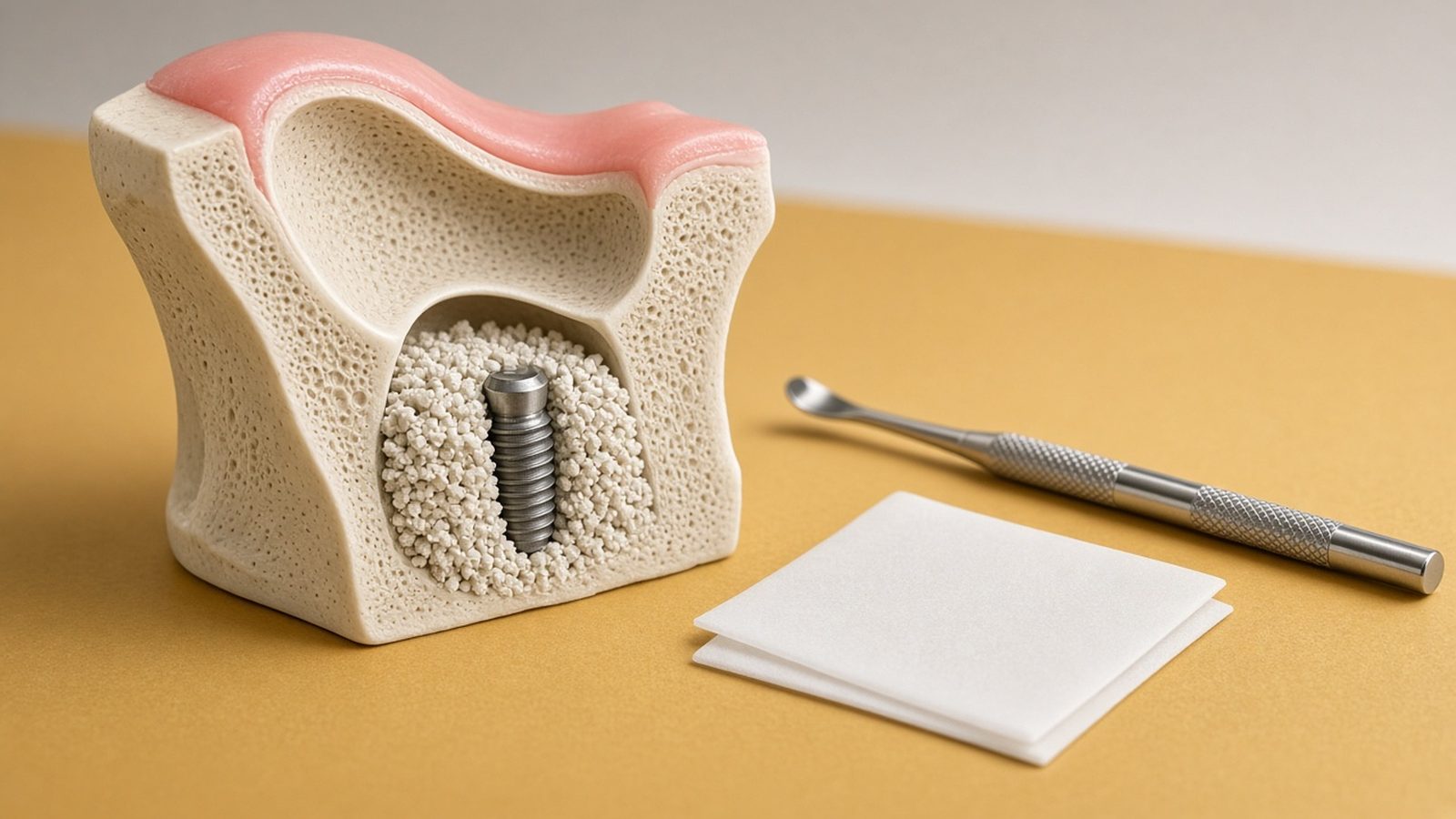
- Bone grafting only when the surgeon judges it worth doing now
- A way to eat and smile while you heal, which for many people is a removable denture or temporary teeth
- Enough healing time before the medical procedure, as set by your medical team
Phase 2, after your medical team agrees, is about replacing teeth for the long term. That can mean traditional dentures, snap-on implant overdentures or fixed full-arch teeth, and the timing depends on your recovery. After a transplant, that may mean waiting until the transplant team clears you for elective dental care. After head and neck radiation, any implant surgery in irradiated bone needs a separate risk discussion with your radiation oncologist. After a joint or valve replacement, your surgeon may ask you to wait months before elective dental work.
Whether implants can be placed during the same surgery as the extractions, before the medical procedure, is a case-by-case decision. It depends on your health, your bone, the medical procedure ahead and your physicians' preferences. Same-day temporary teeth are possible for some patients and not for others; our article on teeth in a day explains how temporary and final teeth differ. Splitting the plan this way puts the medical procedure first. It does not mean giving up on the teeth you want.
Sedation and safety when your health is complicated
Clearance patients often have the very conditions that make sedation planning important, so the anesthesia plan is built around your medical history and your physicians' input.
Depending on your procedure and health history, options may include local anesthesia, IV sedation or general anesthesia, and your doctor will discuss the safest and most appropriate option for your care. Our Hutto office has a dentist anesthesiologist on site, and anesthesia care includes continuous vital sign monitoring and recovery monitoring afterward. Before sedation is planned, expect detailed questions about your heart, lungs, kidneys, liver, blood thinners and recent hospital stays, and a request to talk with your physicians. Our article on IV sedation and general anesthesia explains the options in more detail. Sedation is not right for every patient, and no anesthesia is free of risk.
How our Hutto team approaches clearance
At Regional Implant Centers, clearance starts with an exam, imaging and your medical requirements, and the plan is matched to what your medical team actually needs.
Our Hutto office is at 201 E Wilco Hwy, Suite 203, in Hutto, and serves patients from Hutto, Round Rock, Pflugerville, Georgetown, Cedar Park and Austin. We do not have offices in those other cities. The Hutto office has CBCT imaging, and when the clinical team decides 3D imaging is appropriate, CBCT lets the specialists study bone volume, nerve pathways, sinus position and jaw anatomy. That helps show infections at the root tips and bone loss that flat x-rays can miss. Hutto also provides bone grafting and sinus procedures when they are needed, and our oral surgery page lists the surgical services involved, including extractions and alveoloplasty.
When teeth need to be replaced afterward, both of our offices offer traditional dentures, snap-on implant overdentures and fixed full-arch teeth. For patients with severe upper bone loss, Dr. Dan Holtzclaw and Dr. Enrique Tabarini perform zygomatic and pterygoid implants in selected cases. Not everyone is a candidate for implants, and the right choice may change after a major medical event. Our in-house dental lab is at our Katy office. Our Hutto location page has directions, and our guide to full-mouth implants near Austin walks through each visit.
Many clearance patients also live with diabetes, gum disease or other conditions that affect healing; our article on dental implants with diabetes covers how that changes planning.
Insurance for clearance-related treatment
Medical plans sometimes review dental surgery that is tied to a covered medical treatment, but the rules are narrow and vary by plan, so treat coverage as worth checking and please verify it before treatment.
Medicare.gov describes narrow situations in which Original Medicare may pay for dental services linked to the success of a covered medical treatment, such as an oral exam and dental treatment before a heart valve replacement or an organ transplant, or an extraction to treat a mouth infection before chemotherapy. Private plans write their own rules.
At our offices, medical insurance is reviewed only for surgical professional services, such as extractions, bone grafting and alveoloplasty. Implants, temporary teeth and the final prosthesis are billed to you separately. Only PPO plans work for our out-of-network oral surgery benefits, and we cannot bill Federal Employee Program (FEP) Blue Cross Blue Shield plans. Through Insurance Advantage, our team reviews dental and medical benefits when appropriate, but coverage is never guaranteed. Our article on medical insurance for the oral surgery part of full-arch treatment explains how the medical claim, the documentation and your share work. Financing may be available for qualified patients through third-party partners.
What to bring and what to ask
Bring the clearance form or letter from your medical team (or the name and fax number of the person who needs it), the date of your planned procedure if it is set, a current medication list including blood thinners and any bone-strengthening or immune-suppressing drugs, recent lab results if your physician has them, recent dental x-rays, and your insurance cards. Then ask any dental office you are considering:
- What do you see that my medical team will care about, and what can wait?
- Which treatment has to be finished before my procedure, and how much healing time does it need?
- If my date is close, what is the minimum plan, and what happens to the rest?
- Who will send the clearance letter, and will my physician get the imaging or a summary?
- How will sedation be planned around my heart, kidneys, liver or medicines?
- How will I eat and smile while I heal, and when could teeth be replaced for the long term?
- Which parts of the plan might be submitted to my medical insurance, and which would I pay for directly?
Frequently asked questions
How long does dental clearance take?
It depends on what the exam finds. If there is no active infection, clearance can come down to one visit and a letter. If teeth need to be removed, healing time is added, often one to several weeks depending on your medical procedure, so start as soon as you know a procedure is coming.
Can bad teeth delay my transplant, surgery or cancer treatment?
Sometimes. Medical teams may wait until an active infection is treated, but dental problems do not always prevent treatment, and cancer treatment is not usually delayed just to fit in dental work. Your physician makes the final decision.
Do I need antibiotics before dental work after a joint replacement?
In general, no. The American Dental Association's guideline does not recommend routine antibiotics before dental procedures for people with prosthetic joints. Any rare exception should be decided with your orthopedic surgeon, who is best placed to recommend the regimen.
Can I get dental implants before my medical procedure?
Sometimes, but not always. Removing infected teeth comes first, and whether implants are placed at the same time depends on your health, your bone, the procedure ahead and your physicians' input. For many patients, implants wait until the medical team says elective dental care is safe.
Will insurance pay for dental treatment needed for medical clearance?
It is worth checking, and please verify your benefits first. Some medical plans review oral surgery tied to a covered medical treatment. At our offices, only surgical professional services are submitted to medical plans, implants and prosthetic teeth are billed to you, and coverage is never guaranteed.
Start your clearance early
If your physician has asked for dental clearance and you live in the Austin area, call early so there is time for any treatment and healing before your procedure. Bring your clearance form and medication list, and our team will review your findings with you, explain what needs to happen first and what can wait, and send documentation to your medical team when you authorize it. Schedule a consultation, book with our Austin-area office, or call (832) 632-7037.
Sources & Resources
- Mayo Clinic News Network. Mayo Clinic Q and A: Why you might need a dental exam before a heart procedure. August 2019.
- National Institute of Dental and Craniofacial Research. Organ or Stem Cell Transplant and Your Mouth (guide for dental providers).
- Olsson J, et al. Impact of Oral Infection on Organ Transplantation: A Systematic Review. J Evid Based Dent Pract. 2024.
- National Institute of Dental and Craniofacial Research. Cancer Treatments and Mouth Problems.
- National Cancer Institute. Oral Complications of Cancer Therapies (PDQ), Patient Version.
- Yong CW, et al. Dental Evaluation Prior to Cancer Therapy. Front Oral Health. 2022.
- Lee J, et al. Dental Extractions Before Radiation Therapy and the Risk of Osteoradionecrosis in Patients With Head and Neck Cancer. JAMA Otolaryngol Head Neck Surg. 2023.
- University of North Carolina Department of Orthopaedics. Total Joint Optimization: Dental Clearance Form.
- American Dental Association. Antibiotic Prophylaxis Prior to Dental Procedures. Last updated July 2026.
- Sollecito TP, et al. The use of prophylactic antibiotics prior to dental procedures in patients with prosthetic joints. J Am Dent Assoc. 2015.
- Smith MM, et al. Morbidity and mortality associated with dental extraction before cardiac operation. Ann Thorac Surg. 2014.
- Medicare.gov. Dental services.
This article is general patient education and is not medical, dental, legal or insurance advice, a diagnosis or a treatment plan. Requirements for dental clearance are set by each medical team, and the final decision about your medical procedure belongs to your physician. Dental clearance does not guarantee a medical outcome. Timing figures quoted here come from published sources and may not apply to your case. Insurance coverage is never guaranteed; at Regional Implant Centers, medical insurance is reviewed only for surgical professional services, and implants, temporary teeth and the final prosthesis are billed to the patient. Only PPO plans work for our out-of-network oral surgery benefits, and we cannot bill Federal Employee Program (FEP) Blue Cross Blue Shield plans. Financing is provided by independent third-party companies. Implant treatment is not appropriate for every patient, outcomes vary, and no surgery or anesthesia is free of risk. Regional Implant Centers has offices in Katy and Hutto, Texas.
Ready to Learn What Is Possible?
Schedule a consultation with Regional Implant Centers.
Schedule ConsultationFrequently Asked Questions
How long does dental clearance take?
It depends on what the exam finds. If there is no active infection, clearance can come down to one visit and a letter. If teeth need to be removed, healing time is added, often one to several weeks depending on your medical procedure, so start as soon as you know a procedure is coming.
Can bad teeth delay my transplant, surgery or cancer treatment?
Sometimes. Medical teams may wait until an active infection is treated, but dental problems do not always prevent treatment, and cancer treatment is not usually delayed just to fit in dental work. Your physician makes the final decision.
Do I need antibiotics before dental work after a joint replacement?
In general, no. The American Dental Association's guideline does not recommend routine antibiotics before dental procedures for people with prosthetic joints. Any rare exception should be decided with your orthopedic surgeon, who is best placed to recommend the regimen.
Can I get dental implants before my medical procedure?
Sometimes, but not always. Removing infected teeth comes first, and whether implants are placed at the same time depends on your health, your bone, the procedure ahead and your physicians' input. For many patients, implants wait until the medical team says elective dental care is safe.
Will insurance pay for dental treatment needed for medical clearance?
It is worth checking, and please verify your benefits first. Some medical plans review oral surgery tied to a covered medical treatment. At our offices, only surgical professional services are submitted to medical plans, implants and prosthetic teeth are billed to you, and coverage is never guaranteed.
This content is educational and not a substitute for a consultation.