Implant Procedure Education
How Long Does All-on-4 Take? A Visit-by-Visit Timeline for Austin-Area Patients
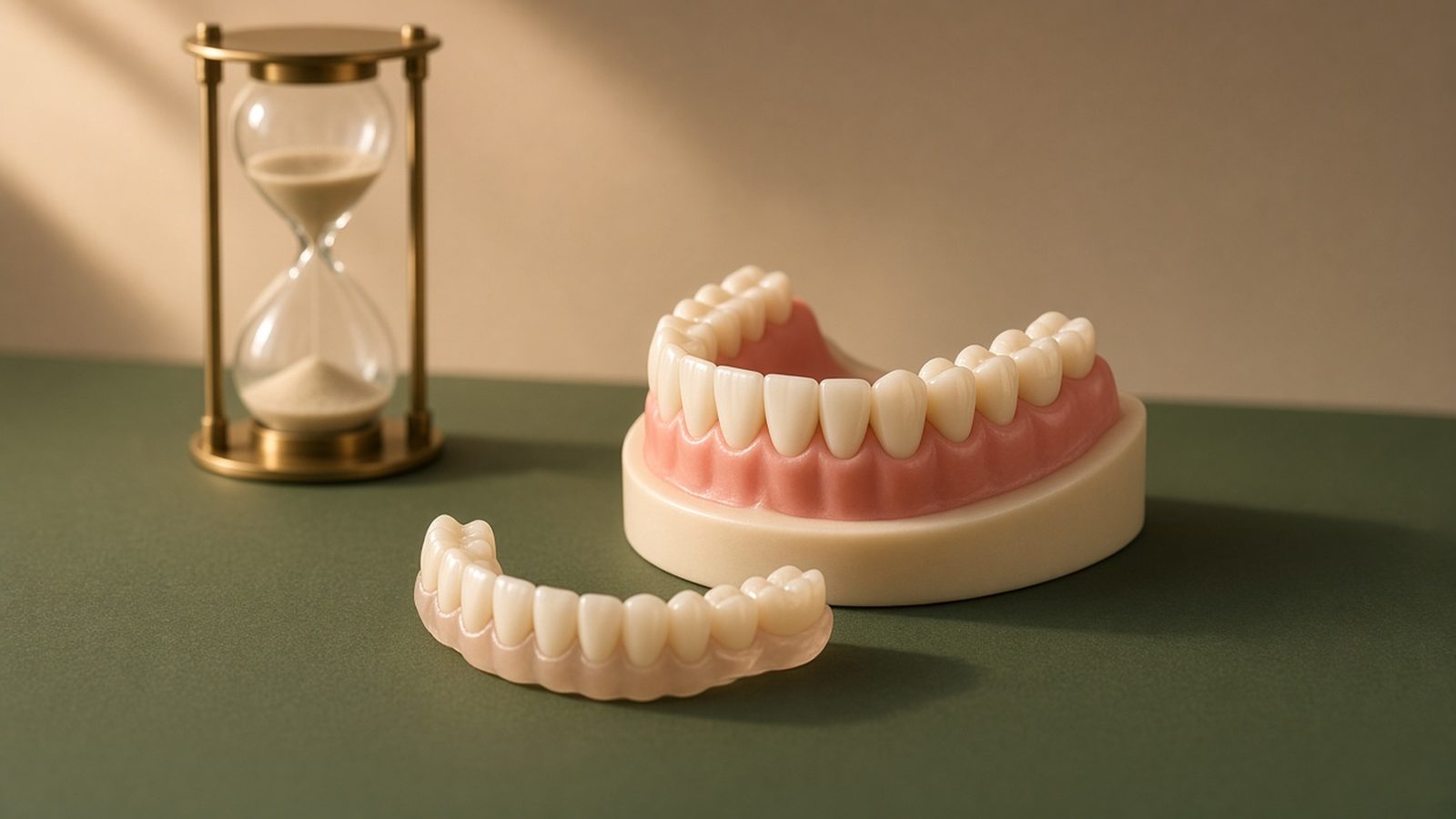
How long All-on-4 usually takes, how many visits to expect and what can stretch the timeline, from consultation to final teeth, for Austin-area patients.
If you live in Austin, Round Rock, Pflugerville, Cedar Park, Georgetown or Hutto and you are weighing All-on-4 or other full-arch implants, one of the first practical questions is how long All-on-4 takes. Not the surgery alone, but the whole thing: how many appointments, how much time off work, how long you wear temporary teeth and when the final teeth arrive. This guide walks through a realistic All-on-4 timeline, explains which parts are set by your calendar and which are set by biology, and lists what can stretch the schedule so you can plan around it.
Regional Implant Centers serves the Austin area from our office in Hutto. If you want a broader overview of full-arch treatment there, start with our article on full-mouth dental implants near Austin. This one stays on time: weeks, months and visits.
The short answer
For many full-arch patients, the work happens in a small number of visits spread over a few months. At Regional Implant Centers, a typical case takes about 4 to 5 total visits. On the day of full-arch implant surgery, every patient leaves with teeth, and those teeth are temporary. Final arches are usually delivered about 1 to 4 months after surgery, depending on how healing progresses. Planning before surgery can take longer when medical clearance, infection treatment or a staged bone graft is needed. Your own timeline is set after an exam and a 3D scan.
Two clocks run during All-on-4 treatment
The number of appointments is a scheduling question. The months in between are a healing question, and healing cannot be rushed by a calendar.
The first clock is yours: consultation, records, surgery date, follow-up visits and the day your final teeth go in. You and the office can move these around.
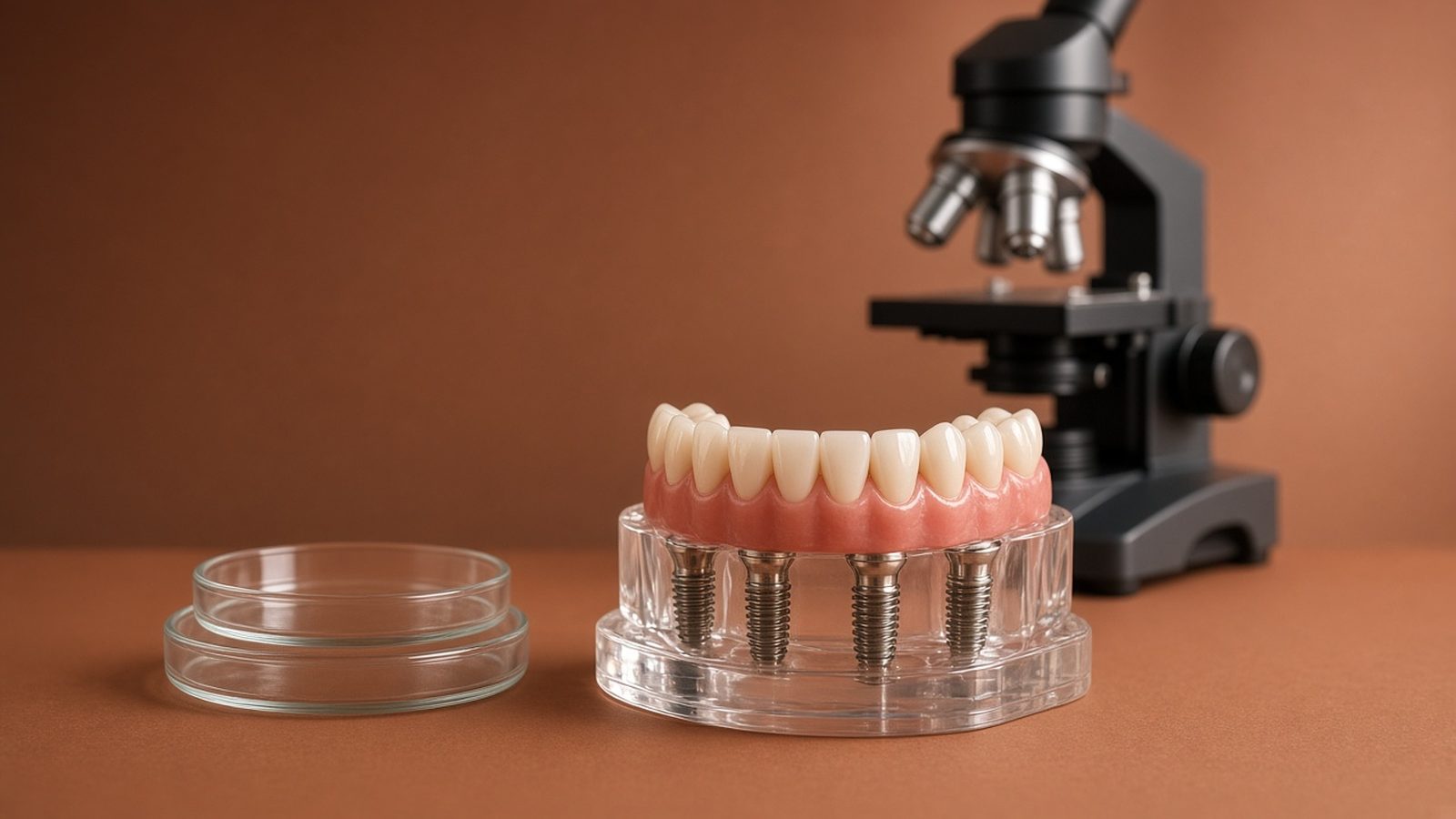
The second clock belongs to your body. After an implant is placed, bone grows into close contact with its surface. This is called osseointegration. Cleveland Clinic notes that the first round of healing after implant surgery takes about a week, while the bone fusing around an implant can take anywhere from three to nine months, depending on how quickly a person heals. The American Dental Association describes the same idea in plainer words: the bone actually grows around the implant and holds it in place, and that takes time.
Same-day teeth do not skip the second clock. They let you have teeth while it runs. That distinction explains most of the confusing timelines you see online.
Why you can have teeth before the implants have healed
Joining implants together with a rigid bridge on the day of surgery is called immediate loading. In carefully selected patients, research shows results similar to waiting.
For decades, the standard approach was to leave implants without load for months. A Cochrane review of loading times describes that traditional window as three to eight months. The same review, which pooled 26 randomized trials with 1,217 participants and 2,120 implants, found no convincing evidence of a clinically important difference in prosthesis failure, implant failure or bone loss between immediate, early and conventional loading.
A 2014 systematic review focused on people with no teeth who received fixed full-arch bridges. It included 62 studies with 2,695 patients and 13,653 implants. The authors concluded that, when cases are selected carefully and rough-surface implants are used, immediate loading gave similar implant and prosthesis survival to early and conventional loading, with estimated one-year implant survival above 99 percent under all three approaches. They also noted that most studies recommended a minimum implant stability at placement before loading immediately, and they cautioned that many factors affect outcomes.
Two takeaways matter for your calendar:
- Same-day teeth are a real, studied approach, not a marketing trick. They are still temporary teeth on implants that are healing.
- The bone still needs its time. The months after surgery are when the implants integrate and your gums and jaw settle, which is why final teeth come later.
Our article on what full-arch implant research actually shows explains how to read survival numbers like these.
A typical All-on-4 timeline, visit by visit
Most full-arch plans follow the same sequence: consultation and imaging, planning, surgery with temporary teeth, healing checks, then final teeth. How those steps are grouped into visits varies by office and by patient.
The table shows a general pattern for one or two arches when no staged graft is needed. It is not a promise about your case.
| Stage | What happens | Typical timing |
|---|---|---|
| Consultation and 3D scan | Exam, health history, CBCT scan, discussion of options | Week 0 |
| Planning and records | Tooth design, implant plan, written treatment plan, financial review, any medical clearance | Days to weeks, longer if clearance or other treatment is needed first |
| Surgery day | Extractions if needed, bone reshaping, implants, temporary teeth attached | One day |
| Early healing | Swelling and soreness settle, soft diet, first follow-up check | First 1 to 2 weeks |
| Integration | Implants fuse with bone while you wear temporary teeth; healing checks | About 1 to 4 months at Regional Implant Centers before final arches, depending on progress |
| Final teeth | Scans or records of the healed implants, try-in as needed, delivery of the final arch | Final visits after healing is confirmed |
| Maintenance | Cleanings and checks for the life of the bridge | Ongoing |
At Regional Implant Centers, a typical case takes about 4 to 5 total visits. Some patients need more, for example when a staged graft, extra healing checks or both arches on different days are part of the plan. Ask your treatment coordinator to lay out your own visits on a calendar before you commit.
Visit 1: consultation and imaging
The first visit answers whether full-arch treatment fits you and what it would involve.
Expect a review of your health history and medications, an exam of your teeth, gums and bite, photos, and a cone beam CT scan, which shows your bone in three dimensions along with the sinuses and the nerve in the lower jaw. Both our Hutto and Katy offices have mobile cone beam CT. Bring a list of your medications and doses, any recent dental x-rays or scans, your dental and medical insurance cards, and your questions. There is a consultation fee at Regional Implant Centers, and our team will confirm it when you book.
Planning: where the first weeks go
Between the consultation and surgery, the team designs your teeth, plans the implants around that design and settles any medical or financial steps.
Under our RISE Protocol, the prosthodontist maps out your bite, facial support, speech and the long-term plan for your new teeth before surgery begins, and the implant positions follow that plan. Our article on how your new teeth are designed before surgery explains this step.
Several things can add weeks before a surgery date is set:
- Medical clearance. If you have heart disease, diabetes, sleep apnea, take blood thinners or other medications that affect surgery, your physician may need to weigh in. Our guide to dental clearance before surgery explains how that works.
- Infection or gum disease. Active infection may need treatment first. See our article on dental implants with gum disease.
- Nicotine. Stopping smoking, vaping and nicotine pouches before surgery helps healing. Our article on vaping, nicotine pouches and dental implants explains why.
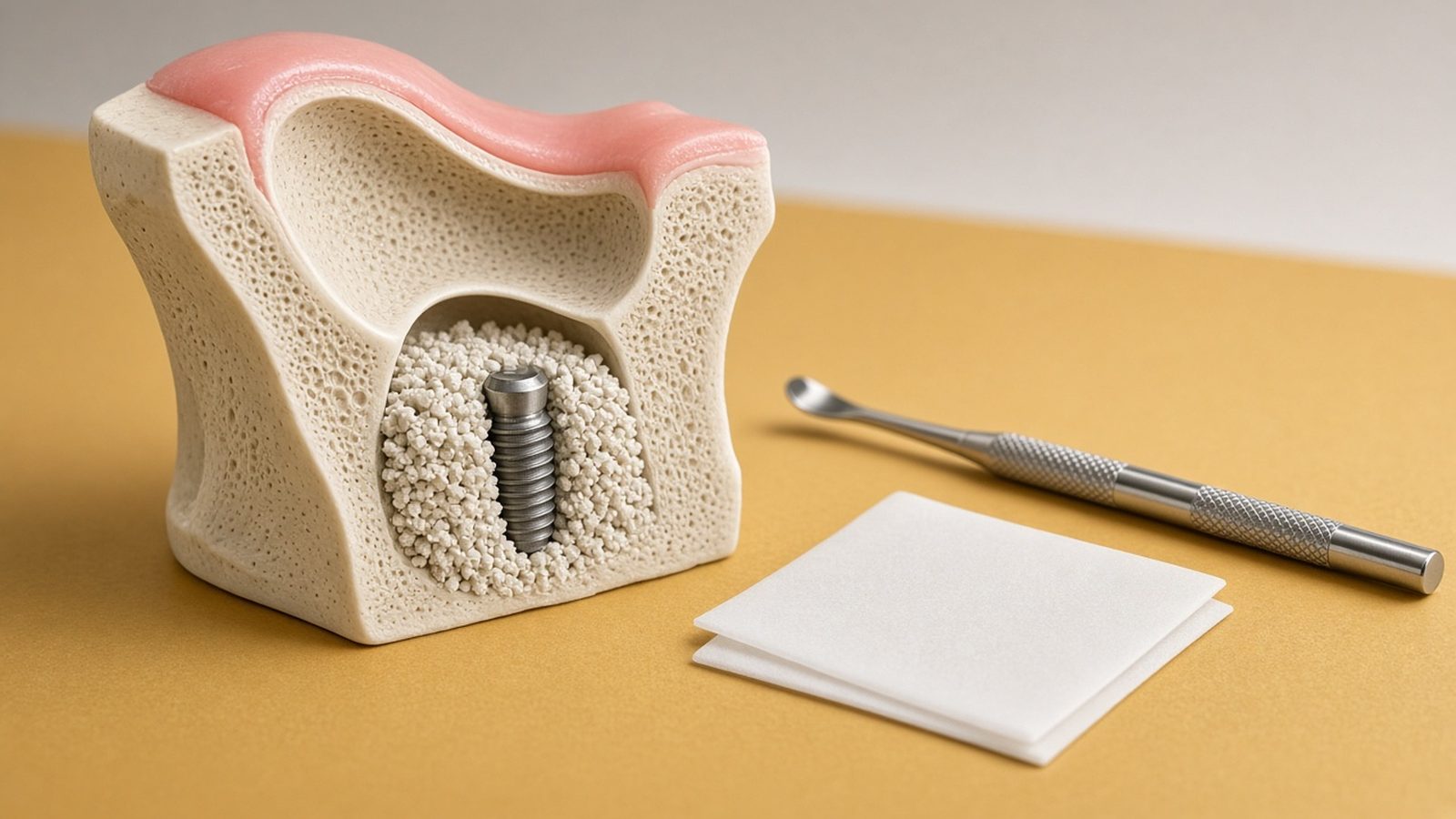
- A staged bone graft. Most full-arch plans do not need a separate graft surgery, but when the jaw is too thin or a sinus lift has to heal first, that can add months. Our article on whether you need a bone graft for All-on-4 explains which kinds of bone work add time and which do not.
- Insurance and financing. Benefit checks and financing applications take time. Start them early.
Surgery day
Surgery day is usually the longest appointment, and it ends with temporary teeth attached to your implants.
The day typically includes removing any failing teeth, reshaping bone where the tooth design calls for it, placing the implants and attaching the temporary bridge. At Regional Implant Centers, an anesthesiologist focuses on your safety, comfort and monitoring, with local anesthesia, IV sedation or general anesthesia, and surgery takes place in a very safe surgical facility with the highest standards of care. See our anesthesia and patient comfort page, and our article on IV sedation or general anesthesia for full-arch implants for how that choice is made.
If you have sedation or general anesthesia, you will need an adult to drive you home and stay with you afterward. Ask how long you should plan to be at the office that day. For a step-by-step picture, read what happens on full-arch implant surgery day.
The first two weeks: early recovery
Swelling and soreness are usually worst in the first few days and ease over the next week or two.
Cleveland Clinic describes the first round of healing after implant surgery as taking about a week, and notes that slight discomfort and swelling are normal afterward. For full-arch surgery, which often includes several extractions, plan for more than a day or two of downtime. Many people with desk jobs plan about a week off; people with physically demanding jobs often need longer. Your surgeon's advice for your case comes first.
During this stretch you will follow a soft diet and specific cleaning instructions, and you will usually have a first follow-up check. Our article on what to eat after All-on-4 has food lists by week, and our guide to protein and nutrition around full-arch surgery explains why eating enough helps healing.
The healing months: living with temporary teeth
Most of the calendar time in All-on-4 treatment is spent wearing temporary teeth while the implants integrate and your gums and bone settle.
Two things happen during these months. The implants fuse with the bone. And the ridge where teeth were removed changes shape. A systematic review of healing after extraction found that the ridge lost about 32 percent of its width by three months and about 29 to 63 percent by six to seven months, with smaller changes in height. Because your gums and bone shift, a final bridge made too early may not fit as well once things settle.
Temporary teeth are built for this phase. They let you eat soft-to-moderate foods, speak and smile while the team learns from how they look, feel and function. Our article on same-day teeth versus final teeth covers what living with temporaries is like and why they are not the finished product.
Keep every healing check. These visits are short, but they let the team catch a loose screw, a sore spot or early signs of a problem while it is still simple to fix.
Final visits: your permanent arch
Once healing is confirmed, the team records the exact position of your implants and delivers the final arch, often with a try-in step along the way.
At Regional Implant Centers, final arches are made in full monolithic zirconia or titanium-reinforced zirconia and are usually delivered about 1 to 4 months after surgery, depending on healing. To capture where the implants sit, the team may use photogrammetry; our article on photogrammetry and intraoral scanning explains how that helps the bridge fit. Our in-house dental lab is at our Katy office, so Hutto patients should ask which final-teeth steps happen in Hutto.
The try-in, when your plan includes one, is the moment to speak up about tooth shape, shade, lip support and how your bite feels. Changes are easiest before the final arch is made.
After the final teeth: maintenance
Full-arch teeth need professional cleanings and checks for as long as you have them. Long-term care at Regional Implant Centers runs through our maintenance packages, and our article on All-on-4 cleaning and maintenance explains what those visits involve.
Upper arch, lower arch or both
Treating both arches can often happen on the same surgery day, but whether yours should is a clinical and personal decision.
Doing both arches together can mean fewer surgery days and one recovery period. Treating them separately can mean a shorter surgery and recovery each time, but more total visits and a longer overall timeline. Bone in the upper and lower jaw also differs, and the upper jaw may need different planning near the sinuses. Our article on upper versus lower full-arch implants explains the differences. Ask your team which approach fits your health, your bone and your schedule.
What can make the All-on-4 timeline longer
Most delays come from health, healing or a stage that has to be done first, not from the surgery itself.
Common reasons the calendar stretches:
- Medical conditions and medications. Diabetes that is not well controlled, certain bone medications, past head and neck radiation and some autoimmune conditions can slow healing or require extra steps. The American Dental Association notes that chronic illnesses can interfere with healing after surgery and that tobacco use can slow healing.
- Staged grafting or sinus work. When bone has to be built before implants, healing can add several months before the implant surgery.
- Implant stability on surgery day. If an implant is not firm enough to support teeth right away, the surgeon may adjust the plan. Ask what happens in your case if that occurs.
- Healing problems. Infection, a sore spot under the temporary or a broken temporary can add visits.
- Missed or rescheduled checks. Each one can push the final teeth back.
- Changes during the try-in. Asking for a different shade or shape is your right, and it can add time.
Our article on how to read a full-arch implant quote explains how to check whether a plan accounts for these steps.
How to keep your treatment on schedule
You control more of the timeline than you might think.
- Book your consultation and imaging early, before a holiday, a planned trip or a busy season at work.
- Bring a complete medication list and your physicians' contact details to the first visit so clearance requests go out right away.
- Start insurance verification and any financing application as soon as you have a written plan.
- Stop smoking, vaping and nicotine pouches before surgery and stay off them through healing.
- Arrange your driver, time off and soft foods before surgery day.
- Follow the cleaning and diet instructions, and protect your temporary teeth from hard or sticky foods.
- Keep every follow-up, and call the office if something changes rather than waiting for the next visit.
How our team plans your timeline
At Regional Implant Centers, the same specialist team plans the teeth, the scan, the surgery and the bridge, which helps keep each step connected.
- Teeth first. Under the RISE Protocol, the prosthodontist sets the plan for your teeth before surgery, the digital planning team uses 3D imaging, the oral surgeon focuses on implant placement and any bone reconstruction, and the anesthesiologist focuses on your safety and comfort.
- Imaging at both offices. Hutto and Katy both have mobile CBCT, which can also capture updated scans during surgery when appropriate.
- Bone work and advanced options. Our Hutto office does bone grafting and sinus work. Regional Implant Centers offers sinus lifts and, for patients who need them, zygomatic and pterygoid implants performed by Dr. Dan Holtzclaw and Dr. Enrique Tabarini.
- Anesthesia on site. Our Hutto office has an anesthesiologist on site.
- Teeth the same day. On the day of full-arch implant surgery, every patient leaves with teeth. Those teeth are temporary.
- Final arches. Full monolithic zirconia or titanium-reinforced zirconia, usually delivered about 1 to 4 months after surgery depending on healing, with about 4 to 5 total visits in a typical case.
- Lab and aftercare. Our in-house lab is at Katy, and long-term care runs through our maintenance packages.
No implant, technology or schedule guarantees a result. Healing depends on your health, your bone, your habits and your follow-up care, and not every patient is a candidate for fixed full-arch teeth. Some patients are better served by a snap-on implant overdenture or a traditional denture, both of which our Hutto and Katy offices also offer.
Questions to ask about your All-on-4 timeline
Whether you see us or another office, ask:
- How many total visits does my plan include, and what happens at each one?
- Is anything needed before surgery, such as medical clearance, infection treatment or a staged graft? How long might that take?
- Will both arches be treated on the same day?
- How long should I plan to be at the office on surgery day, and how much time off work should I plan for?
- Are my same-day teeth temporary, and what can I eat with them?
- When will my final teeth likely be delivered, and what has to happen first?
- What material will my final arch be made of, and will there be a try-in?
- Which visits happen at which office, and can any follow-up questions be handled by phone?
A note on insurance and financing
Insurance checks and financing applications are part of the timeline, so start them early. At Regional Implant Centers, medical insurance is billed only for surgical professional services, such as extractions, bone grafting and alveoloplasty. Implants, temporaries and the final bridge are billed to the patient separately. Only PPO plans work for out-of-network oral surgery benefits, and most BCBS PPO plans with oral surgery coverage are worth checking, please verify with your plan. We cannot bill Federal Employee Program (FEP) Blue Cross Blue Shield plans. Our Insurance Advantage team reviews dental and medical benefits and explains estimated out-of-pocket costs, but coverage is never guaranteed. See our insurance experts page. Financing through independent third-party companies is available, subject to each provider's approval; our article on dental implant financing for Austin patients explains the options.
Our Hutto office for Austin-area patients
Our Austin-area office is at 201 E Wilco Hwy, Suite 203, Hutto, TX 78634, east of Round Rock along US-79. See our Hutto location page. Patients from Austin, Round Rock, Pflugerville, Cedar Park and Georgetown come to Hutto for consultations, imaging, surgery and follow-up care. Because several visits are spread over a few months, it helps to plan each drive, and the person who will drive you home after surgery, ahead of time.
Frequently asked questions
How long does All-on-4 take from start to finish?
It depends on your health, your bone and whether anything must be done first. At Regional Implant Centers, a typical case takes about 4 to 5 total visits, and final arches are usually delivered about 1 to 4 months after surgery, depending on healing. Medical clearance or a staged graft can add time before surgery.
Will I leave surgery with teeth?
Yes. At Regional Implant Centers, on the day of full-arch implant surgery, every patient leaves with teeth. Those teeth are temporary. They are worn while the implants heal, and the final arch is made afterward.
How much time off work do I need after All-on-4?
Plan for at least several days, and often about a week for a desk job. Swelling and soreness usually ease over the first week or two. People with physically demanding jobs may need longer. Your surgeon will advise you based on your surgery.
Why do I have to wait for my final teeth?
The implants need time to fuse with the bone, and your gums and jaw change shape after extractions. Making the final arch after things settle helps it fit and function well. Your temporary teeth also help the team refine the design of the final arch.
Can the timeline be shortened?
Some steps can be scheduled sooner, such as starting medical clearance or insurance checks early. Healing cannot be rushed. To keep things moving, complete pre-surgery steps quickly, avoid nicotine and keep every follow-up visit.
Plan your timeline with our Hutto team
The most accurate All-on-4 timeline is one built for you after an exam and a 3D scan. To schedule a consultation, call (832) 632-7037 or book online with our Hutto office. You can also start at our main scheduling page.
Sources & Resources
- Cleveland Clinic. Dental Implants.
- American Dental Association, MouthHealthy. Implants.
- Esposito M, Grusovin MG, Maghaireh H, Worthington HV. Interventions for replacing missing teeth: different times for loading dental implants. Cochrane Database of Systematic Reviews. 2013.
- Papaspyridakos P, Chen CJ, Chuang SK, Weber HP. Implant loading protocols for edentulous patients with fixed prostheses: a systematic review and meta-analysis. International Journal of Oral and Maxillofacial Implants. 2014.
- Tan WL, Wong TL, Wong MC, Lang NP. A systematic review of post-extractional alveolar hard and soft tissue dimensional changes in humans. Clinical Oral Implants Research. 2012.
This article is general patient education. It is not medical or dental advice, a diagnosis or a treatment plan. Treatment timelines vary, and your own schedule can only be set after an exam and imaging. Not every patient is a candidate for dental implants or fixed full-arch teeth. Insurance coverage varies by plan and is never guaranteed; please verify your benefits with your plan.
Ready to Learn What Is Possible?
Schedule a consultation with Regional Implant Centers.
Schedule ConsultationFrequently Asked Questions
How long does All-on-4 take from start to finish?
It depends on your health, your bone and whether anything must be done first. At Regional Implant Centers, a typical case takes about 4 to 5 total visits, and final arches are usually delivered about 1 to 4 months after surgery, depending on healing. Medical clearance or a staged graft can add time before surgery.
Will I leave surgery with teeth?
Yes. At Regional Implant Centers, on the day of full-arch implant surgery, every patient leaves with teeth. Those teeth are temporary. They are worn while the implants heal, and the final arch is made afterward.
How much time off work do I need after All-on-4?
Plan for at least several days, and often about a week for a desk job. Swelling and soreness usually ease over the first week or two. People with physically demanding jobs may need longer. Your surgeon will advise you based on your surgery.
Why do I have to wait for my final teeth?
The implants need time to fuse with the bone, and your gums and jaw change shape after extractions. Making the final arch after things settle helps it fit and function well. Your temporary teeth also help the team refine the design of the final arch.
Can the timeline be shortened?
Some steps can be scheduled sooner, such as starting medical clearance or insurance checks early. Healing cannot be rushed. To keep things moving, complete pre-surgery steps quickly, avoid nicotine and keep every follow-up visit.
This content is educational and not a substitute for a consultation.