Patient Education
Dentures vs. Implants: What Each Really Costs Over Time for Austin-Area Patients
How the long-term cost of dentures, snap-on overdentures and fixed implant teeth adds up, and what research found, for Austin and Hutto-area patients.
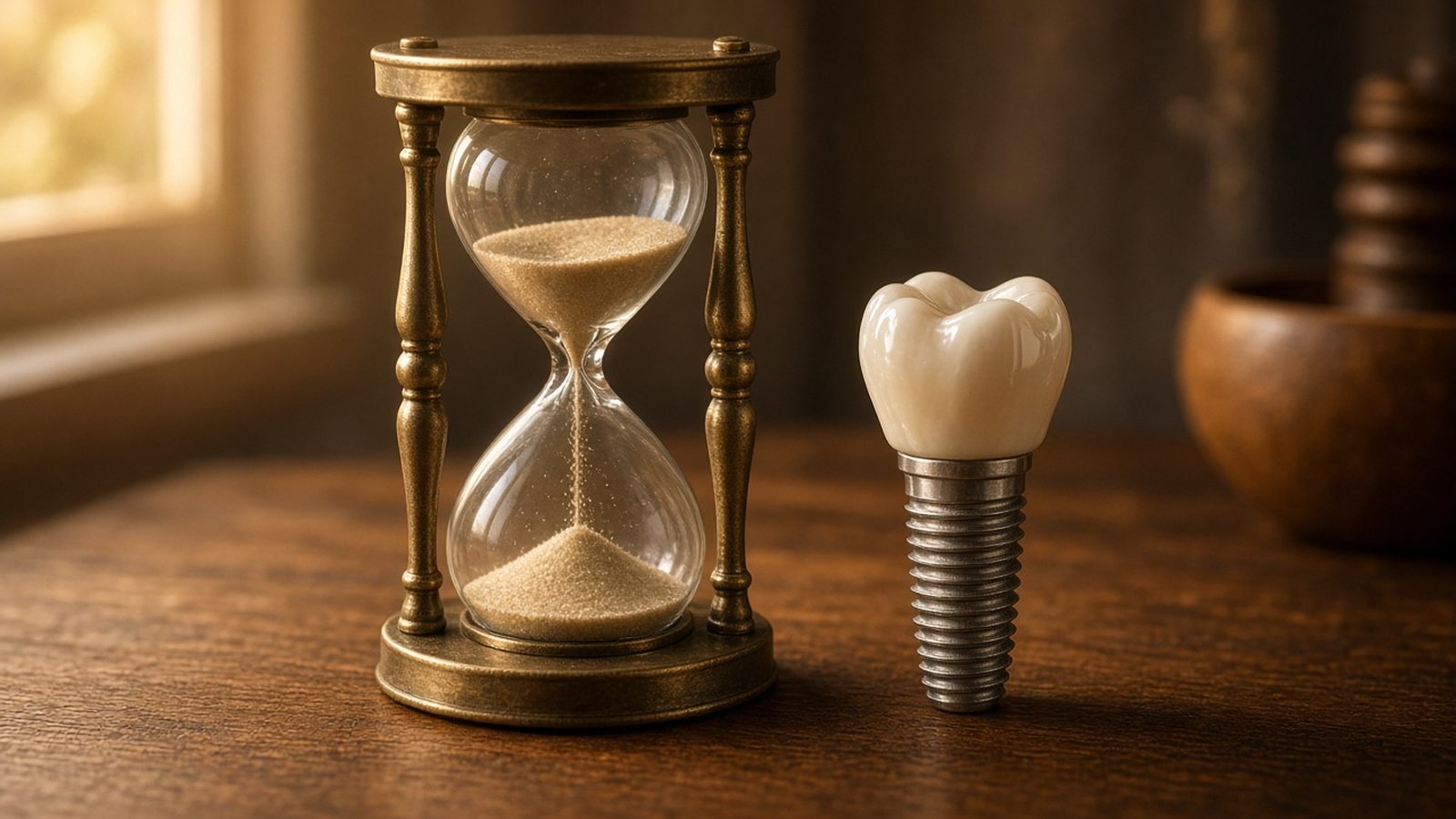
When people in Austin, Round Rock or Pflugerville start comparing the cost of dentures vs. implants, they usually compare one number against another: the price of a denture against the price of an implant treatment plan. That comparison leaves out most of the money. A denture is cheaper on day one and then keeps sending small bills for relines, remakes, adhesive and sore-spot visits. Implant options cost more to start and then have their own recurring costs: attachment parts, maintenance visits, screws, repairs and, eventually, new teeth on the same implants. This article walks through what drives the long-term cost of each option, what research on those costs actually found, and how to compare your own options without a price list. It is written for patients near our Hutto office, including Austin, Round Rock, Pflugerville, Georgetown and Cedar Park.
The short answer
Traditional dentures almost always cost the least up front, and fixed full-arch implant teeth cost the most. Over the years, each option adds its own recurring costs, so the price on day one is never the whole story. Which one is the better value depends on your bone, your bite, how long you expect to live with the result and what you want to be able to eat.
There is no honest way to say that implants "pay for themselves" or that dentures are "the cheap option" for everyone. Research on long-term costs finds that implant overdentures cost more per year than conventional dentures but deliver noticeably better day-to-day comfort and function for many patients, and that fixed implant teeth cost more over time than implant overdentures. The useful question is not which option is cheapest. It is what you get for the money each year, and what each option will ask of you later.
Why this article has no prices
A full-arch cost depends on what an exam and 3D imaging find, so any number quoted online is a guess about someone else's mouth. What we can explain is what each option costs over time and why.
Fees vary with the number of teeth that need to come out, whether bone grafting is needed, the type of anesthesia, how many implants are planned, whether one arch or both are treated, and the material of the final teeth. At Regional Implant Centers, before treatment begins you receive a detailed written plan that outlines the recommended care, estimated insurance benefits, financing options and your expected out-of-pocket investment. That plan is where your real numbers live. This article is meant to help you read it, and to make sure the long-term costs are part of the conversation instead of a surprise three years from now.
The options you are actually comparing
For a full arch of missing or failing teeth, the usual choices are a traditional denture, a snap-on implant overdenture or fixed full-arch implant teeth. Many people also mix them, with one type on the top and another on the bottom.
A traditional denture rests on the gums and is held by suction, fit and sometimes adhesive. A snap-on implant overdenture is a removable denture that clips onto two or more implants, usually with small replaceable attachment parts. Fixed full-arch teeth, often called All-on-4 or All-on-X, are a full arch of teeth screwed onto several implants; you do not take them out, though your dental team can remove them for maintenance.
Mixed plans are common because the upper and lower jaws behave differently. A lower denture often struggles to stay put, while an upper denture on a good ridge can hold reasonably well. Our full-mouth implants page describes two-arch combinations that include fixed teeth on both arches, fixed lower teeth with a traditional upper denture, and a traditional upper denture with an implant-retained lower overdenture. Both our Hutto and Katy offices offer traditional dentures, snap-on implant overdentures and fixed full-arch teeth, so a consultation can compare all three for your mouth.
Traditional dentures: the lowest start, then a steady stream of upkeep
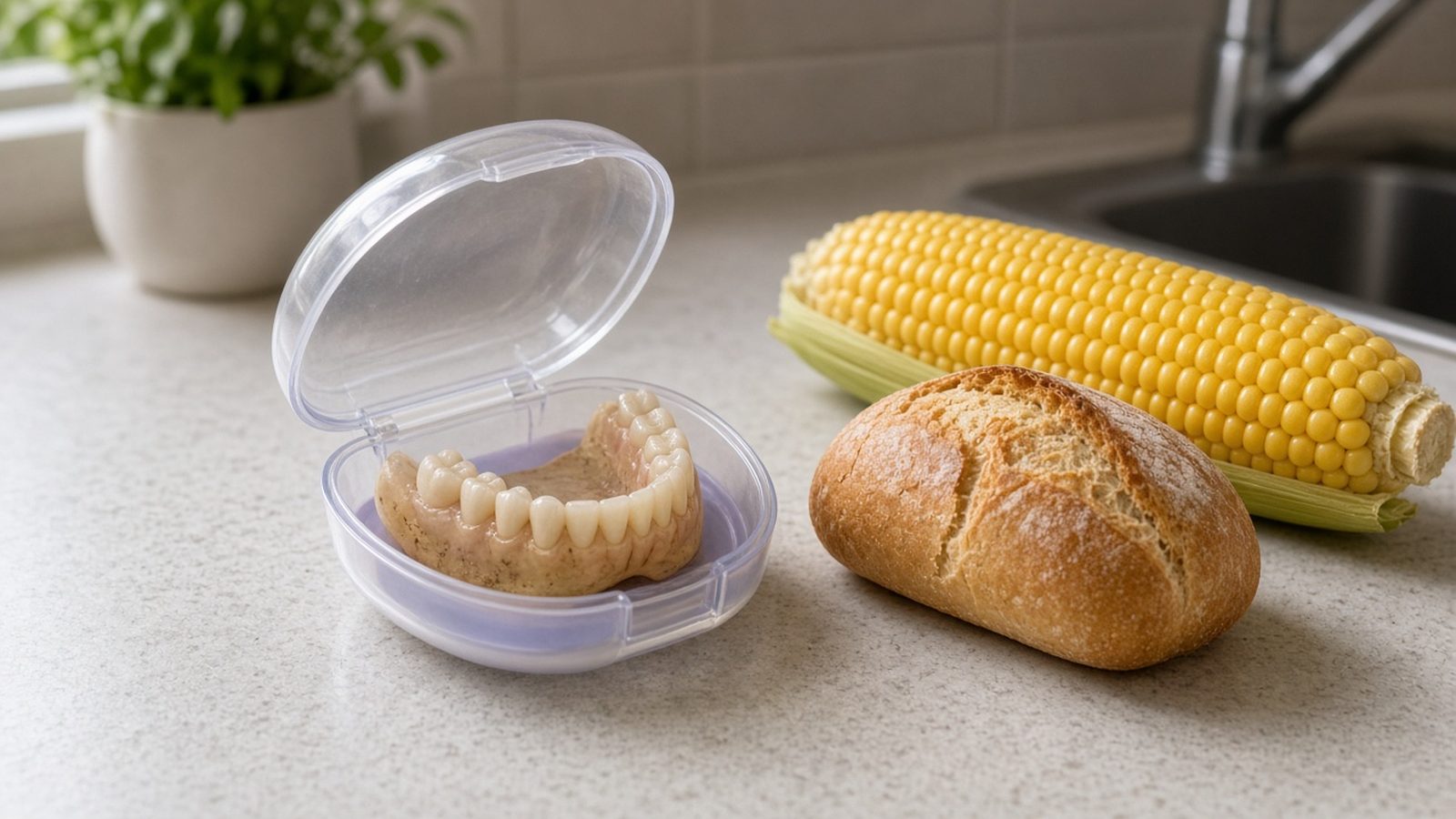
Dentures need regular checkups, relines as the gums and bone shrink, and a remake every several years. Adhesive, cleaners and repair visits add smaller recurring costs on top.
The main long-term cost of a denture comes from the bone underneath it. Once teeth are gone, the jawbone shrinks and changes shape, and the denture that fit well at delivery slowly stops fitting. The U.S. Food and Drug Administration (FDA) explains it plainly: over time, shrinkage in the bone causes dentures to become loose, and when that happens they should be relined or new dentures made. The American College of Prosthodontists (ACP) says dentures should typically be checked every year and are often remade when they lose their fit, after about 5 to 10 years of use.
Put those together and a realistic denture budget over 15 or 20 years includes the first denture, several relines, two or more replacement dentures, adjustment visits for sore spots, an occasional repair for a cracked base or a broken tooth, and supplies. Adhesive deserves a closer look. The FDA notes that properly fitted dentures should not usually need adhesive, and that adhesive only fills gaps caused by shrinking bone. Someone using more and more of it is paying, a tube at a time, for a fit problem that a reline or a new denture would address.
There is also a cost that does not show up on a receipt. A lower denture that moves when you chew can narrow what you eat and how comfortable you feel at a table with other people. That matters when you are deciding what the money is buying.
Snap-on implant overdentures: fewer fit problems, small parts that wear
An implant overdenture costs more than a denture to start, and then adds routine replacement of the attachment parts, relines and eventual remakes of the denture itself. Most of that upkeep is quick, but it is ongoing.
The attachments that hold a snap-on denture to its implants include small nylon or plastic inserts that are designed to wear out, much like the soles of a good pair of shoes. As they wear, the denture feels looser, and a short visit to swap them restores the grip. The denture base still sits on gum in some areas, so relines are still part of the picture, and the denture teeth wear down over the years just as they do on a traditional denture.
One of the more detailed looks at this upkeep comes from a 2022 study in Dentistry Journal by D'haese and colleagues, who followed 69 patients with lower overdentures on two implants for at least seven years. Only one implant was lost. The team recorded 438 technical or maintenance events, and 78 percent of them were minor problems solved chairside, most often replacing retention caps or making small acrylic repairs. Patients with one type of attachment (Locator abutments) needed 179 insert replacements over the study, compared with 12 for patients with ball attachments, although total maintenance costs were similar between the two groups. Averaged across patients, seven years of maintenance came to about 19 percent of what the original treatment cost, with a very wide range: some patients spent almost nothing, and a few spent more on upkeep than the treatment itself.
That is the honest shape of overdenture costs. Most people have a predictable rhythm of small visits. A minority have a run of expensive problems. It is worth asking which attachment system is planned for you and how often its parts usually need replacing.
Fixed full-arch teeth: the largest investment, with maintenance built in
Fixed implant teeth cost the most to start, and in long-term studies they also carry higher maintenance costs than overdentures. Expect professional cleanings with the teeth removed, screw care, a nightguard if you grind, repairs and, at some point, a new prosthesis on the same implants.
With fixed teeth, nothing comes out at night, there is no adhesive and there are no clips to replace. The upkeep moves to the dental chair. The implants and the underside of the teeth have to be cleaned professionally, which usually means removing the prosthesis at some visits. Screws loosen and need retightening or replacing. A nightguard wears and gets remade. Tooth material can chip or wear, and over a long enough period a new prosthesis may be made on the implants you already have. How long the implants and the teeth on top tend to last is a separate question with a lot of research behind it; our guide to how long dental implants last covers that research, so we will not repeat it here.
What matters for budgeting is that fixed treatment costs more than overdentures over time, not only at the start. In a University of Toronto study of 90 patients with lower implant prostheses, Attard, Zarb and Laporte measured both clinical costs and the value of patients' time over 10 to 15 years. Initial treatment and maintenance costs were significantly higher for fixed prostheses than for overdentures, and patients with fixed teeth also spent more of their own time on care. The authors concluded that the lower overdenture was the less expensive treatment over the long term. That does not make it the right choice for everyone, since many people choose fixed teeth for how they feel and function, but it is a useful corrective to ads that suggest fixed teeth save money in the end.
How a case is done can change its long-term costs too. A 14-year cost analysis by Alfadda and Attard of patients with lower overdentures found that the group whose implants were loaded immediately had higher complication costs, and therefore higher maintenance costs, than the group whose implants healed before loading. One study does not settle the question, and it looked at overdentures rather than fixed teeth, but it is a reminder that the upkeep a plan needs later is partly decided by choices made at the start.
What research says about value, not just cost
Reviews of the economic research generally find that implant options cost more but improve daily life enough to be considered good value for many people, especially compared with a lower denture. The evidence is uneven, so treat it as a guide, not a verdict.
A widely cited study on this question is a McGill University trial by Heydecke and colleagues, published in the Journal of Dental Research in 2005. It compared conventional lower dentures with two-implant overdentures in older adults and estimated costs over an average remaining life expectancy of about 18 years, using expert estimates for the years after the first. The overdentures cost more per year, and they also produced significantly better scores on a standard oral-health quality-of-life questionnaire. In plain terms, people paid more each year and got noticeably more comfort and function for it.
Two literature reviews reach similar conclusions. A 2013 review in the International Journal of Oral and Maxillofacial Implants by Vogel and colleagues found that for patients missing all their lower teeth, implants came with higher initial costs than dentures, but most studies considered them cost-effective over the long term, with high patient satisfaction. A 2017 systematic review in the International Journal of Prosthodontics by Zhang and colleagues found implant-supported overdentures to be cost-effective compared with both conventional dentures and fixed implant prostheses, while noting that most of the underlying studies had a high or unclear risk of bias. Neither review proves that implants are the better buy for you. Together they suggest that "most affordable" and "best value" are different questions.
Long-term cost drivers side by side
This table lists what tends to add cost over the years for each option. It has no prices on purpose; ask for the matching line items in your own written plan.
| Cost driver | Traditional denture | Snap-on implant overdenture | Fixed full-arch teeth |
|---|---|---|---|
| Up-front treatment | Lowest | Middle | Highest |
| Surgery | Extractions if needed | Extractions if needed, implants, possible grafting | Extractions if needed, implants, possible grafting or bone shaping |
| Temporary teeth while healing | Often an immediate denture | Often a denture during healing | Temporary fixed or removable teeth before the final arch |
| Recurring parts | Adhesive and cleaners for some wearers | Attachment inserts that wear out | Screws, nightguard |
| Fit changes | Relines as bone shrinks | Relines where the base rests on gum | Less affected, but the bite and gums are still monitored |
| Replacement | New denture every several years | New denture every several years | New prosthesis on the same implants at some point |
| Professional visits | Yearly checkup, sore-spot adjustments | Checkups, insert changes, relines | Cleanings with the teeth removed, exams with imaging, screw checks |
| Your time | Fewer appointments, more daily handling | Short, regular visits | More time in the chair over the years |
Two rows people often skip are temporary teeth and time. Every implant plan has a healing phase, and the teeth you wear during it are part of the cost. Same-day teeth, when they are possible, are temporary teeth for qualifying patients, not the final arch. And the time you spend at appointments, plus the drive from Georgetown or Cedar Park to Hutto, is a real cost even if it never appears on an invoice.
How insurance fits in
Medical insurance may help with some surgical parts of an implant plan, but at our office it does not pay for implants, temporaries or the final teeth, and coverage is never guaranteed.
At Regional Implant Centers, we bill medical insurance only for surgical professional services, such as extractions, bone grafting and alveoloplasty (smoothing and reshaping the bone). Implants, temporary teeth and the final prosthesis are billed to the patient separately. Only PPO plans work for out-of-network oral surgery benefits, and a PPO medical plan with oral surgery coverage may be worth checking, but please verify your benefits with our team before treatment. We cannot bill Federal Employee Program (FEP) Blue Cross Blue Shield plans. Dental insurance benefits for dentures, implants and relines vary by plan, often with annual limits, waiting periods and replacement rules. Our Insurance Advantage team reviews dental and medical benefits, and our insurance disclaimer explains that a benefit estimate or preauthorization is not a guarantee of payment.
When you compare options, it helps to ask how your plans treat the recurring items too: how often a plan will pay toward a reline or a new denture, and whether anything applies to implant maintenance. Ask our team to walk through those clauses with you before treatment.
Financing and budgeting for the years after treatment
If you finance treatment, budget for the upkeep at the same time. A plan that only works until the loan is paid off leaves out the part that keeps the teeth working.
Financing for treatment is available through independent third-party companies listed on our financing page, including Cherry, Proceed, CareCredit and Sunbit. Approval, credit limits, interest rates, promotional terms and payment amounts are set by each lender, not by Regional Implant Centers.
After a final implant prosthesis is delivered at our office, long-term care is handled through a required Maintenance Package, not a warranty. Enrollment must begin within 30 days of final prosthesis delivery, the packages provide a defined number of services each year at a monthly fee, and services not included in a tier are billed separately if you need them. The terms also note that repairs or remakes may require lab time and may be prorated, and that the program is not dental insurance. Our implant warranty page explains why we do not offer a traditional warranty: there is no guarantee that implants or prosthetics will never need adjustment, repair or replacement. Knowing that up front makes it easier to compare a monthly maintenance commitment with the pattern of reline and remake costs a denture brings.
Seven questions that reveal the long-term cost of any plan
Ask these at any consultation, with us or with another office, and ask for the answers in writing.
- What will I wear while I heal, and is that included in the plan?
- For a denture or overdenture, how often do you expect relines, and when would a new denture usually be needed?
- For an overdenture, which attachment system are you planning, and how often do its parts usually need replacing?
- For fixed teeth, what material is planned, what repairs does it usually need, and what happens when the teeth wear out?
- What maintenance visits do you recommend, how often, and what do they cost if they are not included?
- Which parts of this plan might my medical or dental insurance help with, and which will be billed to me no matter what?
- If I start with a denture now, what would moving to implants later involve, and could waiting make it harder?
If you already have a written estimate from another office, bring it. Comparing line by line is the quickest way to see whether two plans describe the same treatment and the same upkeep.
How we plan long-term costs at our Hutto office
We start with your bone, your bite and your goals, then show you the options that fit, including dentures when they make sense, with the costs over time explained before you commit.
Our Hutto office, on E Wilco Hwy, sees patients from Hutto, Round Rock, Pflugerville, Georgetown and surrounding communities. It has CBCT imaging, handles bone grafting and sinus work, and has an anesthesia provider on site who is a dentist anesthesiologist. Our post on sedation and comfort during dental implant surgery explains how anesthesia options are chosen. Planning runs through our RISE Protocol, in which a prosthodontist maps out the bite, facial support and long-term plan for the new teeth before surgery begins, and 3D CBCT imaging lets the team study bone volume and anatomy ahead of time. That matters for cost because the amount of bone you have often decides whether an overdenture or fixed teeth is realistic, and whether grafting needs to be part of the plan. Our post on why bone grafting may be needed before dental implants explains when that comes up.
Our in-house dental lab is at our Katy office, where technicians work beside the surgical and restorative team. Plans are reviewed by specialists including Dr. Polyxeni Konti, a prosthodontist, and Dr. Dan Holtzclaw, a Board-Certified Diplomate of the American Board of Periodontology and the International Congress of Oral Implantologists. For patients with significant upper jaw bone loss, our team also offers zygomatic and pterygoid implants, performed by Dr. Holtzclaw and Dr. Enrique Tabarini; they are not right for everyone, and the evaluation decides. Our post on how prosthodontists design implant-supported teeth explains the design choices that affect upkeep, and why full-mouth rehabilitation requires more than implants covers the rest of the plan.
We would rather tell you that a denture may be the sensible choice for one of your arches than sell you more treatment than you need. We would also rather tell you about maintenance and remakes now than have them come as a surprise. Our article on how to avoid failed implant dentistry and costly mistakes explains why doing the planning carefully the first time tends to cost less than correcting it later.
Frequently asked questions
Are implants cheaper than dentures in the long run?
Not always. Dentures cost less to start and keep adding relines, remakes and supplies, so the gap narrows over the years. Long-term studies find implant overdentures cost more per year than dentures but improve comfort and chewing for many people, and fixed implant teeth cost more over time than overdentures. Value depends on your mouth and goals.
How often do dentures need to be relined or replaced?
The American College of Prosthodontists says dentures should typically be checked every year and are often remade after about 5 to 10 years, when they lose their fit. Relines in between are common because the bone under a denture keeps shrinking. Your own schedule depends on your gums, bone and how the denture was made.
Do snap-on implant dentures have ongoing costs?
Yes. The small inserts in the attachments wear out and are replaced at routine visits, the denture may need relines where it rests on the gums, and the denture itself is eventually remade. In one seven-year study most of this upkeep was minor and solved chairside, but a few patients needed more costly repairs.
Will insurance pay for my implants or dentures?
At our office, medical insurance is billed only for surgical services such as extractions, bone grafting and alveoloplasty; implants, temporaries and the final teeth are billed to you. A PPO medical plan with oral surgery coverage may be worth checking, so please verify with our team. We cannot bill FEP Blue Cross Blue Shield plans. Coverage is never guaranteed.
Can I start with dentures and switch to implants later?
Often, yes. Many people wear a denture first and move to an overdenture or fixed teeth later. Bone keeps changing after teeth are lost, so waiting can sometimes mean grafting or a different implant plan. A consultation with 3D imaging can show what a later switch would likely involve for you.
Compare your options with our Hutto team
If you are weighing dentures against implants, a consultation is where averages turn into your own numbers. You will have a clinical evaluation, 3D imaging when indicated, a side-by-side look at the options that fit your bone and goals, and a written plan with estimated insurance benefits, financing options and your expected out-of-pocket investment before anything begins. Qualified patients receive a complimentary consultation, CBCT scan and insurance benefits evaluation. Schedule a consultation by phone or in person at our Hutto office, serving Austin, Round Rock, Pflugerville, Georgetown and Cedar Park, or call (832) 632-7037. Houston-area patients can book with our Katy office.
Sources & Resources
- U.S. Food and Drug Administration. Denture Adhesives
- American College of Prosthodontists. Frequently Asked Questions about Dentures
- D'haese J, Matthys C, Sahak H, Besseler J, De Bruyn H. Implant-retained mandibular overdentures: patient-related outcome measurements after seven years of function. Dentistry Journal, 2022;10(5).
- Attard NJ, Zarb GA, Laporte A. Long-term treatment costs associated with implant-supported mandibular prostheses in edentulous patients. International Journal of Prosthodontics, 2005;18(2):117-123.
- Alfadda SA, Attard NJ. A cost analysis of a long-term prospective study of patients treated with immediately loaded implant-supported mandibular overdentures. Clinical Implant Dentistry and Related Research, 2017;19(5):944-951.
- Heydecke G, Penrod JR, Takanashi Y, Lund JP, Feine JS, Thomason JM. Cost-effectiveness of mandibular two-implant overdentures and conventional dentures in the edentulous elderly. Journal of Dental Research, 2005;84(9):794-799.
- Vogel R, Smith-Palmer J, Valentine W. Evaluating the health economic implications and cost-effectiveness of dental implants: a literature review. International Journal of Oral and Maxillofacial Implants, 2013;28(2):343-356.
- Zhang Q, Jin X, Yu M, et al. Economic evaluation of implant-supported overdentures in edentulous patients: a systematic review. International Journal of Prosthodontics, 2017;30(4):321-326.
This article is general patient education and is not a diagnosis, treatment plan or cost estimate. Costs, insurance benefits and the right option depend on an individual clinical evaluation. Insurance coverage is never guaranteed, and financing is provided by independent third-party companies. Regional Implant Centers has offices in Katy and Hutto, Texas. Outcomes vary, and implant treatment is not appropriate for every patient.
Ready to Learn What Is Possible?
Schedule a consultation with Regional Implant Centers.
Schedule ConsultationFrequently Asked Questions
Are implants cheaper than dentures in the long run?
Not always. Dentures cost less to start and keep adding relines, remakes and supplies, so the gap narrows over the years. Long-term studies find implant overdentures cost more per year than dentures but improve comfort and chewing for many people, and fixed implant teeth cost more over time than overdentures. Value depends on your mouth and goals.
How often do dentures need to be relined or replaced?
The American College of Prosthodontists says dentures should typically be checked every year and are often remade after about 5 to 10 years, when they lose their fit. Relines in between are common because the bone under a denture keeps shrinking. Your own schedule depends on your gums, bone and how the denture was made.
Do snap-on implant dentures have ongoing costs?
Yes. The small inserts in the attachments wear out and are replaced at routine visits, the denture may need relines where it rests on the gums, and the denture itself is eventually remade. In one seven-year study most of this upkeep was minor and solved chairside, but a few patients needed more costly repairs.
Will insurance pay for my implants or dentures?
At our office, medical insurance is billed only for surgical services such as extractions, bone grafting and alveoloplasty; implants, temporaries and the final teeth are billed to you. A PPO medical plan with oral surgery coverage may be worth checking, so please verify with our team. We cannot bill FEP Blue Cross Blue Shield plans. Coverage is never guaranteed.
Can I start with dentures and switch to implants later?
Often, yes. Many people wear a denture first and move to an overdenture or fixed teeth later. Bone keeps changing after teeth are lost, so waiting can sometimes mean grafting or a different implant plan. A consultation with 3D imaging can show what a later switch would likely involve for you.
This content is educational and not a substitute for a consultation.