Oral Surgery
What Happens on Full-Arch Implant Surgery Day at Our Katy Office
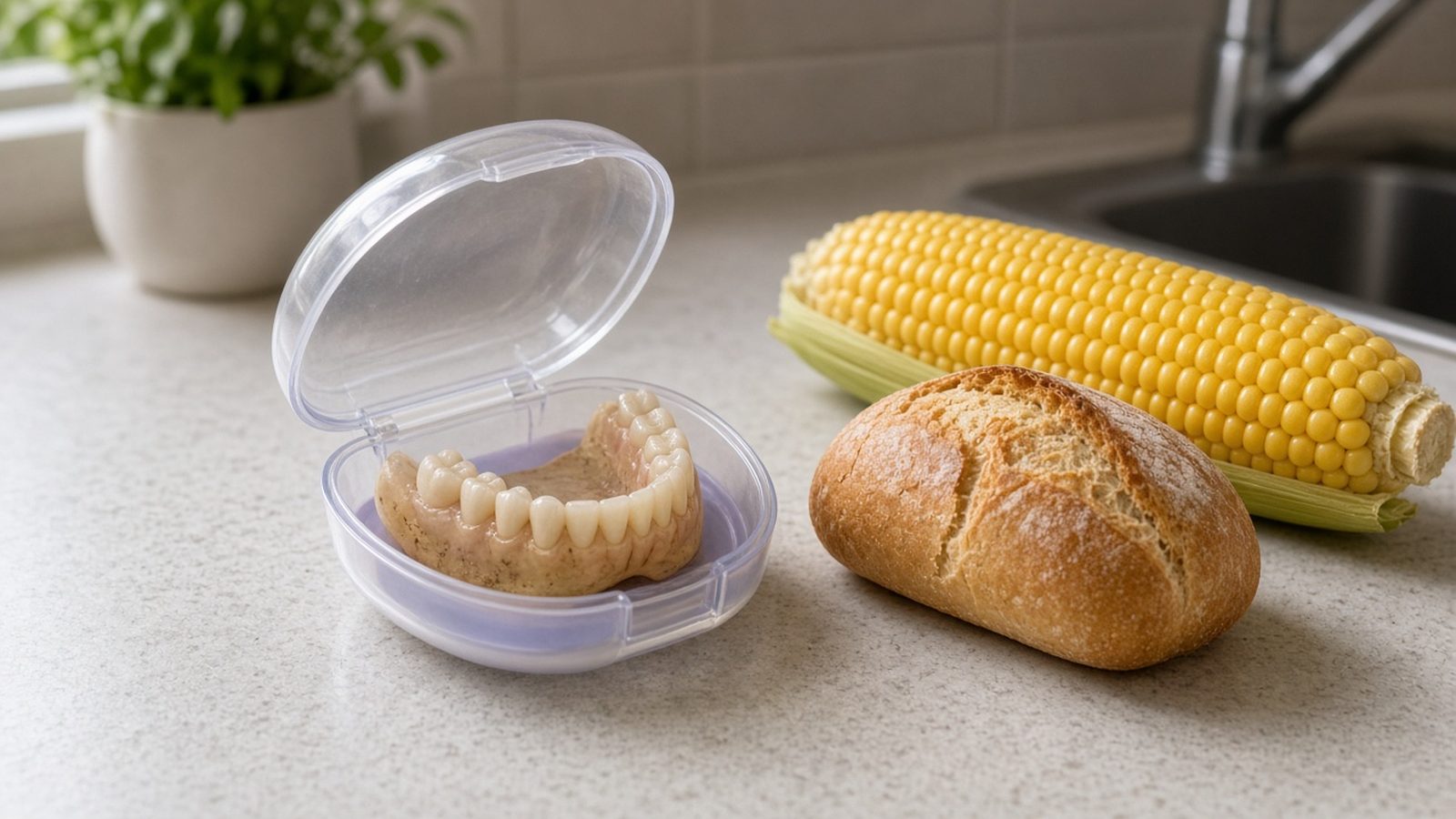
What really happens on full-arch implant surgery day in Katy, from fasting and check-in to bone shaping, implants, temporary teeth and the ride home.
Most people who book full-arch implant surgery have already made the big decision. What keeps them up the week before is smaller and more concrete: what time do I need to be there, will I be awake, what exactly gets done, and will I go home with teeth? This article walks through a typical full-arch implant surgery day at our Katy office at 707 S Fry Rd, from the night before to the ride home, so you can picture the day before you live it. Your own written instructions always come first, because every plan is built around one patient's health, anatomy and goals.
We see patients from Katy, Cypress, Sugar Land, Fulshear and across the Houston area for full-arch care, and many of them tell us the unknowns were harder than the surgery itself. If you are still deciding between fixed teeth, snap-on implant overdentures and traditional dentures, start with a consultation instead. This article is for the people who already have a date, or are close to setting one.
The short answer
On full-arch surgery day you arrive fasting with a driver, meet your anesthesia provider, and go to sleep or into deep sedation. The surgeon removes any failing teeth, shapes the bone, and places the implants where the plan calls for them. If the implants are stable enough, a fixed temporary set of teeth is attached before you leave. If not, the team protects the implants and uses a different temporary plan.
The visit is long, and much of it happens while you are comfortable and unaware of the time. The parts you will remember are the check-in, the conversation right before anesthesia, and waking up. Everything in between follows a plan that the surgeon, prosthodontist, anesthesia provider and lab team agreed on before your date was set.
The days before: instructions that protect you
Most surgery-day problems are prevented the week before. Follow your fasting instructions exactly, tell the team about every medicine and supplement you take, and line up a responsible adult to drive you and stay with you.
Fasting is the rule people are most tempted to bend, and it is the one that matters most. The American Society of Anesthesiologists (ASA) explains that unless you are having only local anesthesia, you may be told not to eat or drink after midnight, because of the rare risk of food or liquid in your stomach getting into your lungs while you are under sedation or general anesthesia. The ASA also notes that you may be told you can drink clear liquids and take your regular medications. Which of those applies to you is your anesthesia provider's call, so follow the written instructions you receive from us rather than a general rule from the internet.
A few medicines deserve a specific conversation:
- GLP-1 medicines for diabetes or weight loss, such as Ozempic, Wegovy, Mounjaro or Trulicity. These drugs slow stomach emptying. ASA patient guidance, based on 2024 multisociety recommendations, says most people can keep taking them before surgery, but some patients are asked to follow a liquid-only diet for 24 hours beforehand, and surgery may be postponed if you have nausea, vomiting or other stomach symptoms. Tell us early if you take one, and do not stop it on your own.
- Blood thinners and diabetes medicines. Never stop or adjust these without instructions from the physician who prescribes them and your surgical team. The plan is coordinated, not guessed.
- Supplements and over-the-counter products. The ASA asks patients to list everything, including vitamins and supplements, because some affect bleeding or anesthesia.
Then the practical pieces. The ASA reminds patients that you will not be allowed to drive after outpatient surgery under sedation or anesthesia, so plan for someone to take you home. Wear loose, comfortable clothing with short sleeves or sleeves that roll up easily, and leave jewelry and valuables at home. If you smoke, the ASA advises stopping as soon as possible, even a day or two before surgery, and the FDA notes that smoking may affect implant healing and long-term success. Fill your prescriptions and stock soft foods before the day, not after it.
Arrival and check-in at our Katy office
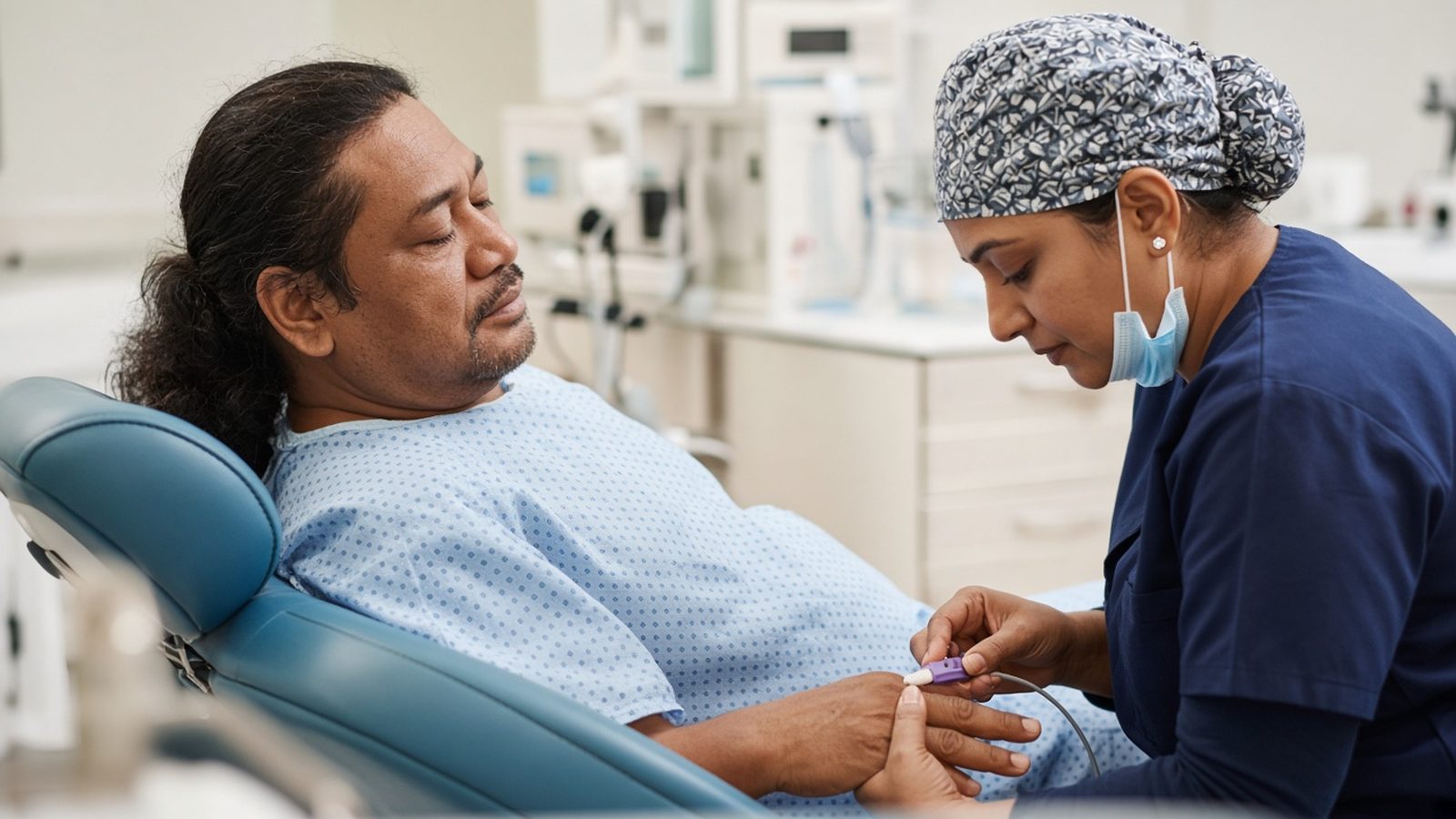
Check-in is a safety review, not paperwork for its own sake. The team confirms your health history, medicines and fasting, reviews the plan and consent with you, and answers last questions before anything starts.
Expect the team to ask some of the same questions you answered at consultation: what you take, when you last ate or drank, whether anything has changed with your health. That repetition is deliberate. Your blood pressure and other vital signs are checked, and this is a good moment to say so if you have had a cold, a fever or stomach upset since your last visit.
You will also meet the anesthesia provider caring for you that day. At Regional Implant Centers, each specialist has a clear role during complex treatment: the oral surgeon focuses on surgery, the prosthodontist focuses on the treatment outcome, and the anesthesia provider focuses on the patient. Depending on your plan, options may include IV sedation or general anesthesia, and your doctor will discuss the safest and most appropriate option for your care. For certain complex procedures, general anesthesia with nasal intubation may be recommended, which can help protect and maintain the airway while keeping the mouth fully accessible. Our article on why nasal intubation may be used explains that choice.
Before you drift off, the team can monitor oxygen levels, breathing, heart rate, blood pressure and overall patient status, and that monitoring continues throughout. If you are nervous, say so out loud. You should never feel rushed, ignored or unsupported, and an anxious patient is a normal patient here. More on how comfort is planned is on our anesthesia and patient comfort page.
Step 1: Removing the failing teeth
If you still have teeth in the arch being treated, the first surgical step is usually removing them and cleaning out any infection around them, so the implants go into healthy bone.
For many full-arch patients this is the moment years of dental problems end. Full-mouth extractions are done when clinically appropriate, meaning the planning team has already decided which teeth cannot predictably support long-term oral health. Some plans keep strategic teeth or treat one arch at a time; that was settled at your planning visit, not on the day.
Once teeth are out, the surgeon removes infected tissue from the sockets. This matters more than it sounds. Implants need clean, healthy bone, and old infection left behind is one of the things a careful surgeon spends time on. If your plan includes bone grafting, such as socket preservation or ridge augmentation in a weak area, it is often done during this same stretch of the surgery. Our article on why bone grafting may be needed covers the reasons.
Step 2: Shaping the bone
After extractions, the jaw ridge is often uneven. The surgeon may smooth and reshape it, a step called alveoloplasty, so the implants and the new teeth have a stable, cleanable foundation and enough room for the prosthesis.
This is the step patients most often have not heard of. When teeth have been failing for years, the bone around them breaks down unevenly, leaving peaks, ledges and sharp edges. A full-arch prosthesis also needs a certain amount of vertical space to be strong, to look natural and to be cleaned underneath. Bone shaping can create that space and a smoother base. Our oral surgery services list it as alveoloplasty and bone shaping: ridge contouring and surgical foundation refinement.
How much bone, if any, should be reduced is a planning decision, not a habit. A 2025 narrative review in the International Journal of Prosthodontics found that the role of bone removal in immediate full-arch treatment is still an area of clinical debate with no established consensus, and concluded that bone reduction and prosthetic design require individualized planning. That is exactly why at our office the prosthodontist's design for your final teeth comes before surgery. Surgical planning begins with the final teeth in mind, including smile, speech, hygiene access and long-term stability, and the bone is shaped to serve that design. Our article on why final teeth should guide oral surgery planning goes further.
Step 3: Placing the implants
The implants are placed in the positions chosen during digital planning, angled and spaced to support the final teeth. The surgeon checks how firmly each one is anchored, and in selected cases our mobile CBCT can capture updated images while treatment is underway.
Before surgery day, our SegMark Workflow aligns your CBCT imaging, intraoral scans, bite information and facial references into one coordinated digital plan, so the desired tooth position, smile line, bite and facial support help guide where implants should be placed. On the day, the surgeon carries out that plan while reading the bone in front of them. Plans are a starting point, and real bone can be softer, harder or shaped a little differently than a scan suggests. Good surgeons adjust, and that is one reason the implant count or position can change during surgery.
Imaging is another layer of support. Traditional CBCT units are usually fixed in one imaging room. Mobile Cone Beam CT technology can be brought directly into treatment environments when appropriate, and in selected cases it can help the team evaluate implant positioning, review anatomical relationships and support additional decision-making while treatment is underway. This does not replace clinical judgment, experience or careful planning. It gives the specialists another layer of information when that information may be helpful.
If your upper jaw has very little bone, your plan may call for zygomatic or pterygoid implants, which anchor in denser bone farther back or higher up. At Regional Implant Centers these are performed by Dr. Dan Holtzclaw and Dr. Enrique Tabarini. They are not for everyone, and when they are part of a plan, the day is planned around them in advance.
The FDA lists the risks of implant placement plainly, including injury to surrounding tissue such as sinus perforation, fracture of surrounding jawbone, and post-surgical numbness from nerve injury. Careful imaging and planning are how a team tries to reduce those risks, and your surgeon should walk you through the ones that apply to your anatomy before the day. The FDA also suggests asking which brand and model of implant system is used and keeping that information for your records, which is a simple thing to request at your post-operative visit.
Step 4: The same-day temporary decision
Many patients are able to leave surgery with a fixed temporary set of teeth on the same day as implant placement. Your treatment plan, and how stable the implants are once they are in, determine whether immediate teeth are appropriate for your specific case.
When the implants are stable enough, the temporary teeth are fitted, adjusted to your bite and attached to the implants before you go home. How and when each part of that fitting happens depends on your plan, so ask your team to walk you through it. The temporary is made around the design the prosthodontist created before surgery. At our Katy office, laboratory technicians collaborate with the clinical team to support customized temporary and final restorations, and our in-house lab keeps that team connected throughout treatment.
Those teeth are temporary. They let you smile, speak and eat soft food while the implants bond to bone over several months, and they are not built for hard chewing. The final teeth come later, after healing has been verified.
Sometimes the answer on the day is no, or not yet. Soft bone, extensive grafting or an implant that did not seat as firmly as hoped can all mean the safer choice is to let the implants heal without chewing forces. In that case you may leave with a removable temporary or a different interim plan, and fixed teeth follow once healing allows. This is a safety decision, not a failed surgery. The most useful thing you can do is ask before your date what the plan B would be, so neither answer surprises you.
Waking up and going home
You wake up in recovery under monitoring, with numbness, some drowsiness and gauze or a temporary in place. You leave only when the team is satisfied you are ready, with a responsible adult who drives you home and stays with you.
Most people remember little of the surgery itself. The anesthesia provider continues watching you as you wake, and the team reviews your written aftercare instructions with your companion, because you may not remember the details. Expect your lips and cheeks to stay numb for a while, so cool liquids are the safest first choice. Prescriptions, ice, rest with your head raised and a soft diet set the tone for the next few days.
The ASA notes that after general anesthesia you may continue to be sleepy and your judgment and reflexes may take time to return to normal, and that it is best to have someone with you for at least the first 24 hours. Treat the rest of the day as a recovery day: no driving, no important decisions, and no signing anything you would want to read carefully. If anything worries you that evening, call the number on your instructions. The recovery weeks ahead, from swelling to the soft-food phase, are a separate topic with their own guide.
How surgery day works at our Katy office
At Regional Implant Centers, surgery day is one step in the RISE Protocol, not a stand-alone event. Three specialists, three areas of expertise, one coordinated treatment plan.
Our Katy office has surgical suites and imaging, along with in-house lab collaboration, so the people designing your teeth are in the same building as the people placing your implants. The prosthodontist guides the restorative vision, the oral surgeon focuses on implant placement, bone reconstruction and surgical execution, and a dedicated anesthesia provider focuses on your safety, comfort and monitoring. Our anesthesia systems include ventilator capabilities and comprehensive monitoring technology. You can read more about how this fits together on our RISE Protocol page and our Katy office page.
Our Hutto office offers full-arch care for Austin-area patients too, with bone grafting and sinus work, CBCT imaging and a dentist anesthesiologist on site. Both offices offer traditional dentures, snap-on implant overdentures and fixed full-arch teeth, so surgery is only one of the paths we discuss.
A few things are settled before surgery day, not on it. Your written plan explains what is included. Regional Implant Centers does not offer a traditional implant warranty; instead, long-term protection depends on enrolling in the required Maintenance Package within 30 days of final prosthesis delivery, and there is no guarantee that implants or prosthetics will never need adjustment, repair or replacement. Details are on our Maintenance Packages page.
On insurance, our team may bill medical insurance only for surgical professional services, such as extractions, bone grafting and alveoloplasty. Implants, temporaries and the final prosthesis are billed to the patient separately. Some PPO plans with oral surgery coverage may be worth checking, but coverage is never guaranteed, so please verify your benefits with us before surgery. We cannot bill Federal Employee Program (FEP) Blue Cross Blue Shield plans. Our insurance team can review your plan, and financing is available through independent third-party companies for qualified patients.
Questions to ask before your surgery date
Surgery days tend to go more smoothly for patients who asked the awkward questions a week early. These are worth having answered in writing.
- What time should I arrive, and roughly how long should my driver plan to wait or be on call?
- Exactly when do I stop eating and drinking, and which of my medicines do I take that morning?
- Will I have IV sedation or general anesthesia, and who will be monitoring me?
- Which teeth are coming out, and is bone grafting or bone shaping planned?
- How many implants are planned, and what happens if the bone is different from the scan?
- If same-day fixed teeth are not possible, what will I leave with?
- Who do I call that night, and when is my first follow-up visit?
Frequently asked questions
How long does full-arch implant surgery take? It depends on whether one or both arches are treated, how many teeth come out and whether grafting is needed. Plan for a long appointment of several hours, longer when both arches are done the same day. Your team will give you an arrival time and an estimate for your driver.
Will I be awake during All-on-4 surgery? Most full-arch patients are not aware of the procedure. Depending on your plan, options may include IV sedation or general anesthesia, and your doctor will discuss the safest and most appropriate option for your care. A dedicated anesthesia provider monitors you throughout.
Will I definitely leave with fixed teeth the same day? Not always. Many patients leave surgery with a fixed temporary set of teeth the same day, but your treatment plan and the stability of the implants decide whether immediate teeth are appropriate. If they are not, the team uses a different temporary plan while the implants heal.
Can I drive myself home after implant surgery? No. After sedation or general anesthesia your judgment and reflexes need time to recover, so a responsible adult must drive you home. The ASA advises having someone with you for at least the first 24 hours after general anesthesia, and for at least the first several hours after sedation.
Can I keep taking Ozempic or another GLP-1 medicine before surgery? Tell us early if you take one. Current ASA patient guidance says most people can continue these medicines, but some are asked to follow a liquid-only diet for 24 hours before surgery, and stomach symptoms can mean postponing. Do not change the dose on your own.
Ask us what your surgery day would look like
If you have a surgery date coming up, or you are weighing one, we are glad to walk you through your own plan step by step, including what happens if same-day teeth are not possible. Your consultation includes a clinical evaluation and, when indicated, 3D imaging, and an Insurance Advantage benefit review for qualified patients. Schedule a consultation at our Katy office or call (832) 632-7037.
Sources & Resources
- American Society of Anesthesiologists, Made for This Moment: Preparing for Surgery Checklist. https://madeforthismoment.asahq.org/preparing-for-surgery/prep/preparing-for-surgery-checklist/
- American Society of Anesthesiologists, Made for This Moment: Drugs for Diabetes or Weight Loss, What To Know Before Surgery. https://madeforthismoment.asahq.org/preparing-for-surgery/risks/drugs-diabetes-weight-loss/
- American Society of Anesthesiologists. Most Patients Can Continue Diabetes, Weight Loss GLP-1 Drugs Before Surgery (multisociety guidance news release, October 29, 2024). https://www.asahq.org/about-asa/newsroom/news-releases/2024/10/new-multi-society-glp-1-guidance
- American Society of Anesthesiologists, Made for This Moment: Anesthesia Recovery. https://madeforthismoment.asahq.org/preparing-for-surgery/recovery/
- U.S. Food and Drug Administration. Dental Implants: What You Should Know. https://www.fda.gov/medical-devices/dental-devices/dental-implants-what-you-should-know
- Polido WD, Le B. Current Considerations for Full-Arch Fixed Rehabilitations: A Narrative Review. Int J Prosthodont. 2025;38(5):51-56. PubMed 40900556. https://pubmed.ncbi.nlm.nih.gov/40900556/
This article is general patient education, not medical advice. Every patient's anatomy, health and treatment plan are different, outcomes vary, and fixed implant teeth are not appropriate for every patient. Follow the written instructions from your own surgical and anesthesia team, and call us or your physician with questions about your health or medicines.
Ready to Learn What Is Possible?
Schedule a consultation with Regional Implant Centers.
Schedule ConsultationFrequently Asked Questions
How long does full-arch implant surgery take?
It depends on whether one or both arches are treated, how many teeth come out and whether grafting is needed. Plan for a long appointment of several hours, longer when both arches are done the same day. Your team will give you an arrival time and an estimate for your driver.
Will I be awake during All-on-4 surgery?
Most full-arch patients are not aware of the procedure. Depending on your plan, options may include IV sedation or general anesthesia, and your doctor will discuss the safest and most appropriate option for your care. A dedicated anesthesia provider monitors you throughout.
Will I definitely leave with fixed teeth the same day?
Not always. Many patients leave surgery with a fixed temporary set of teeth the same day, but your treatment plan and the stability of the implants decide whether immediate teeth are appropriate. If they are not, the team uses a different temporary plan while the implants heal.
Can I drive myself home after implant surgery?
No. After sedation or general anesthesia your judgment and reflexes need time to recover, so a responsible adult must drive you home. The ASA advises having someone with you for at least the first 24 hours after general anesthesia, and for at least the first several hours after sedation.
Can I keep taking Ozempic or another GLP-1 medicine before surgery?
Tell us early if you take one. Current ASA patient guidance says most people can continue these medicines, but some are asked to follow a liquid-only diet for 24 hours before surgery, and stomach symptoms can mean postponing. Do not change the dose on your own.
This content is educational and not a substitute for a consultation.