Full-Mouth Rehabilitation
Peri-Implantitis Treatment: What Happens When an Implant Gets Infected. A Guide for San Antonio-Area Patients
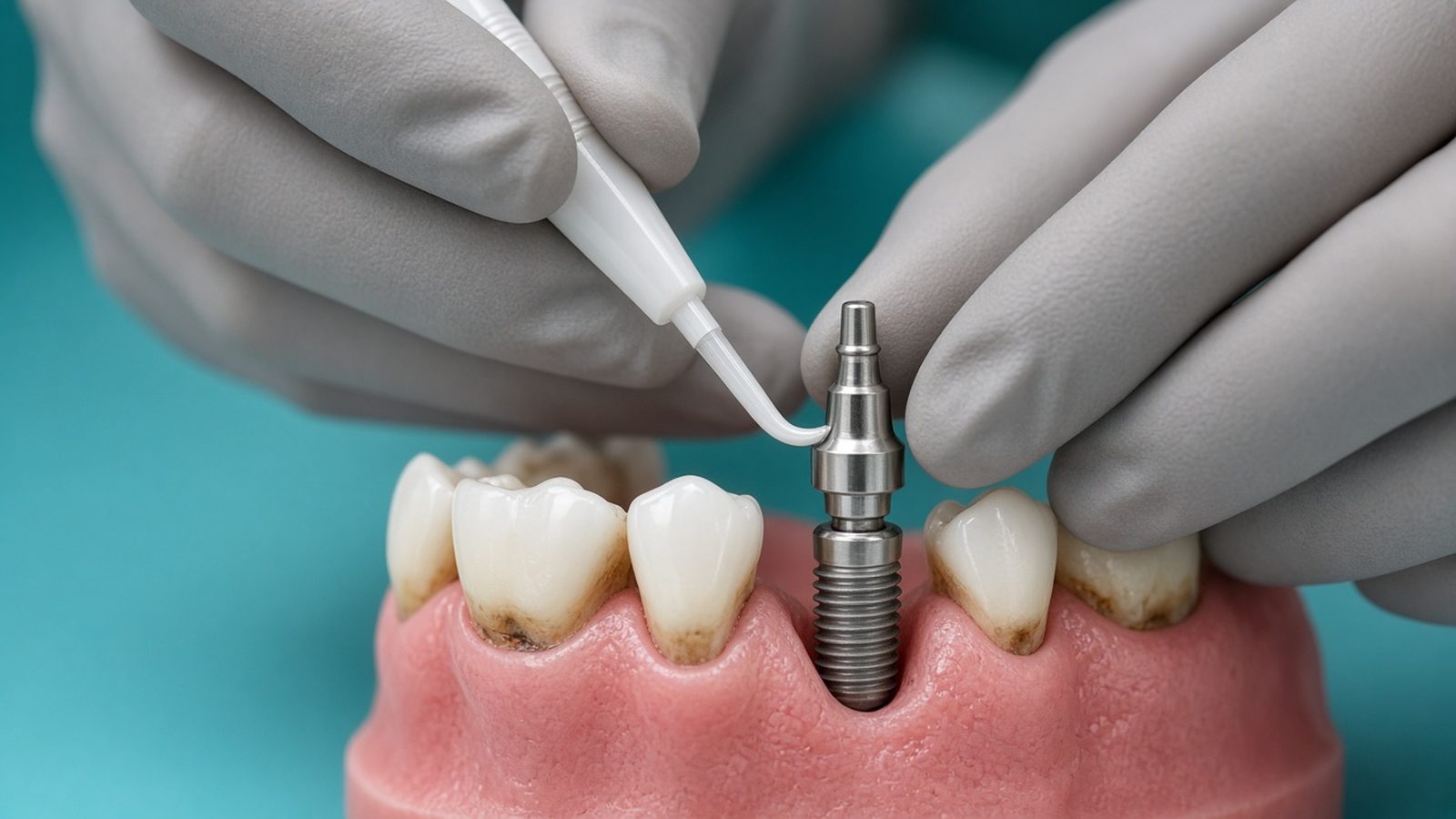
How peri-implantitis is treated, from the first deep cleaning to surgery, what changes under a full-arch bridge, and how San Antonio patients can plan care.
Bleeding around an implant when you brush, a sour taste that keeps coming back, gum that looks puffy next to one post of your bridge: these are the moments people start searching for peri-implantitis treatment. The good news is that treatment exists and often works. The harder truth is that it usually takes more than one visit, the bone that has already been lost does not simply grow back, and the right plan depends on how far the problem has gone. This guide walks through what peri-implantitis is, how dentists decide whether an implant can be treated, what nonsurgical and surgical treatment involve, what changes when the implant holds up a full-arch bridge, and how to plan care if you live in San Antonio, New Braunfels, Schertz or Boerne. Regional Implant Centers does not have an office in the San Antonio area. Our offices are in Hutto, near Austin, and in Katy, near Houston.
The short answer
Peri-implantitis is an infection-driven inflammation around an implant that destroys the bone holding it. Treatment usually starts with a thorough nonsurgical cleaning, then a re-check, and moves to surgery only if bleeding, pus or deep pockets remain. Many implants can be kept stable this way, but some cannot, and lost bone is rarely fully restored.
The earlier stage, peri-implant mucositis, affects only the gum and can usually be reversed with better cleaning at home and in the office. Once bone loss has started, the goal shifts from cure to control: stopping the damage, keeping the implant clean and watching it closely for the rest of its life.
Mucositis or peri-implantitis: why the name matters
Both conditions start the same way, with bacterial plaque collecting where the implant meets the gum. The difference is the bone. Mucositis leaves the bone alone; peri-implantitis eats into it.
The American Academy of Periodontology (AAP) describes peri-implant mucositis as inflammation limited to the soft tissue, with no bone loss, and says evidence suggests it may be reversible if it is caught early. In peri-implantitis, the inflammation reaches the bone supporting the implant, and the AAP notes that it usually requires surgical treatment. Signs look a lot like gum disease around natural teeth: red or tender gum around the implant and bleeding when you brush.
That distinction changes the plan. The 2023 clinical practice guideline from the European Federation of Periodontology (EFP), built from 13 systematic reviews and a formal expert consensus, calls peri-implantitis irreversible. Even after successful treatment, the implant is described as having "stable" peri-implantitis rather than being cured, because the lost support is not fully re-established. That is not a reason for despair. It is the reason follow-up visits never really stop once you have had it.
Signs that deserve an appointment, not a wait-and-see
Bleeding, swelling, pus, a bad taste, gum pulling back from the implant or a part that feels loose all deserve a call. Pain is often a late sign, so do not wait for it.
Peri-implantitis is frequently quiet. Many people feel very little until the bone loss is well along, which is why scheduled checkups and X-rays matter so much. Call your implant team if you notice:
- Bleeding from around an implant when you brush, floss or use a water flosser
- Gum that looks red, shiny or swollen next to an implant or along the edge of a bridge
- Pus, a salty or sour taste, or a bad smell that keeps returning from one area
- Gum receding so that metal or a gray edge starts to show
- A crown, bridge or overdenture that feels different, rocks or clicks
A loose implant, as opposed to a loose crown or bridge, is a different and more serious finding. Our article on how to avoid failed implant dentistry and costly mistakes covers the questions worth asking before treatment, and the evaluation below explains how a team tells these problems apart.
What usually causes it
Plaque is the starting point. Gum disease history, smoking, diabetes, leftover cement, a bridge that is hard to clean under and missed maintenance visits all make it more likely or harder to control.
The AAP lists a previous diagnosis of periodontal disease, poor plaque control, smoking and diabetes as risk factors. Two causes are worth singling out because they can often be fixed directly.
Leftover cement. Single crowns and some bridges are cemented onto the implant parts, and a small amount of cement can squeeze out below the gum where it is hard to see. In a 2009 study, periodontist Thomas Wilson used a dental endoscope to examine 42 implants with signs of disease and found excess cement at 34 of them, about 81 percent. Thirty days after the cement was removed, about 74 percent of the treated implants no longer showed clinical or endoscopic signs of inflammation. It was a small study in one practice, but it is why the EFP patient guidance tells dentists to check for cement deposits around an infected implant.
A prosthesis that is hard to clean. The EFP guideline recommends that implant teeth be designed so patients can reach the area with cleaning aids and so the dental team can probe and clean around each implant. Its experts describe the ideal underside of a fixed implant bridge as smooth, polished and convex, without a design that rests flat against the gum. When a bridge traps food and plaque that no brush can reach, treatment of the gum alone may not hold.
How a team decides whether an implant can be treated
The first question is not which treatment to use. It is whether the implant is treatable at all, based on how much bone is left, whether it is moving, the shape of the bone loss and what the implant supports.
The EFP guideline lays out that sequence plainly: once peri-implantitis is diagnosed, the dentist decides whether the affected implant is treatable; if so, nonsurgical therapy comes first, followed by a re-evaluation against set goals. A thorough evaluation usually includes:
- Gentle probing around the implant to measure pocket depth and check for bleeding or pus
- X-rays or 3D imaging to see how much bone is gone and the shape of the defect
- Comparison with earlier X-rays, if you can get them from the dentist who placed the implant
- A check of the crown or bridge: fit, cement, screws, bite and whether it can be cleaned
- A review of health and habits, such as smoking, blood sugar control and grinding
An implant that has lost most of its bone or is mobile is usually not a candidate for treatment aimed at saving it. Our offices use 3D CBCT imaging when indicated, which shows bone in three dimensions instead of the flat view of a standard X-ray.
Step one: nonsurgical treatment
The first step is a deep, implant-safe cleaning below the gum, often with antiseptic rinses or gels, plus fixing whatever is feeding the problem. Then the area is re-checked after several weeks.
The EFP patient guidance describes the first step as professional nonsurgical therapy together with chlorhexidine mouthwashes and gels to reduce bacterial deposits, along with a check for cement under the gum. At re-evaluation, usually after about six weeks, the dentist looks at whether bleeding and pocket depths have decreased. If they have, regular recall visits are set based on your risk. If bleeding and pus continue, the EFP suggests repeating the nonsurgical step before moving on, and in some cases antibiotics may be given to help control the infection first.
This stage is also when the "why" gets addressed. That might mean removing cement, adjusting a bite that overloads one implant, reshaping or remaking a bridge so it can be cleaned, a new home-care routine, or help quitting smoking. Skipping that part is one of the reasons infections come back.
Step two: surgical treatment when cleaning is not enough
If deep pockets with bleeding or pus remain after nonsurgical care, the next step is usually surgery: the gum is lifted so the implant surface can be cleaned directly, and the bone defect is then reshaped or, in some cases, rebuilt.
The EFP guideline says the surgical step must always include cleaning the implant surface after a flap is raised. Depending on what the surgeon finds, the patient guidance lists three main approaches, often combined:
- Regenerative surgery, which uses bone grafts to try to fill in certain kinds of defects
- Resective surgery, which removes bony ledges and smooths irregular bone so the area is easier to keep clean
- Implantoplasty, which smooths and polishes the exposed threads of the implant so plaque has less to cling to
The EFP also notes that thick, firm gum around an implant helps protect against bone loss, and that soft-tissue grafts, often taken from the palate, may be used when that tissue is missing. Results vary from patient to patient, and the guideline is direct about that. After surgery, the implant is re-evaluated, and if the goals are not met and the implant still seems maintainable, it may be treated again.
When the implant holds a full-arch bridge
With All-on-4 or All-on-X teeth, the bridge often has to come off so each implant can be examined and cleaned, and the bridge itself may need adjusting or replacing so the problem does not return.
A full-arch bridge covers the gum where the implants come through, which makes it harder for you to clean and harder for the team to see what is going on. Treatment may mean removing the prosthesis, sometimes more than once, and using a temporary arrangement while the tissue heals. If the underside of the bridge is part of the problem, the treatment plan may include reshaping it or making a new one with better access for cleaning. At our Katy office, laboratory technicians collaborate with the clinical team to support customized temporary and final restorations, and our in-house lab keeps the clinical and lab teams connected throughout.
One infected implant under a full arch does not automatically mean losing the whole bridge, and it does not guarantee the bridge will survive either. What happens depends on which implant is affected, how many healthy implants remain and how the bridge was designed. Our post on how prosthodontists design implant-supported teeth explains how those design choices are made.
When an implant cannot be saved
If an implant has lost too much bone, is loose, or keeps getting re-infected despite treatment, removing it is often the safer choice. Removal protects the bone around it and can make room for a better plan.
Taking out an implant is not the same as starting over. Depending on the bone left behind, the area may be grafted and given time to heal before a new implant is considered, the bridge may be modified to work on the remaining implants, or the plan may change to a different type of restoration. Both of our offices offer traditional dentures, snap-on implant overdentures and fixed full-arch teeth, and our bone and tissue reconstruction page explains how grafting fits in. Our article on why bone grafting may be needed before dental implants covers that step in more detail. Not every jaw can be rebuilt for a new implant, and an honest evaluation should tell you that up front.
Keeping it from coming back
After treatment, plan on more frequent checkups than before, careful daily cleaning around every implant and fast action on any new bleeding.
The EFP guideline says programs that follow peri-implantitis treatment may need to look different from routine maintenance, and it recommends regular probing to track bleeding and pocket depth over time. The U.S. Food and Drug Administration (FDA) puts the basic point simply: regularly cleaning an implant is very important for its long-term success. In practice, that usually means shorter intervals between professional cleanings, a home routine built for your specific bridge or crowns, and X-rays at agreed intervals to confirm the bone is holding. People with diabetes are asked to keep blood sugar under control, and quitting smoking helps healing and long-term stability.
How Regional Implant Centers evaluates and treats implant infections
At Regional Implant Centers, an implant infection visit starts with a full look at the site, the bone and the bite, and treatment is planned by a specialist team under our RISE Protocol, including for implants placed elsewhere.
Our Maintenance Packages page lists what an implant infection treatment visit includes: clinical evaluation of the affected implant site, radiographic assessment of bone levels, measurement of peri-implant pocket depths, mechanical debridement of the infected area, implant surface decontamination, antimicrobial therapy as indicated, occlusal evaluation and force adjustment, and follow-up monitoring of healing. Implant infection treatment is included once a year in our Silver and Gold maintenance tiers. Additional procedures such as anesthesia, sedation, CBCT or bone grafting are not included unless they are specified in your plan.
Dr. Dan Holtzclaw is a Board-Certified Diplomate of the American Board of Periodontology and the International Congress of Oral Implantologists, which means gum and bone health around implants sits squarely in his training. Dr. Enrique Tabarini is an oral and maxillofacial surgeon, and Dr. Polyxeni Konti is a prosthodontist who focuses on the teeth the implants support. Under our RISE Protocol, surgical and restorative planning happen together, which matters when the fix involves both the bone and the bridge.
Regional Implant Centers frequently evaluates patients who need correction of failed treatment performed elsewhere. If your implants came from another office, bring every record you can get: X-rays, scans, the implant brand and size if you know them, and your treatment notes. Our Hutto office offers bone grafting and sinus work, has CBCT imaging and has a dentist anesthesiologist on site. Our Katy office has surgical suites and imaging and is home to our in-house dental lab.
Regional Implant Centers does not offer a traditional implant warranty. Patients enroll in a required Maintenance Package within 30 days of final prosthesis delivery, and our implant warranty page explains why: implant outcomes depend on biology, healing, hygiene, habits, follow-up care and long-term maintenance, and there is no guarantee that implants or prosthetics will never need adjustment, repair or replacement.
Planning care from San Antonio
We do not have an office in the San Antonio area, so plan for more than one visit. Hutto is the shorter drive for most San Antonio-area patients, and Katy is a straight run east on I-10.
From San Antonio, New Braunfels and Schertz, the drive to Hutto runs up the I-35 corridor through San Marcos, and some drivers use the SH 130 toll road to stay east of central Austin. From Boerne or the west side of San Antonio, Katy sits off I-10. Peri-implantitis care has a few planning points of its own:
- Expect a sequence, not a single fix. Treatment usually means an evaluation, a nonsurgical visit, a re-check several weeks later and possibly surgery after that.
- Ask which visits must be in person. A first conversation can happen by phone, but probing, imaging and cleaning cannot.
- Gather records before the first trip. Old X-rays help show how fast the bone has changed.
- Keep a local dentist in the loop. Ask how records and findings will be shared so local care and specialist care do not work at cross purposes.
- Think long term. Maintenance visits for full-arch implants take place at Regional Implant Centers unless your written agreement states otherwise, so factor the drive into how often you would come in.
Insurance and financing
Medical insurance may help with some surgical parts of treatment, but it does not cover implants or implant teeth through our office, and coverage is never guaranteed.
Our team bills medical insurance only for surgical professional services, such as extractions, bone grafting and alveoloplasty. Implants, temporaries and the final prosthesis are billed to the patient separately. Some PPO plans with oral surgery coverage may be worth checking, but coverage is never guaranteed, so please verify your benefits with us before treatment. We cannot bill Federal Employee Program (FEP) Blue Cross Blue Shield plans. Our insurance team can review your plan, and financing is available through independent third-party companies for qualified patients.
Questions to ask about an infected implant
Take these to any appointment, with us or another office.
- Is this mucositis or peri-implantitis, and how much bone has been lost?
- Do you think this implant is treatable, and what makes you think so?
- What is causing it in my case: cement, cleaning access, my bite, my health or something else?
- What does the nonsurgical step involve, and when will you re-check it?
- If surgery is needed, which approach do you expect and why?
- Will my crown or bridge need to come off, be changed or be replaced?
- If the implant cannot be saved, what are my options for that spot?
- How often should I come in afterward, and what should I watch for at home?
Frequently asked questions
Can peri-implantitis be cured?
Peri-implant mucositis, the gum-only stage, can usually be reversed. Once bone has been lost, peri-implantitis is considered irreversible, but treatment can often stop it and keep the implant stable with regular follow-up. Some implants still need to be removed.
Is peri-implantitis treatment painful?
The nonsurgical step is similar to a deep cleaning, and the area is often numbed first. Surgery involves some soreness and swelling for a few days. Sedation options can be discussed for surgical treatment.
Can an infected implant heal on its own?
No. The bacteria and anything feeding them, such as plaque or leftover cement, have to be removed. Rinses alone do not reach below the gum well enough to stop bone loss.
Do I lose my full-arch bridge if one implant gets infected?
Not necessarily. It depends on which implant is affected, how many healthy implants remain and how the bridge was designed. The bridge may need to come off for treatment and may need to be adjusted or remade.
Do you have an office in San Antonio?
No. Our offices are in Hutto, near Austin, and in Katy, near Houston, and Hutto is the shorter drive for most of the San Antonio area. You can start with a phone consultation and then come in for an exam and imaging.
Get an infected implant checked by a specialist team
If an implant is bleeding, swelling or just does not feel right, an evaluation can show whether it is mucositis or peri-implantitis, whether the implant can be treated and what your bridge or crown needs. A consultation includes a clinical evaluation and, when indicated, 3D imaging, plus an Insurance Advantage benefit review for qualified patients. Schedule a consultation by phone or in person, choosing our Hutto office, the closer drive for most of the San Antonio area, or our Katy office, or call (832) 632-7037.
Sources & Resources
- Herrera D, Berglundh T, Schwarz F, et al. Prevention and treatment of peri-implant diseases: the EFP S3 level clinical practice guideline. Journal of Clinical Periodontology, 2023;50 Suppl 26:4-76.
- European Federation of Periodontology. Peri-implant disease: Treatment
- American Academy of Periodontology. Peri-Implant Diseases
- Wilson TG Jr. The positive relationship between excess cement and peri-implant disease: a prospective clinical endoscopic study. Journal of Periodontology, 2009;80(9):1388-1392.
- U.S. Food and Drug Administration. Dental Implants: What You Should Know
This article is general patient education and is not a diagnosis or treatment plan. Whether an infected implant can be treated, and how, depends on an individual clinical evaluation. Regional Implant Centers has offices in Katy and Hutto, Texas, and does not have an office in the San Antonio area. Outcomes vary, and fixed implant teeth are not appropriate for every patient.
Ready to Learn What Is Possible?
Schedule a consultation with Regional Implant Centers.
Schedule ConsultationFrequently Asked Questions
Can peri-implantitis be cured?
Peri-implant mucositis, the gum-only stage, can usually be reversed. Once bone has been lost, peri-implantitis is considered irreversible, but treatment can often stop it and keep the implant stable with regular follow-up. Some implants still need to be removed.
Is peri-implantitis treatment painful?
The nonsurgical step is similar to a deep cleaning, and the area is often numbed first. Surgery involves some soreness and swelling for a few days. Sedation options can be discussed for surgical treatment.
Can an infected implant heal on its own?
No. The bacteria and anything feeding them, such as plaque or leftover cement, have to be removed. Rinses alone do not reach below the gum well enough to stop bone loss.
Do I lose my full-arch bridge if one implant gets infected?
Not necessarily. It depends on which implant is affected, how many healthy implants remain and how the bridge was designed. The bridge may need to come off for treatment and may need to be adjusted or remade.
Do you have an office in San Antonio?
No. Our offices are in Hutto, near Austin, and in Katy, near Houston, and Hutto is the shorter drive for most of the San Antonio area. You can start with a phone consultation and then come in for an exam and imaging.
This content is educational and not a substitute for a consultation.