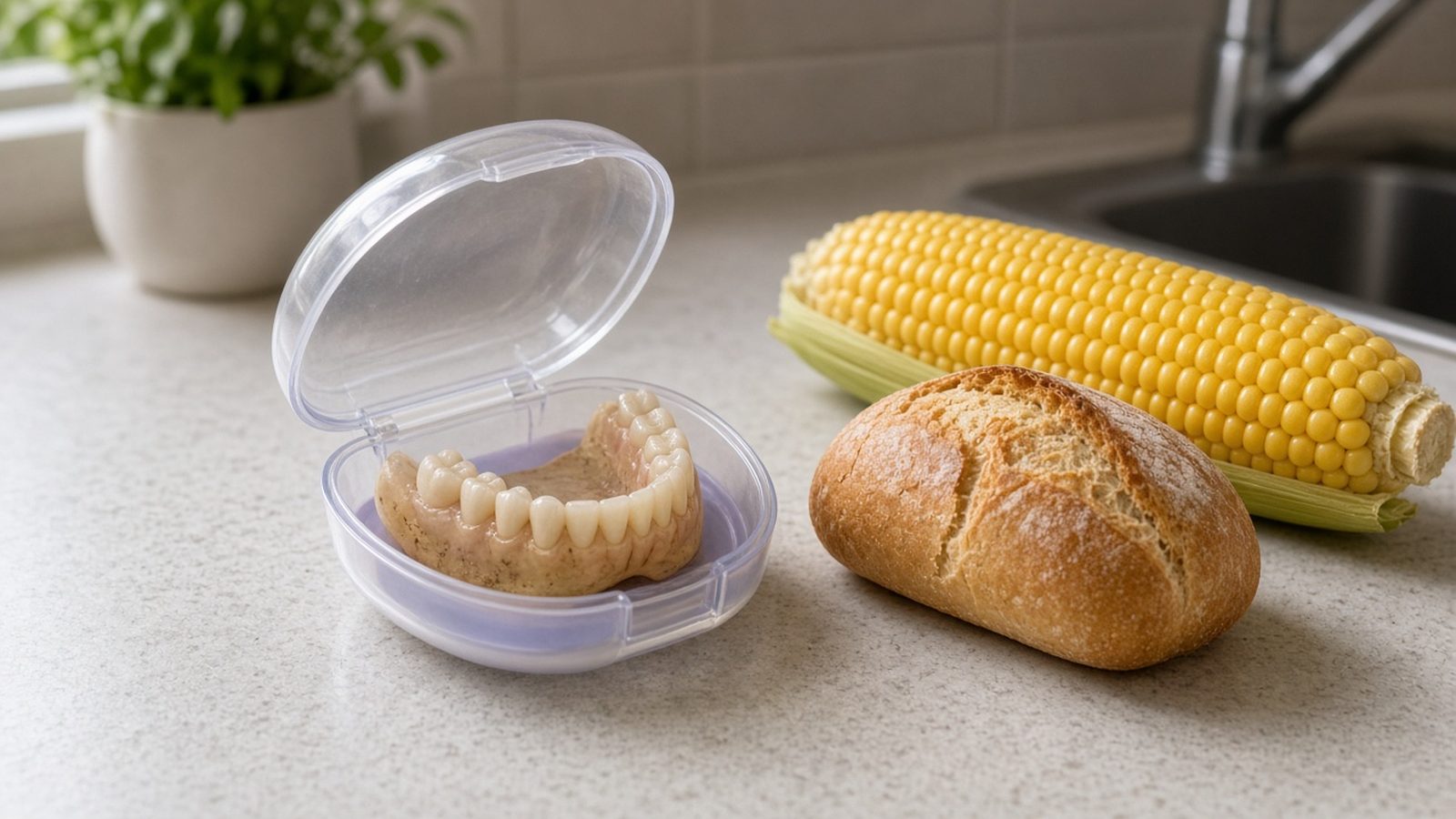
Bone Loss & Jaw Health
Severe Lower-Jaw Bone Loss: Full-Arch Options When the Lower Jaw Is Very Thin. A Guide for Houston Patients
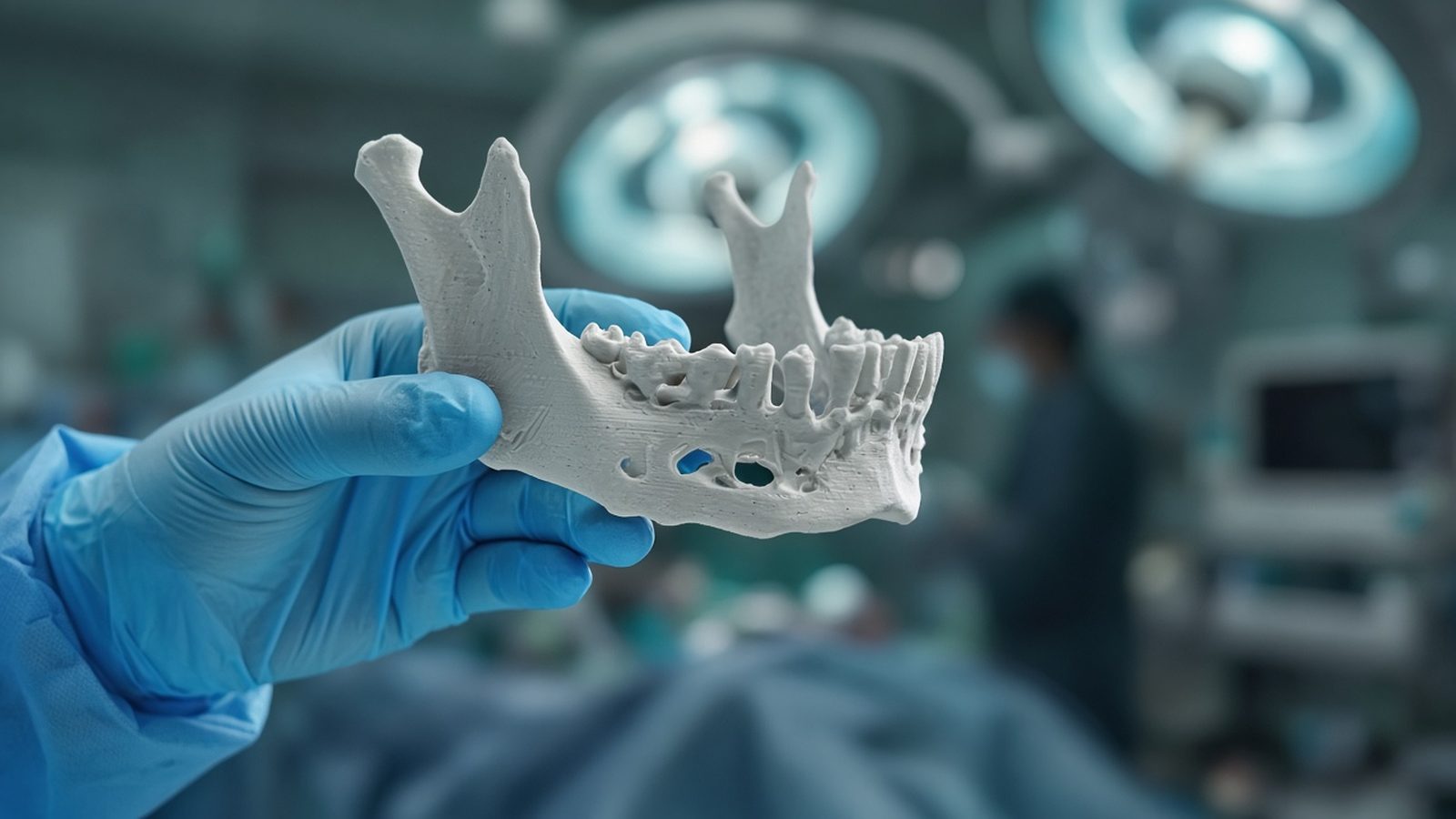
A very thin lower jaw does not always rule out implants. Learn how it is measured and when overdentures, fixed teeth, short implants or grafting fit.
If you have worn a lower denture for many years, you may have heard some version of "there isn't much bone left down there." Severe lower jaw bone loss is common after long-term tooth loss, and it is the main reason a lower denture slides, rocks and rubs no matter how often it is relined. A thin lower jaw does not automatically rule out implants, but it changes which options are realistic and which risks deserve the most attention. This guide explains how the lower jaw shrinks, what a 3D scan has to measure, and how overdentures, fixed full-arch teeth, short or narrow implants and bone grafting compare when the bone is very thin. It is written for patients in Katy, Cypress, Sugar Land, Richmond, Fulshear, Memorial and the rest of the Houston area who are weighing implants for the lower jaw.
The short answer
Even a very thin lower jaw usually keeps its most usable bone in the front, between the two points where the nerves exit. Many plans for severe lower-jaw bone loss start there: a snap-on overdenture held by implants in the front of the jaw, or fixed full-arch teeth when there is enough height and room. Short or narrow implants and bone grafting fill specific gaps. A 3D CBCT scan, not a regular X-ray, decides which of these fit your jaw, and some jaws are too thin for any of them to be done safely.
The answer also depends on things that have nothing to do with surgery: how much lip support you have lost, the condition of your upper teeth or upper denture, how easily you can clean, and whether you want teeth that come out at night or teeth that stay in.
How a lower jaw gets so thin
When teeth are lost, the ridge of bone that held them slowly shrinks, first in width and then in height. The thick base of the jaw below it changes much less, which is why options often remain even after years of denture wear.
The jaw has two parts. The alveolar ridge is the bone that grew around the tooth roots, and the basal bone is the heavier frame of the jaw underneath. In a classic 1988 study of 300 dried skulls, Cawood and Howell found that the basal bone stays relatively stable after the teeth are gone, while the ridge changes shape in a predictable pattern, losing both height and width. Clinicians still use their classification to describe how far that process has gone.
In everyday terms, a lower ridge that once looked like a rounded hill becomes a narrow, knife-edge crest and then flattens. That is why so many long-term lower denture wearers say their denture floats on top of the gums.
A denture does not stop this process. A 2003 study in the International Journal of Oral and Maxillofacial Implants measured the back of the lower jaw over five years. Under conventional dentures, the ridge lost an average of 1.63 mm of height. In patients whose lower denture was held by two implants, the loss averaged 0.69 mm, almost a millimeter less. Years without teeth did not predict the rate, so two people with the same denture history can have very different jaws.
What your scan has to measure
A cone beam CT (CBCT) scan shows the jaw in three dimensions, so the team can measure width as well as height, see where the nerve runs and exits, and check how much space there is for the teeth themselves. A flat panoramic X-ray cannot show width at all.
Those measurements answer different questions:
- Width. A knife-edge ridge may be tall enough for an implant but too narrow to hold a standard-diameter one without thinning the bone walls around it.
- Height in the front. This is the bone between the nerve exits, where most lower full-arch and overdenture plans place implants. It also bears on the fracture risk discussed below.
- Height in the back. In the back of the lower jaw, the nerve canal runs through the bone, so the usable height is only the bone above the canal, minus a safety margin.
- Where the nerve exits. As the ridge shrinks, the openings where the nerve leaves the jaw can end up close to the top of the ridge. A denture pressing on that spot can cause sharp pain or tingling in the lip, and an implant plan has to keep clear of it.
- Room for the teeth. The space between the lower ridge and the upper teeth sets how thick the new teeth and attachments can be. Severe bone loss usually leaves plenty of it.
Our CBCT imaging is used to "evaluate bone structure, jaw anatomy, sinuses, nerves, existing teeth, and possible implant sites," and for a deeper look at how the scan works, see what is cone beam CT.
Why the front of the lower jaw is usually the starting point
Between the two nerve exits, the front of the lower jaw is usually clear of the main nerve canal and keeps more height than the back. That is why both overdentures and fixed lower full arches most often rely on implants placed there.
When the back of the jaw has thinned to a few millimeters above the nerve, implants in the molar area usually mean grafting, very short implants or moving the nerve. Keeping the implants in the front avoids most of that. Four-implant fixed layouts, often called All-on-4, angle the back two implants so their tops emerge farther back under the bridge while their tips stay in front of the nerve exits. Overdentures can use as few as two implants in the same zone.
The trade-off is that a bridge supported only in the front has to limit how far its back teeth extend, and a jaw that is thin even in front narrows the choices further.
Option 1: A snap-on overdenture held by implants in the front
A lower overdenture clips onto implants, usually two to four of them, placed where the bone is strongest. It still comes out for cleaning, but it stops sliding, and in research on extremely thin lower jaws it has some of the strongest long-term evidence.
A lower overdenture on two implants has been recommended as the first-choice standard of care for people with no lower teeth since a 2002 consensus statement from a group of clinicians and researchers meeting at McGill University. For very thin jaws, the most useful study comes from the University Medical Center Groningen in the Netherlands. Stellingsma and colleagues followed 60 patients with extremely resorbed lower jaws for ten years. Each received an implant-retained overdenture by one of three routes: a large implant passing through the whole jaw, a bone graft from the patient's own body followed by four implants, or four short implants placed without grafting. Implant survival at ten years was 76.3 percent, 88 percent and 98.8 percent respectively, and 30 percent, 5 percent and 0 percent of patients needed further surgery. The authors concluded that short implants with an overdenture should be the first choice for patients with extremely resorbed lower jaws.
In a thin jaw, the pink base of an overdenture can replace lost gum and bone and support the lower lip, the implants are easy to reach for cleaning, and if an implant ever has trouble, the denture can often be adapted. The Kordatzis study above also suggests it slows the shrinking of the back of the jaw. On the other hand, it is still removable, the attachments wear and need replacing, and some people simply do not want teeth they take out at night.
Option 2: Fixed full-arch teeth on implants in the front
A fixed lower full arch, screwed onto four or more implants, can work in a jaw with significant bone loss as long as the front has enough height and width for the implants and the jaw can handle the surgery safely.
The longest follow-up of the four-implant lower approach comes from the clinic in Lisbon where it was developed. In a 2019 study of 471 patients with fixed lower bridges on four implants, followed for 10 to 18 years, cumulative bridge survival was 98.8 percent and implant survival was 93 percent. The same study recorded a 36.7 percent incidence of mechanical complications, and smokers and patients with earlier biological complications were more likely to lose more than 3 mm of bone around their implants. Almost a third of patients were lost to follow-up, and the study did not report results separately for very thin jaws, so its figures describe the approach in general.
In a severely resorbed jaw, the questions for a fixed plan are practical. Is there room for four or more implants of a sensible size between the nerve exits? Is the front of the jaw tall enough that four implant sites do not weaken it too much? Can you clean under a bridge with a large gum-colored section? If the answers point the wrong way, an overdenture is not a lesser choice; it may simply be the safer one.
Option 3: Short or narrow implants
Short implants are designed for jaws that have lost height, and narrow implants for jaws that have lost width. Both can avoid a graft in the right situation, but they are chosen for specific measurements, not as a shortcut.
Short implants are what made the third group in the Groningen study work: four short implants in the front of extremely resorbed jaws, with no grafting and the best ten-year results of the three routes. In the back of the lower jaw, short implants are also used to stay above the nerve canal when the remaining height is limited.
Narrow and mini implants answer the knife-edge problem, where the ridge has height but not width. A 2024 study from the University of Bern followed 20 people with horizontally thin lower jaws who each received four one-piece mini implants, 1.8 mm wide, holding an overdenture. Fourteen were followed for the full ten years; all 56 of their implants were still in place, and 93 percent of the overdentures were still in use. It is a small study, and most mini implants are designed to hold overdentures rather than fixed bridges, but it shows why a narrow ridge is not always a reason to graft.
Whether a short or narrow implant suits you depends on bone quality, how many implants share the load, what they hold and how hard you bite.
Option 4: Rebuilding the bone first
Bone grafting can add width or height before implants go in, or alongside them. It adds healing time and another surgical site, so it is usually chosen when the teeth need to go somewhere the existing bone cannot support, or when the jaw itself needs reinforcing.
Our bone and tissue reconstruction services include bone grafting, ridge augmentation and jawbone reconstruction, and some patients need what the page calls "staged foundation development before full mouth dental implants or implant-supported restoration can be planned safely." The same page is clear that "reconstruction is not required for every patient."
The Groningen results cut both ways. Grafting followed by implants reached 88 percent implant survival at ten years with a 5 percent retreatment rate, but in those extremely resorbed jaws it did not beat short implants without a graft. Grafting can still be the right call when a fixed bridge needs support farther back, when the ridge is too narrow for any implant, or when the jaw needs strengthening. For the basics of why grafts are used, read why bone grafting may be needed before dental implants.
Some surgeons also move the nerve aside to make room for implants in the back of the jaw. Changes in lip and chin sensation are its most common complication, so it is usually considered only after simpler options are ruled out.
The fracture question: why jaw height matters
A very thin lower jaw is weaker than a normal one, and in rare cases it can fracture during or after implant treatment. The risk is concentrated in the thinnest jaws, which is why height at the front of the jaw is measured before any plan is chosen.
The FDA lists injury during surgery, "for example, fracture of surrounding jawbone," among the known risks of dental implant systems. One of the largest estimates of how often this happens comes from a survey of oral and maxillofacial surgery departments in the Netherlands covering 1980 to 2007. They recorded 157 lower-jaw fractures associated with implant treatment and estimated an incidence of less than 0.05 percent among roughly 475,000 patients treated with implants for an overdenture. Every one of those fractures occurred in a jaw less than 10 mm tall at the front, and almost half of the fractured jaws had complications while healing. The authors concluded that patients with jaws 10 mm tall or less should be properly informed of the advantages and disadvantages before implants are placed.
The risk is small, but it is one reason implant size, number and position are planned against the thickness of the jaw, why a softer diet matters while implants heal, and why your consent conversation should cover it if your jaw is in that range. Fractures a year or more after treatment were linked to infection around implants, injuries and implant removal, one more reason maintenance matters.
Could zygomatic implants help the lower jaw?
No. Zygomatic and pterygoid implants anchor in the cheekbone and the back of the upper jaw. They are options for severe upper-jaw bone loss, not for the lower jaw.
The question comes up because "not enough bone" is often treated as one problem, but the two jaws lose bone differently and are rebuilt differently. At Regional Implant Centers, zygomatic and pterygoid implants are performed by Dr. Dan Holtzclaw and Dr. Enrique Tabarini for upper-jaw cases where they are appropriate, which is not every patient. If both of your jaws have lost bone, each arch gets its own plan.
Fixed or removable when the jaw is very thin
Both can work, and neither is right for everyone. The bone sets the limits, and within those limits the choice is about daily life, cleaning and how you want your teeth to feel.
| Implant overdenture | Fixed full-arch bridge | |
|---|---|---|
| Typical implants in a thin lower jaw | Two to four, in the front | Four or more, mostly in the front |
| Comes out at home | Yes, for cleaning and at night | No, only your dental team removes it |
| Replacing lost gum and lip support | Pink denture base, easy to adjust | Gum-colored section built into the bridge |
| Cleaning | Implants and attachments are easy to reach | Daily cleaning under the bridge |
| If an implant later fails | Denture can often be adapted | Bridge may need modifying or remaking |
Some patients choose an overdenture because their jaw is at the thin end of the range, others because they value easy cleaning even when fixed teeth are possible. Our Katy full-mouth implants page explains how fixed implant teeth compare with traditional dentures.
Questions to ask at your consultation
Whether you are seeing an office in Katy, the Energy Corridor, Sugar Land or the Medical Center, these questions show how a plan accounts for a thin lower jaw:
- How tall and how wide is my jaw at the front, and how much bone is above the nerve canal at the back?
- Where do my nerve exits sit, and is my denture pressing on them now?
- Is my jaw in the range where fracture risk needs special planning, and how does that change the plan?
- What length and width of implants are you planning, how many, and why?
- Could an overdenture give me a similar result with less surgery, or is fixed teeth realistic for my jaw?
- If grafting is recommended, what is it for, how long does it add, and what happens if it does not take?
A thin jaw is not a reason to panic, but it is a reason for the plan to be specific.
How our team plans a very thin lower jaw
At Regional Implant Centers, the prosthodontist plans the final teeth first, the surgical team measures the jaw on 3D imaging, and the plan is built around what your bone can safely support. Some jaws are best served by an overdenture, some by fixed teeth, and some need grafting first.
That order is the core of our RISE Protocol. Your prosthodontist first "maps out bite, facial support, speech, and the long-term plan for your new teeth before surgery begins," which matters in a thin jaw because so much lip and facial support has been lost with the bone. Our SegMark Workflow "aligns CBCT imaging, intraoral scans, bite information, facial references, and restorative goals into one coordinated digital plan." For how that bone-first planning works across the team, see specialist-led planning for bone and tissue reconstruction and advanced technology for bone and tissue reconstruction planning.
On surgery day, the oral surgeon concentrates on the implants and any grafting while a dedicated anesthesia provider concentrates on your safety, comfort and monitoring. Many patients leave surgery with a fixed temporary set of teeth the same day when their treatment plan shows that immediate teeth are appropriate; in a very thin jaw, the plan may call for a different sequence, and you will know which before surgery. Both of our offices offer traditional dentures, snap-on implant overdentures and fixed full-arch teeth, so a thin jaw is not steered toward one answer.
Final teeth are made in our in-house lab at the Katy office, where technicians work beside the surgical and restorative team, and seeing the patient in person helps refine tooth shape, shade, lip support and smile line. Before any treatment begins, you receive a detailed written treatment plan outlining the recommended care, estimated insurance benefits, financing options and your expected out-of-pocket investment. We do not offer a traditional implant warranty. Long-term care comes through a required Maintenance Package, and as our implant warranty page explains, there is no guarantee that implants or prosthetics will never need adjustment, repair or replacement.
Visiting our Katy office
Our Katy office, at 707 S Fry Rd, Suite 150, offers CBCT imaging, surgical suites and in-house lab support, so a thin lower jaw can be scanned, planned and restored in one place.
The office serves patients from Katy, Cypress, Sugar Land, Richmond, Fulshear, Memorial and the rest of West Houston. Our prosthodontist, Dr. Polyxeni Konti, sees patients at the Katy office. See our Katy location page for directions, or start with a phone consultation from home. Austin-area patients are seen at our Hutto office, which also has CBCT imaging, performs bone grafting and has a dentist anesthesiologist on site.
Bring the denture you wear now, any X-rays or scans you have and a list of medications. If another office said your lower jaw is too thin for implants, bring that too. A second look can confirm that answer or find a different route, and if your jaw cannot safely support implants, we will say so and talk through how to make a denture as comfortable as possible.
Frequently asked questions
Can you get implants with severe bone loss in the lower jaw? Often, yes. Even when the back of the lower jaw is very thin, the front between the nerve exits usually keeps usable bone. Short implants holding an overdenture have strong ten-year results in extremely resorbed lower jaws, and fixed teeth are possible when there is enough height and width. A 3D CBCT scan decides what is realistic, and some jaws are too thin for implants to be placed safely.
Is All-on-4 possible if my lower jaw is very thin? Sometimes. A lower All-on-4 places its implants in the front of the jaw and angles the back two, so it can avoid thin bone over the nerve. It still needs enough height and width in front for four implants and room for the bridge. If the jaw is very thin, an overdenture on implants, or grafting first, may be the safer choice.
Do I need a bone graft for implants in my lower jaw? Not always. Short or narrow implants can avoid a graft in the right measurements, and in a ten-year study of extremely thin lower jaws, short implants without grafting did better than grafting followed by implants. Grafting is still used when a fixed bridge needs support farther back, when the ridge is too narrow for any implant, or when the jaw needs strengthening.
Can a thin lower jaw break during implant surgery? It is rare. A survey of Dutch oral surgeons estimated fewer than 1 in 2,000 patients treated with implants for an overdenture had a related fracture, and every fracture occurred in a jaw less than 10 mm tall at the front. If your jaw is in that range, the risk should be part of your consent discussion and the plan.
Why does my lower denture hurt in one spot near my chin? As the lower ridge shrinks, the openings where the nerve leaves the jaw can end up near the top of the ridge, and a denture pressing there can cause sharp pain or tingling in the lip. Sore spots also come from a poor fit. Have it checked; adjusting the denture may help, and implants planned around the nerve exits can take the pressure off.
Talk with our Katy team about your lower jaw
If you live in Katy, Cypress, Sugar Land, Richmond, Fulshear or elsewhere in the Houston area and have been told your lower jaw is too thin, the first conversation can happen by phone. Schedule a consultation by phone or in person, choosing Katy or Hutto, or call (832) 632-7037. Bring your current denture and any scans or X-rays you have. Qualified patients receive a complimentary consultation, advanced CBCT scan and insurance benefits evaluation, and by the end of the appointment you will have a clear understanding of your next steps.
Sources & Resources
- U.S. Food and Drug Administration: Dental Implants: What You Should Know
- Cawood JI, Howell RA. A classification of the edentulous jaws. International Journal of Oral and Maxillofacial Surgery, 1988;17(4):232-236.
- Kordatzis K, Wright PS, Meijer HJ. Posterior mandibular residual ridge resorption in patients with conventional dentures and implant overdentures. International Journal of Oral and Maxillofacial Implants, 2003;18(3):447-452.
- Feine JS, Carlsson GE, Awad MA, et al. The McGill consensus statement on overdentures. Mandibular two-implant overdentures as first choice standard of care for edentulous patients. Gerodontology, 2002;19(1):3-4.
- Stellingsma K, Raghoebar GM, Visser A, Vissink A, Meijer HJ. The extremely resorbed mandible, 10-year results of a randomized controlled trial on 3 treatment strategies. Clinical Oral Implants Research, 2014;25(8):926-932.
- Malo P, de Araujo Nobre M, Lopes A, Ferro A, Botto J. The All-on-4 treatment concept for the rehabilitation of the completely edentulous mandible: a longitudinal study with 10 to 18 years of follow-up. Clinical Implant Dentistry and Related Research, 2019;21(4):565-577.
- Schenk N, Bukvic H, Schimmel M, Abou-Ayash S, Enkling N. One-piece mini dental implant-retained mandibular overdentures: 10-year clinical and radiological outcomes. Journal of Functional Biomaterials, 2024;15(4):99.
- Soehardi A, Meijer GJ, Manders R, Stoelinga PJ. An inventory of mandibular fractures associated with implants in atrophic edentulous mandibles: a survey of Dutch oral and maxillofacial surgeons. International Journal of Oral and Maxillofacial Implants, 2011;26(5):1087-1093.
This article is general education, not a diagnosis or treatment recommendation. Whether implants, grafting, an overdenture or fixed teeth are appropriate, and the timeline and cost of treatment, depend on an individual clinical evaluation and imaging. Not every jaw can be treated with implants. Insurance coverage is never guaranteed, and financing is provided by independent third-party companies. Regional Implant Centers has offices in Katy and Hutto, Texas only.
Ready to Learn What Is Possible?
Schedule a consultation with Regional Implant Centers.
Schedule ConsultationFrequently Asked Questions
Can you get implants with severe bone loss in the lower jaw?
Often, yes. Even when the back of the lower jaw is very thin, the front between the nerve exits usually keeps usable bone. Short implants holding an overdenture have strong ten-year results in extremely resorbed lower jaws, and fixed teeth are possible when there is enough height and width. A 3D CBCT scan decides what is realistic, and some jaws are too thin for implants to be placed safely.
Is All-on-4 possible if my lower jaw is very thin?
Sometimes. A lower All-on-4 places its implants in the front of the jaw and angles the back two, so it can avoid thin bone over the nerve. It still needs enough height and width in front for four implants and room for the bridge. If the jaw is very thin, an overdenture on implants, or grafting first, may be the safer choice.
Do I need a bone graft for implants in my lower jaw?
Not always. Short or narrow implants can avoid a graft in the right measurements, and in a ten-year study of extremely thin lower jaws, short implants without grafting did better than grafting followed by implants. Grafting is still used when a fixed bridge needs support farther back, when the ridge is too narrow for any implant, or when the jaw needs strengthening.
Can a thin lower jaw break during implant surgery?
It is rare. A survey of Dutch oral surgeons estimated fewer than 1 in 2,000 patients treated with implants for an overdenture had a related fracture, and every fracture occurred in a jaw less than 10 mm tall at the front. If your jaw is in that range, the risk should be part of your consent discussion and the plan.
Why does my lower denture hurt in one spot near my chin?
As the lower ridge shrinks, the openings where the nerve leaves the jaw can end up near the top of the ridge, and a denture pressing there can cause sharp pain or tingling in the lip. Sore spots also come from a poor fit. Have it checked; adjusting the denture may help, and implants planned around the nerve exits can take the pressure off.
This content is educational and not a substitute for a consultation.