Cost & Financing
Full-Arch Implant Payment Stages: When Houston and Katy Patients Pay From Consult to Final Teeth
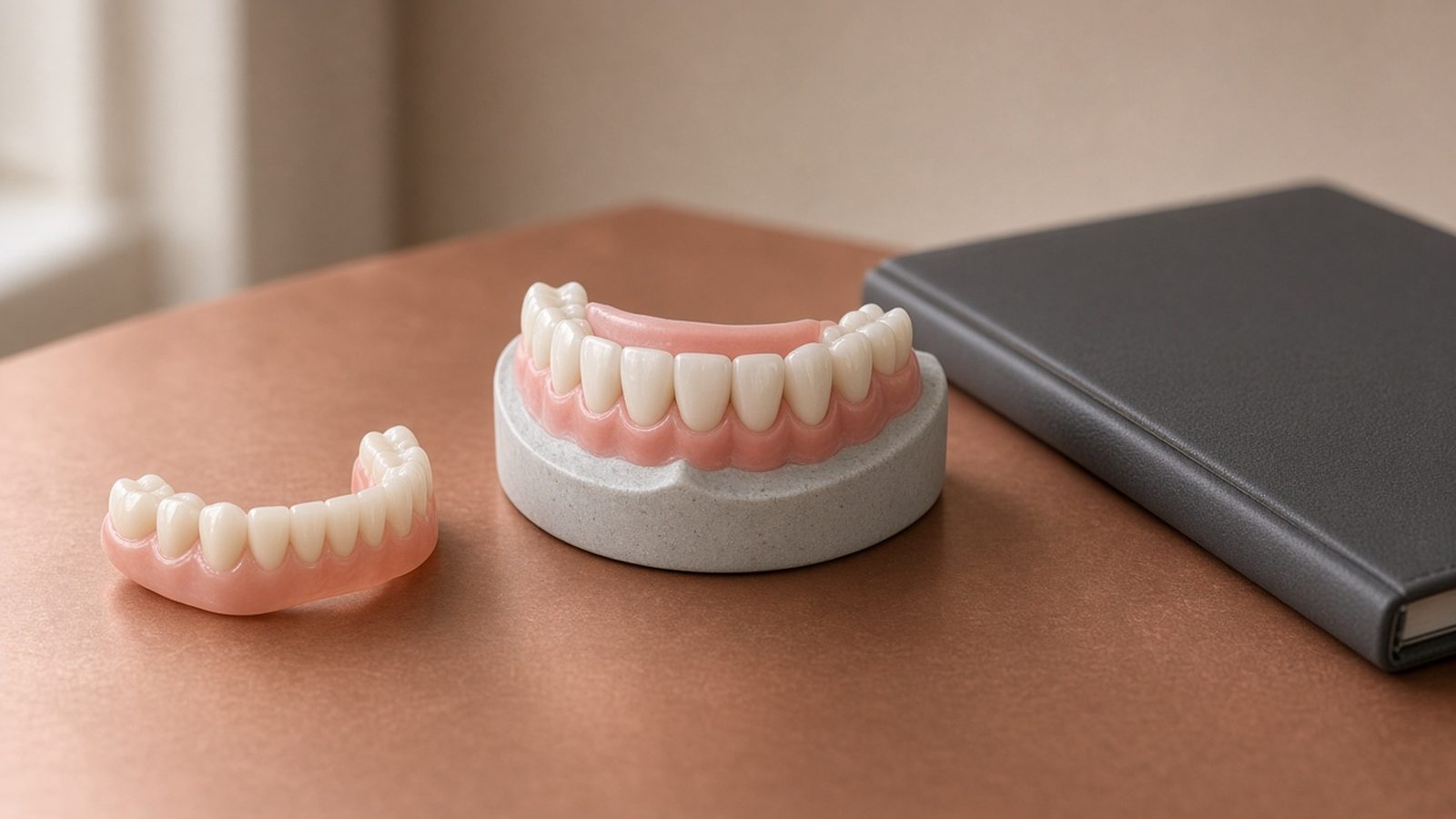
Houston and Katy payment stages for full-arch implants: when money is due from the $25 consult through surgery, temporary teeth, finals and maintenance.
If you live in Houston, Katy, Cypress, Sugar Land, Richmond, Fulshear or the Memorial area and you are pricing full-arch dental implants, the sticker shock is only half the story. Full-arch implant payment stages matter just as much as the total: when the consultation fee is due, when a deposit holds a surgery date, what is owed on the day you get temporary teeth, what is left when the final arch is delivered, and when maintenance billing starts. This guide walks through that calendar for Houston-area patients planning care at our Katy office, without quoting a public treatment price.
It is not a city-swap of our Dallas-Fort Worth travel budget article, and it is not another list of cost factors. For what drives the estimate itself, see what affects the cost of full-mouth dental implants in Houston. For how to read a written quote line by line, see what a full-arch implant quote should include. This piece answers a different question: when the money tends to come due across the journey.
The short answer
Full-arch treatment is paid across stages that roughly follow the clinical timeline: consultation, written plan and benefits review, any amount due to schedule surgery, surgery day with temporary teeth, healing adjustments, final arch delivery, then ongoing maintenance. Ask for a written payment schedule before you commit. Match savings, insurance estimates and financing to those dates, and do not treat a monthly financing payment as the whole story.
Why a stage map beats a single number
A single "per arch" figure rarely tells you when cash or financing draws are needed, or which parts of the plan may be billed to medical insurance versus paid by you.
Full-arch care is not one billable event. Imaging, planning, extractions, implant placement, anesthesia, temporary teeth, the final prosthesis and maintenance each land at different times. The U.S. Food and Drug Administration notes that healing of the implant body may take several months or longer, and that patients typically have a temporary restoration in place during that period. That clinical reality is why payment timing and treatment timing often travel together.
Houston competitors often advertise a package price, a monthly payment or a deposit to lock a surgery date. Those headlines can be useful for orientation, but they still leave the calendar vague. A clearer plan answers: what is due now, what is due before surgery, what is due on surgery day, what is due at final delivery, and what becomes a recurring cost afterward.
A payment-stage map for a typical full-arch case
Use this as a planning checklist, not as Regional Implant Centers' published fee schedule. Your written plan controls the amounts and dates.
| Stage | What usually happens clinically | Money questions to ask |
|---|---|---|
| 1. Consultation | Exam, history, discussion of options | Is the consultation fee credited later? What imaging is included that day? |
| 2. Written plan and benefits review | Line-item plan, medical and dental benefit check, financing options | When will I receive the written plan? How long does the estimate hold? |
| 3. Holding the surgery date | Medical clearance if needed; records and lab prep | Is a deposit required to schedule? Is any of it refundable if the plan changes? |
| 4. Surgery day | Extractions as needed, implants, temporary teeth, anesthesia | What must be paid or financed before surgery starts? What if insurance pays less than estimated? |
| 5. Healing period | Soft diet, follow-ups, temporary adjustments | Are routine adjustments included? What would trigger a new charge? |
| 6. Final arch delivery | Temporary removed; final monolithic zirconia or titanium-reinforced arch seated | What balance is due at delivery? Does financing already cover this stage? |
| 7. Maintenance | Cleanings, checks, optional extended maintenance package | When does maintenance billing start? What is covered in the first year vs later? |
A typical Regional Implant Centers case takes about 4 to 5 total visits, with final arches delivered in about 1 to 4 months depending on healing and progress. Every patient leaves surgery with same-day temporary teeth. The visit count is general; staged grafting or medical clearance can add appointments without changing the idea that money and milestones travel together.
Stage 1: the consultation (known fee)
The consultation at Regional Implant Centers costs $25. It is not free, complimentary or "no cost."
That fee covers the appointment itself. It does not mean you have accepted a treatment plan. Bring a list of questions, a current medication list and any recent dental X-rays or CBCT scans you already have. Both our Katy and Hutto offices have mobile CBCT when the clinical team decides 3D imaging is appropriate. Ask whether a scan will be part of this visit or scheduled separately, and whether any imaging fee is separate from the $25 consultation.
Booking for Greater Houston patients starts at schedule a Houston-area consultation. The consultation is a decision point, not a commitment to surgery.
Stage 2: the written plan, insurance review and good-faith estimate questions
Before any large payment, you should have a written plan that separates clinical phases and shows what insurance may or may not touch.
Ask for:
- One arch or both arches, and the implant count planned for each.
- Extractions, alveoloplasty, grafting or sinus work listed as included, excluded or "if needed."
- Temporary teeth and final arch material named separately.
- Anesthesia type (local, IV sedation or general anesthesia) and who provides it.
- Follow-up visits included in the surgical/restorative fee versus billed separately.
- How long the estimate is valid.
If you are not using health insurance for a portion of care, federal consumer guidance under the No Surprises Act explains that providers usually must give a good faith estimate of expected costs when you ask for one or schedule services at least three business days in advance, and that you may be able to dispute a bill that is at least $400 more than the estimate. Ask our team how that process works for your situation. It is a consumer protection question, not a promise that every dental fee is covered by that rule.
For how medical claims may apply only to surgical professional services, see medical insurance for the oral surgery part of full-arch treatment. For side-by-side quote comparison habits, the Austin quote checklist still applies even if you never leave Houston.
Stage 3: holding a surgery date
Many implant centers ask for a deposit or a financing authorization before they reserve a surgery day. Ask for the rule in writing rather than assuming a Houston competitor's deposit policy applies here.
Questions worth putting on paper:
- How much is due to schedule, and when is it due?
- Is the amount applied to the total, held separately or both?
- What happens if medical clearance delays surgery, or if the plan changes after the CBCT?
- If financing is used, does the lender fund the practice before surgery, and does that cover later stages automatically?
Do not schedule travel, time off work or caregiver help until the clinical team and the financial coordinator agree on a date and a payment path. Local Houston patients still need that clarity; the difference from a Dallas-Fort Worth traveler is that you are not also budgeting hotel nights, which our DFW full-arch budget guide covers separately.
Stage 4: surgery day and same-day temporary teeth
Surgery day is usually the largest clinical milestone and often the largest payment milestone. It is also the day every Regional Implant Centers full-arch patient leaves with temporary teeth.
On that day the team may complete extractions, place implants, reshape bone as needed and seat a fixed temporary bridge. Anesthesia may be local anesthesia, IV sedation or general anesthesia, with an anesthesiologist focused on comfort and monitoring in a very safe surgical facility with the highest standards of care. The temporary teeth are not the final arch. They protect healing, help you speak and eat soft foods, and give the prosthodontist and lab a working model for the final design. Our article on temporary vs final teeth after teeth-in-a-day treatment explains that handoff.
Money questions for this stage:
- What must be paid or financed before anesthesia starts?
- If medical insurance is billed for surgical professional services (for example extractions, grafting or alveoloplasty), when is that claim filed, and who pays the patient-responsibility portion if the claim is delayed?
- Implants, temporary teeth and the final prosthesis are billed to the patient separately from those surgical professional services. Confirm that split on your paperwork.
- If something unexpected appears during surgery, when would you be told about an added fee?
PPO plans with oral surgery benefits are the plans worth checking for the surgical side. Coverage is never guaranteed. Use probability language such as "worth checking" or "possible match," and please verify with your plan and with our Insurance Advantage review before you rely on any number.
Stage 5: the healing months
Healing is not a billing blackout. Adjustments to temporary teeth are common; ask which visits are included.
The FDA's patient guidance on dental implants notes that healing of the implant body may take several months or longer. At Regional Implant Centers, finals are typically delivered in about 1 to 4 months depending on progress. During that window you may have checks, soft-diet coaching and temporary adjustments. Our All-on-4 timeline for Austin-area patients describes the clinical calendar in more detail; the payment lesson is the same in Houston: know whether those visits are already in your plan.
Ask specifically:
- Are temporary repairs or screw checks included for a set period?
- What would create a new charge (for example a full remake of a temporary after an accident)?
- If healing takes longer than expected, does any balance reserved for the final arch change date, or only the delivery date?
Stage 6: final arch delivery
The final arch is a separate clinical product and often a separate payment checkpoint, even when financing was arranged before surgery.
Final arches at Regional Implant Centers are full monolithic zirconia or titanium-reinforced designs. They are not temporary acrylic. Delivery usually means the temporary comes off and the final is seated, without another round of implant surgery. Confirm whether your financing already funded this stage, whether a remaining balance is due at delivery, and whether any shade or design try-in visits before delivery are included.
If two quotes differ mainly on final material, read them as different products, not as the same treatment at two prices. The Houston cost-factors article explains why temporary and final materials change the estimate.
Stage 7: after delivery, the maintenance years
Implant teeth need professional cleanings and checks for as long as you have them. Maintenance is a recurring cost, not a one-time line on the surgery invoice.
Regional Implant Centers provides a 1-year warranty and offers extended maintenance packages. We do not invent warranty terms in this article, and we do not link the older warranty page that still conflicts with current policy. For what maintenance visits involve, see All-on-4 cleaning and maintenance in Houston and our maintenance packages page.
Ask:
- When does the first maintenance payment or enrollment window start?
- What is included in the first year versus an extended package?
- Are nightguards, repairs or emergency visits inside or outside the package?
Budgeting only through final delivery undercounts the true cost of keeping the teeth healthy.
Matching financing to the calendar (without chasing a monthly number)
Financing can spread cost, but the lender's schedule and the clinical schedule are not the same document.
Regional Implant Centers lists third-party financing partners on our financing page, including Cherry, Proceed, CareCredit and Sunbit. Approval, rates, terms and payment amounts are set by each lender, not by Regional Implant Centers, and are not guaranteed. For how financing conversations usually run, the Austin financing overview is still useful reading; this section focuses on timing.
The Consumer Financial Protection Bureau warns that medical credit cards and financing plans often use deferred-interest promotions: if the balance is not paid in full by the end of the promotional period, interest may be charged from the original purchase date, not only on the remaining balance. The CFPB also notes that unpaid medical credit or financing balances can affect your credit even when other medical-bill reporting rules have changed. Before you sign:
- Ask whether the loan funds the full treatment plan or only the surgical stage.
- Ask for the APR, whether interest is deferred, the promotional end date and the total you will repay.
- Compare total repayment, not only the advertised monthly payment.
- Confirm whether a later final-arch delivery requires a second authorization.
A low monthly payment stretched across a long term is not automatically a saving.
HSA and FSA timing: the year you pay matters
Tax-advantaged accounts follow the year of payment and the type of expense, not the month the final teeth are delivered.
IRS Publication 502 explains that medical expenses include amounts paid for the prevention and alleviation of dental disease, including services such as extractions, dentures and other dental treatment, and that you generally include expenses in the year you pay them. If you use a credit card, the year of the charge is usually the year of payment for that purpose. Publication 502 is about the medical expense deduction rules; HSA and FSA qualified expenses generally follow related medical-care definitions, but plan documents and timing rules differ. Ask your plan administrator before you rely on an HSA or FSA for a specific stage.
Practical takeaway for Houston patients: if surgery is in December and the final arch is in March, the payments may land in two tax years. Map reimbursements to the payment dates on your written schedule.
Surgical line items vs patient-paid restorative line items
Medical insurance, when it applies at all, is considered for surgical professional services. Implants, temporary teeth and the final prosthesis are billed to the patient.
That split is one reason payment stages feel confusing. A claim for extractions or alveoloplasty may move on a medical timeline while the restorative balance moves on a dental or patient-pay timeline. PPO plans with oral surgery coverage are the plans worth checking. Please verify. Never treat an online eligibility guess as a guarantee, and do not assume Federal Employee Program Blue Cross Blue Shield rules apply; Regional Implant Centers does not bill FEP plans.
Bring your medical and dental cards, a list of prior authorizations if you have them, and any letter of medical necessity from another provider. Our team can help you see which lines are "worth checking" with your plan.
Questions to bring to your Katy financial conversation
Write the answers down. Verbal summaries are easy to misremember when you are also absorbing a clinical plan.
- Please show me a written payment schedule by stage, with dates or triggers for each amount.
- What is due at the $25 consultation versus later?
- What is required to reserve surgery, and what is refundable?
- What is due before anesthesia on surgery day?
- How are medical claims for surgical professional services timed relative to my patient balance?
- Does my financing authorization cover temporary teeth and the final arch, or only part of the plan?
- When does maintenance billing start, and what does the first year include?
- How long is this estimate valid, and what changes it?
How payment planning works with our Katy team
Clinical planning and financial planning sit next to each other under the [RISE Protocol](/rise-protocol), so you are not coordinating separate offices for surgery, teeth design and lab work.
At Regional Implant Centers, a prosthodontist maps bite, facial support, speech and the long-term tooth plan before surgery. The oral surgeon builds the implant foundation. An anesthesiologist manages comfort and monitoring. The in-house lab in Katy shapes the teeth in collaboration with the doctors. Both offices offer traditional dentures, snap-on implant overdentures and fixed full-arch options. Grafting and sinus lifts are part of care when clinically needed; zygomatic or pterygoid approaches, when indicated, are provided by Dr. Holtzclaw and Dr. Tabarini. Not every patient is a candidate for fixed teeth.
Our Katy office is at 707 S Fry Rd Ste 150, Katy, TX 77450. Details and directions are on the Katy location page and the Katy full-mouth dental implants service page. Phone: (832) 632-7037.
Frequently asked questions
Do I pay for full-arch implants all at once in Houston?
Not usually. Most plans collect money across stages that follow the clinical timeline: consultation, scheduling, surgery with temporary teeth, final delivery and maintenance. Ask for a written schedule so you know which stage each payment covers.
Is the Regional Implant Centers consultation free?
No. Consultations cost $25. They are never described as free, complimentary or no-cost in this guide.
Does financing pay the practice before my final teeth are ready?
Sometimes. Many third-party plans fund the practice early so treatment can start, but that is a lender rule, not a universal law. Confirm whether your authorization covers later stages, including the final arch, before you assume nothing more will be due at delivery.
Can medical insurance pay the whole full-arch fee?
Unlikely as a whole-case payment. Medical insurance is considered only for surgical professional services such as extractions, grafting or alveoloplasty when a plan allows it. Implants, temporary teeth and the final prosthesis are billed to the patient. PPO plans with oral surgery benefits are worth checking; please verify. Coverage is never guaranteed.
When do maintenance payments start?
Ask for the enrollment window in writing. Maintenance is separate from the surgical fee. Regional Implant Centers offers a 1-year warranty plus extended maintenance packages; confirm what the first year includes and when recurring billing begins.
Schedule a Houston-area consultation
If you want a stage-by-stage payment map matched to a clinical plan, start with a $25 consultation at our Katy office. Call (832) 632-7037, or book through Houston consultation scheduling or the main schedule consultation page. Bring your questions list, insurance cards and any prior quotes so the financial conversation can be specific.
Sources & Resources
- U.S. Food and Drug Administration - Dental Implants: What You Should Know - https://www.fda.gov/medical-devices/dental-devices/dental-implants-what-you-should-know (healing of the implant body may take several months or longer; temporary restoration during healing; candidacy and risks)
- Consumer Financial Protection Bureau - What should I know about medical credit cards and payment plans for medical bills? - https://www.consumerfinance.gov/ask-cfpb/what-should-i-know-about-medical-credit-cards-and-payment-plans-for-medical-bills-en-1827/ (deferred interest, credit impact, comparing options; last reviewed May 8, 2023)
- Centers for Medicare & Medicaid Services - Medical bill rights / No Surprises Act consumer overview - https://www.cms.gov/nosurprises/consumers/understanding-costs (good faith estimate when not using insurance; dispute path if billed at least $400 over the estimate)
- Internal Revenue Service - Publication 502, Medical and Dental Expenses - https://www.irs.gov/publications/p502 (dental treatment as medical expense; year-of-payment timing; credit-card timing)
- ADA MouthHealthy - Implants - https://www.mouthhealthy.org/all-topics-a-z/implants (patient-facing overview of dental implants and the need for ongoing care)
Disclaimer
This article is general education for Houston-area patients considering full-arch implant treatment. It is not a fee schedule, financing offer, tax advice, insurance determination or treatment recommendation. Amounts, deposits, lender terms and insurance outcomes vary by case and by plan. Only a clinical examination and a written financial agreement define your care and your balance. Please verify insurance benefits with your plan. If you have a billing or credit concern with a medical financing product, the CFPB accepts consumer complaints.
Ready to Learn What Is Possible?
Schedule a consultation with Regional Implant Centers.
Schedule ConsultationFrequently Asked Questions
Do I pay for full-arch implants all at once in Houston?
Not usually. Most plans collect money across stages that follow the clinical timeline: consultation, scheduling, surgery with temporary teeth, final delivery and maintenance. Ask for a written schedule so you know which stage each payment covers.
Is the Regional Implant Centers consultation free?
No. Consultations cost $25. They are never described as free, complimentary or no-cost in this guide.
Does financing pay the practice before my final teeth are ready?
Sometimes. Many third-party plans fund the practice early so treatment can start, but that is a lender rule, not a universal law. Confirm whether your authorization covers later stages, including the final arch, before you assume nothing more will be due at delivery.
Can medical insurance pay the whole full-arch fee?
Unlikely as a whole-case payment. Medical insurance is considered only for surgical professional services such as extractions, grafting or alveoloplasty when a plan allows it. Implants, temporary teeth and the final prosthesis are billed to the patient. PPO plans with oral surgery benefits are worth checking; please verify. Coverage is never guaranteed.
When do maintenance payments start?
Ask for the enrollment window in writing. Maintenance is separate from the surgical fee. Regional Implant Centers offers a 1-year warranty plus extended maintenance packages; confirm what the first year includes and when recurring billing begins.
This content is educational and not a substitute for a consultation.