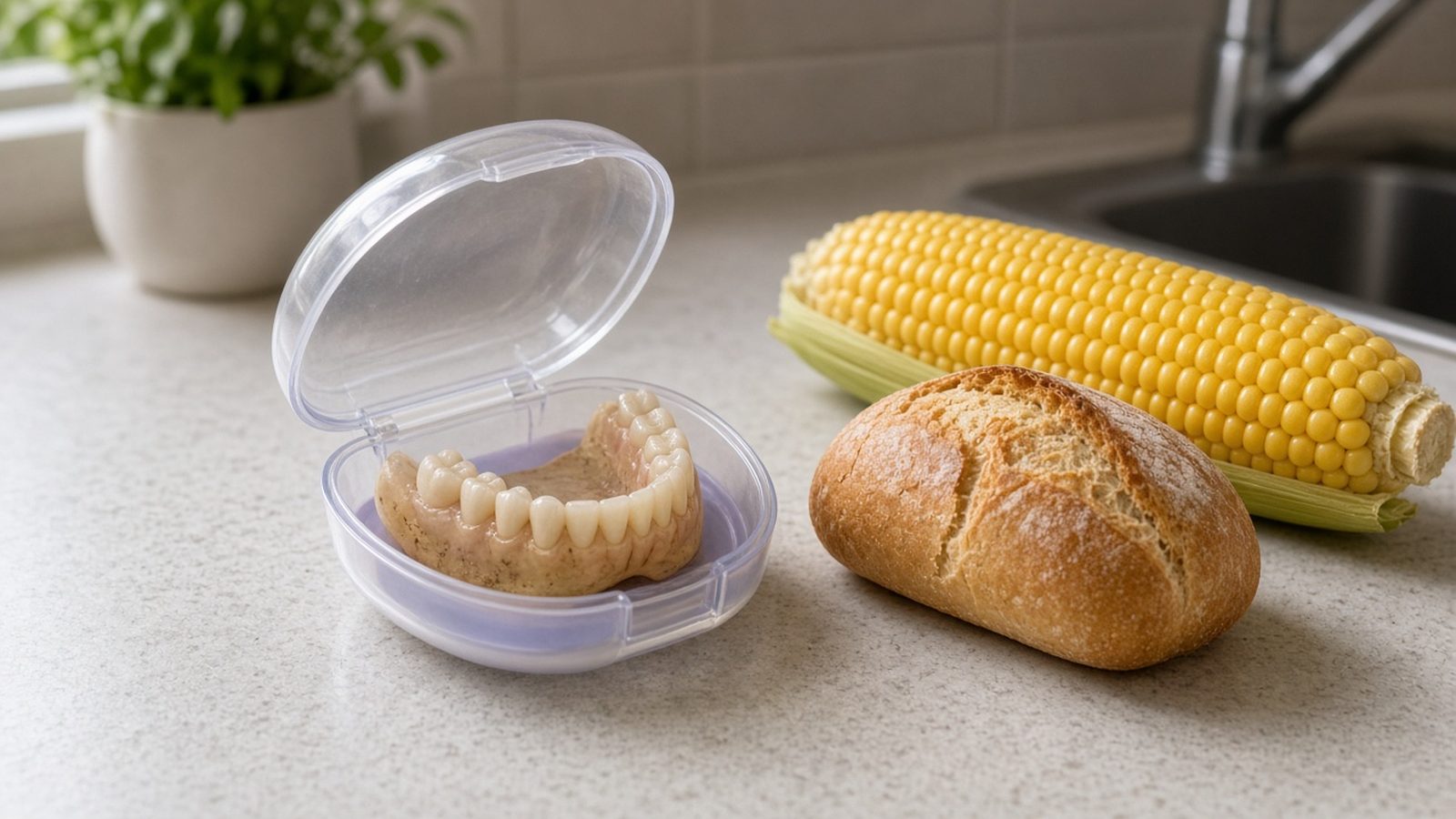
Full-Arch
Upper vs. Lower Full-Arch Implants: Should Houston Patients Treat One Arch or Both?
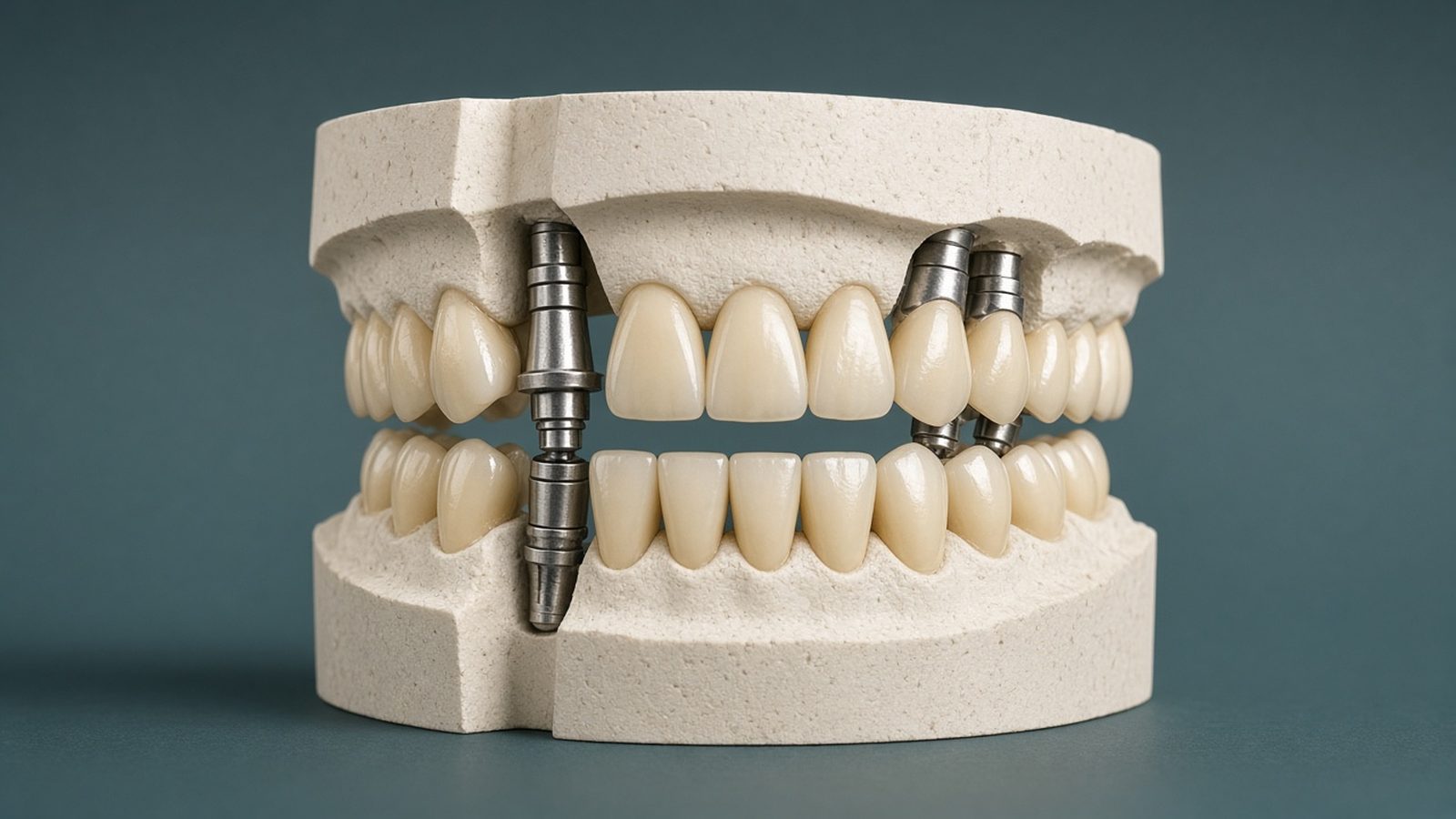
Thinking about full-arch implants on the top, the bottom or both? Here is how the two jaws differ and how Houston-area patients can plan one arch or two.
"My lower teeth are fine. Can you just do the top?" It is one of the most common questions at a full-arch consultation, and it usually arrives with a few others. Is the bottom harder than the top? Should both jaws be done on the same day? What happens if I fix one arch now and the other one in five years? Comparing upper vs lower full-arch implants is less about which jaw is better and more about how the two arches work together, because every plan for one jaw has to bite against whatever is in the other. This guide is for patients in Katy, Cypress, Sugar Land, Fulshear, Richmond and the rest of the Houston area who are deciding whether to treat one arch, both arches, or one now and one later.
If you are still choosing between fixed teeth and dentures, start with our comparison of All-on-X, implant dentures and traditional dentures. If you have been told your upper jaw is short on bone, our guide to sinus lift vs. zygomatic implants compares those techniques in detail, and our article for patients told they are not a candidate for implants covers the reasons offices say no. This article stays with the arch question.
The short answer
Either arch can be treated on its own, and many full-arch patients treat only one. The upper and lower jaws differ in bone, anatomy and what they do for your face, but neither is automatically the harder one. The plan depends on the condition of the opposite arch, what a 3D scan shows about your bone, and whether your bite can be designed so both arches work together now and later.
Most plans fall into one of four patterns: an upper full arch biting against natural lower teeth, a lower full arch against natural upper teeth, both arches at once, or a mixed plan with fixed teeth in one jaw and a denture or snap-on overdenture in the other. Each can be a sound choice for the right mouth, and each comes with a trade-off worth understanding before surgery.
How the upper and lower jaws differ
The upper jaw usually has softer bone, with the sinuses sitting above the back teeth. The lower jaw is usually denser in front but carries a nerve through the bone. Upper teeth do more for your smile and lip support, and a lower denture is usually the harder one to wear.
The upper jaw holds the sinuses, air-filled spaces just above the roots of the back teeth. After those teeth are lost, the bone underneath can become thin, which is why upper plans sometimes involve tilted implants, grafting, a sinus procedure or, in severe cases, implants anchored in the cheekbone or the dense bone at the very back of the jaw. The upper teeth also carry the look of your smile. They set the smile line, hold out the upper lip, and shape sounds like "s" and "f", so an upper bridge is designed as much for your face and speech as for chewing.
The lower jaw has a different hazard. A nerve runs through the bone on each side and gives feeling to the lower lip and chin. The FDA lists numbness from nerve impingement or damage among the risks of implant surgery, along with injuries such as sinus perforation in the upper jaw. That is why surgeons map the nerve on a cone-beam CT (CBCT) scan before planning lower implants. The front of the lower jaw, between the points where the nerve exits on each side, often has dense bone, which is one reason lower full-arch plans commonly concentrate implants there.
Dentures behave differently, too. The American College of Prosthodontists explains that in most cases the lower denture is much less stable than the upper, because of the shape of the lower ridge and the way the tongue moves it. An upper denture covers the palate and can hold by suction. That one difference shapes many arch decisions, because the denture that bothers people most is often the lower one.
| Upper arch | Lower arch | |
|---|---|---|
| Bone | Often softer, especially toward the back | Often denser, especially in front |
| Nearby anatomy | Sinuses above the back teeth | A nerve inside the jaw that supplies the lower lip and chin |
| How a denture behaves | Covers the palate and can hold by suction | Sits on a narrow ridge beside the tongue and often moves |
| What it does for your face | Smile line, upper lip support, many speech sounds | Lower lip support and tongue space |
| Common approaches when bone is thin | Tilted implants, grafting, sinus lift, pterygoid or zygomatic implants | Tilted implants, grafting, or implants kept in the front of the jaw |
Is one arch harder or riskier?
Not in any simple way. A pooled review of All-on-4 studies found no significant difference in implant survival between the upper and lower jaws, while a long-running clinic study did see lower survival for upper implants. Your own bone and bite matter more than either average.
A 2021 systematic review in the Journal of Indian Prosthodontic Society gathered 25 studies of the All-on-4 approach. Reported implant survival ranged from 94 to 98 percent with follow-up of roughly six to eleven years, and the authors found no significant difference between the upper and lower jaws. The most common prosthetic problem was fracture of acrylic bridges.
A large study from a specialist clinic in Malmo, Sweden, followed 709 patients with 869 full-arch fixed bridges for an average of almost 11 years. There, implants in the upper jaw had lower survival than implants in the lower jaw, as did implants in smokers and in people who grind their teeth. Lost or broken acrylic teeth were also more likely on upper bridges and when the opposite jaw had natural teeth or a fixed bridge.
Put together, the research says both arches can do well and the upper jaw may ask more of the planning. A soft upper jaw, a lower nerve close to the ridge, a history of grinding or smoking: details like these in your own scan and history count for more than any average.
Treating only the upper arch
An upper full arch against healthy natural lower teeth is one of the most common full-arch plans. It works best when the lower teeth are stable, free of active disease and line up along a reasonably even biting plane.
The new upper teeth have to meet the lower teeth you already have. If some lower teeth have tipped, drifted or grown upward into spaces where upper teeth were lost years ago, the biting line can be uneven, and a straight new upper arch would touch on only a few points. In that case the plan may include reshaping some lower teeth, new crowns, orthodontic movement or, occasionally, removing a lower tooth that cannot be kept, before the final upper teeth are made.
Gum disease and decay in the lower teeth need attention first, because those teeth will be part of your bite for years. Our guide to gum disease and full-arch implants explains why active infection matters before implant surgery. Regional Implant Centers also offers general dentistry, including exams, cleanings, fillings, crowns, root canals and gum care; ask which services are available at the office you visit.
Matching matters as much as strength. Natural lower teeth have their own shade, shape and wear, and an upper bridge that looks too white or too perfect beside them can draw the eye. At our Katy office, technicians in the in-house dental lab work beside the surgical and restorative team, and being able to see you in person helps them refine tooth shape, shade, lip support and smile line. Final options at Regional Implant Centers include a Monolithic Zirconia Full Arch and Titanium-Reinforced Zirconia, and your prosthodontist recommends a material based on what the bridge will bite against and how hard you bite.
Treating only the lower arch
A lower full arch is often what denture wearers want most, because the lower denture is the one that tends to float. It can work against natural upper teeth, an upper denture or an upper implant bridge, and each pairing changes the design.
A common worry is that a fixed lower bridge will not last as long against natural upper teeth. The evidence is reassuring on that point. A 2020 systematic review in the Journal of Prosthetic Dentistry compared lower fixed full-arch bridges opposed by natural upper teeth, upper removable dentures or upper implant teeth, and found no difference in survival between the groups, with moderate certainty. The bridges in that review were metal-and-acrylic designs, so the finding speaks to survival, not to how much the teeth wear or how often they need repair.
A fixed bridge is not the only way to steady a lower arch. A snap-on overdenture that clips onto a few implants is a well-established option for the lower jaw, and our loose dentures guide explains when it is enough and when fixed teeth make more sense.
When an upper denture bites against lower implants
An upper denture can work well against lower implant teeth, but a firm lower bite can press hard on the front of the upper denture. Plans for this pairing pay close attention to how the teeth meet and how the upper ridge holds up over time.
For decades, dental textbooks described a pattern called combination syndrome: an upper complete denture biting against only lower front teeth, with the bone at the front of the upper jaw wearing away and the denture losing its seal. Newer research has softened that picture. A 2019 King's College London study examined 99 people who wore upper complete dentures against lower front teeth only. Just 8 showed two of the classic features, and 38 showed one, excessive bone loss at the front of the upper jaw. The authors found little evidence for the full syndrome.
Lower implants change the forces again. A 2025 systematic review from the University of Otago looked at lower implant overdentures opposite conventional upper dentures. Its six studies, with 141 participants, reported front upper bone loss, loss of back-tooth contact and a looser upper denture in some patients, while other studies found no difference from regular dentures. The authors could not reach a firm conclusion.
None of this rules the pairing out. It means the bite should be set up so the back teeth share the load instead of the front teeth taking it all, and the upper denture should be checked and relined as the ridge changes. If you already wear an upper denture that you like, keeping it is a real option.
If you might need the other arch later
Plan both arches now, even if you only treat one. A bridge designed against your current teeth may need to be adjusted or remade if the opposite arch changes later.
An upper bridge is shaped to meet the lower teeth you have today: the height of the bite, the curve of the chewing surfaces, the position of the front teeth. If those lower teeth later fail and are replaced, the new lower teeth can often be designed to fit the existing upper bridge. But if the upper bridge was built around an uneven lower bite, the better long-term result may mean reshaping or replacing it once the lower arch is done. That is not a failure. It is a cost and timeline question to understand before you start.
Ask the question directly at your consultation: if my other teeth fail in five or ten years, what happens to this bridge? A team that looks at both arches from the start can place implants where they will still work if the plan for the other jaw changes, and can keep the scans and bite records that make a later step easier. At Regional Implant Centers, the SegMark Workflow aligns CBCT imaging, intraoral scans, bite information, facial references and restorative goals into one coordinated digital plan.
The opposite case comes up too. Sometimes a patient has a few remaining teeth in the second arch that one office calls hopeless and another thinks can last for years. Extractions cannot be undone, so a second look at those teeth is reasonable. Our guide to getting a second opinion before full-arch surgery explains what that review should cover.
Both arches at once or one at a time?
Both approaches can be right. Treating both arches in one surgery means one recovery and a bite designed for both jaws together, while staging keeps each surgery shorter and can make sense when grafting, health or budget call for smaller steps.
Doing both arches in one visit means one anesthesia session, one healing period and one set of temporary teeth to get used to, and the upper and lower teeth can be designed together from the first day. The trade-offs are a longer surgery, more swelling at once, and a soft diet for both jaws during the same weeks. Our All-on-4 recovery guide walks through those weeks.
Staging means two shorter surgeries. One arch heals while the other keeps working teeth, and an arch that needs grafting or sinus work first can take its time while the other moves ahead. Some patients also prefer to spread the cost. The trade-offs are two recoveries, a longer overall timeline and, sometimes, bite refinements once the second arch is finished.
At Regional Implant Centers, treatment may be part of a single visit, staged care or a full-mouth reconstruction plan, depending on your health, anatomy, goals and clinical findings. A dedicated anesthesia provider focuses on your safety, comfort and monitoring during surgery, and depending on your plan the options may include IV sedation or general anesthesia; our anesthesia and comfort page explains the role. Many qualifying patients leave surgery with fixed temporary teeth the same day, and your plan decides whether that is appropriate for you. Our guide to same-day temporary teeth vs. final teeth explains why those first teeth are temporary.
When the upper jaw has very little bone
If your scan shows thin bone under the sinuses, the upper plan may need grafting, a sinus procedure or longer implants anchored elsewhere, and that can change whether the two arches are treated together.
A sinus lift or graft may need months to heal before implants go in, which often pushes toward staging the upper arch. When too little bone is left for conventional implants, implants anchored in the cheekbone (zygomatic) or in the dense bone at the very back of the upper jaw (pterygoid) may be options in selected cases. Regional Implant Centers offers both, performed by Dr. Dan Holtzclaw and Dr. Enrique Tabarini. They are not right for everyone, and our sinus lift vs. zygomatic implants guide compares the options. For some people, an upper denture or overdenture is still the more sensible answer, and we will say so.
Fixed teeth in one jaw, a denture in the other
Mixed plans are common and often sensible. Some patients keep a comfortable upper denture and add implants below; others choose fixed teeth in one arch and a snap-on overdenture in the other.
Both of our offices offer traditional dentures, snap-on implant overdentures and fixed full-arch teeth, so a plan can mix them. A removable arch comes out for cleaning and is usually simpler to reline or repair, while a fixed arch stays in and is cleaned in place. The choice for each jaw can rest on bone, budget, hand dexterity and how you feel about taking teeth out at night. Our All-on-X vs. dentures comparison covers the trade-offs of each type.
What one arch or two means for cost, coverage and upkeep
Scope is the biggest single driver of cost, and fees, benefits and maintenance services are usually counted per arch. Your written plan should show each arch, and each stage, separately.
Treating one arch or both changes the number of implants, surgical time and the number of teeth that have to be designed and made. Our guide to what affects the cost of full-mouth implants in Houston walks through the other factors. Before treatment begins at Regional Implant Centers, you receive a detailed treatment plan outlining the recommended care, estimated insurance benefits, financing options and your expected out-of-pocket cost.
Dental plans usually have annual maximums. When staging makes clinical sense, the timing of each stage can sometimes be planned around your benefit year, but the clinical plan should come first. Our Insurance Advantage team reviews dental and medical benefits, though coverage is never guaranteed, and our financing page lists independent lenders that set their own terms. The dental implant financing guide explains how insurance, financing and savings fit together.
Upkeep is counted per arch, too. After your final teeth are delivered, enrollment in a required Maintenance Package begins within 30 days, and services such as implant cleanings are listed per arch. The package is not dental insurance. If one arch is natural teeth, those teeth still need their own regular cleanings and checkups. Our All-on-4 cleaning guide covers daily care under a bridge.
How our team plans the arch question
At Regional Implant Centers, the prosthodontist plans the final teeth and bite for both arches before surgery, and the surgical team places implants to support that plan.
Our RISE Protocol starts with the prosthodontist, who maps out your bite, facial support, speech and the long-term plan for your new teeth before surgery begins. That step covers the arch you are not treating as well, because it decides where the new teeth have to meet. Our CBCT imaging helps the specialists study bone volume, nerve pathways, sinus position and jaw anatomy before surgery. Full-arch surgery for an upper arch, a lower arch or both is planned around function, bite, smile design and stability.
After surgery, our team uses photogrammetry, when appropriate, to record the exact position of each implant so the final bridge can be designed for passive fit. For more on how final teeth are designed against an opposite arch, see how prosthodontists design implant-supported teeth.
Questions to ask at your consultation
Whatever you decide, these questions show whether a plan accounts for both arches.
- What condition are my other teeth in, and do they need treatment first?
- How will the new teeth be matched to my opposite arch, in bite, shade and shape?
- Would you treat both arches together or stage them, and why?
- If my other arch needs work in a few years, what happens to this bridge?
- Which final material do you recommend for what this bridge bites against?
- Is a fixed bridge, an overdenture or a denture the better fit for each jaw?
Visiting our Katy office
Our Katy office brings together a prosthodontist, oral surgeons, CBCT imaging, anesthesia support and our in-house dental lab, so both arches can be evaluated and planned in one place.
The office is at 707 S Fry Rd, Suite 150, in Katy, and serves patients from Cypress, Sugar Land, Fulshear, Richmond, Memorial and the rest of West Houston. It is open Monday through Thursday, 8 AM to 5 PM, with Fridays reserved for surgery. Our prosthodontist, Dr. Polyxeni Konti, sees patients at the Katy office. See our Katy location page for directions, or start with a phone consultation from home. Austin-area patients are seen at our Hutto office.
Bring a list of dental work in both arches, any recent X-rays or scans, and the denture you wear now if you have one. If one arch was already treated at another office, bring what you know about it, such as the implant brand and any records, since the new arch has to work with it. Not every mouth suits fixed teeth in either jaw, and if yours does not, we will tell you.
Frequently asked questions
Can I get All-on-4 on just the top or just the bottom? Yes. A full arch can be placed in the upper jaw alone, the lower jaw alone, or both. Treating one arch works best when the opposite teeth are healthy and line up evenly, because the new teeth are designed to bite against them.
Is the upper or lower arch harder for full-arch implants? Neither is automatically harder. The upper jaw often has softer bone and the sinuses nearby, while the lower jaw has a nerve that must be mapped and avoided. A 3D CBCT scan of your own jaws shows which challenges apply to you.
Should I do both arches at the same time? It depends on your health, bone and goals. Treating both at once means one surgery and one recovery, with both arches designed together. Staging keeps each surgery shorter and suits cases that need grafting first. Your team should explain why it recommends one approach.
Can an upper implant bridge bite against my natural lower teeth? Yes, and it is a common plan. The lower teeth should be free of active decay and gum disease, and uneven or drifted teeth may need adjusting first. The bridge material is chosen with your natural teeth and bite force in mind.
What happens to my bridge if I need the other arch done later? Often it can stay, with the new arch designed to meet it. If the first bridge was shaped around an uneven bite, it may need reshaping or replacing for the best result. Planning both arches at the start makes a later step more predictable.
Talk with our Katy team about one arch or both
If you are weighing an upper arch, a lower arch or both, an exam and a 3D scan of both jaws are the place to start. Schedule a Houston-area consultation, in person at our Katy office or by phone, or call (832) 632-7037. Qualified patients receive a complimentary consultation, advanced CBCT scan and insurance benefits evaluation, and by the end of the appointment you will have a clear understanding of your next steps.
Sources & Resources
- U.S. Food and Drug Administration: Dental Implants: What You Should Know
- American College of Prosthodontists: Frequently Asked Questions about Dentures
- Gaonkar SH, Aras MA, Chitre V, et al. Survival rates of axial and tilted implants in the rehabilitation of edentulous jaws using the All-on-four concept: A systematic review. Journal of Indian Prosthodontic Society, 2021;21(1):3-10.
- Chrcanovic BR, Kisch J, Larsson C. Retrospective evaluation of implant-supported full-arch fixed dental prostheses after a mean follow-up of 10 years. Clinical Oral Implants Research, 2020;31(7):634-645.
- Carneiro-Campos LE, Freitas-Fernandes LB, Masterson D, et al. Does the natural maxillary dentition influence the survival rate of mandibular metal-resin implant-supported fixed complete dentures? A systematic review and meta-analysis. Journal of Prosthetic Dentistry, 2020;124(1):36-45.
- Bagga R, Robb ND, Fenlon MR. An investigation into the prevalence of combination syndrome. Journal of Dentistry, 2019;82:66-70.
- Veerasamy A, Ham EC, Gian JJ, et al. Combination syndrome in patients with mandibular implant supported overdenture and conventional maxillary denture: A systematic review. European Journal of Prosthodontics and Restorative Dentistry, 2025 (online ahead of print).
This article is general education, not a diagnosis or treatment recommendation. Whether full-arch implants suit one arch or both, which materials fit your bite, and the timeline and cost depend on an individual clinical evaluation. Same-day teeth are temporary and offered only to qualifying patients. Insurance coverage is never guaranteed, and financing is provided by independent third-party companies. Regional Implant Centers has offices in Katy and Hutto, Texas.
Ready to Learn What Is Possible?
Schedule a consultation with Regional Implant Centers.
Schedule ConsultationFrequently Asked Questions
Can I get All-on-4 on just the top or just the bottom?
Yes. A full arch can be placed in the upper jaw alone, the lower jaw alone, or both. Treating one arch works best when the opposite teeth are healthy and line up evenly, because the new teeth are designed to bite against them.
Is the upper or lower arch harder for full-arch implants?
Neither is automatically harder. The upper jaw often has softer bone and the sinuses nearby, while the lower jaw has a nerve that must be mapped and avoided. A 3D CBCT scan of your own jaws shows which challenges apply to you.
Should I do both arches at the same time?
It depends on your health, bone and goals. Treating both at once means one surgery and one recovery, with both arches designed together. Staging keeps each surgery shorter and suits cases that need grafting first. Your team should explain why it recommends one approach.
Can an upper implant bridge bite against my natural lower teeth?
Yes, and it is a common plan. The lower teeth should be free of active decay and gum disease, and uneven or drifted teeth may need adjusting first. The bridge material is chosen with your natural teeth and bite force in mind.
What happens to my bridge if I need the other arch done later?
Often it can stay, with the new arch designed to meet it. If the first bridge was shaped around an uneven bite, it may need reshaping or replacing for the best result. Planning both arches at the start makes a later step more predictable.
This content is educational and not a substitute for a consultation.