Diabetes & Tooth Loss
Diabetes and Tooth Loss: What San Antonio Adults Should Know About Saving or Replacing Teeth
Why diabetes and tooth loss are linked, how gum treatment may help your A1C, and what San Antonio adults should weigh before choosing dentures or implants.
If you live with diabetes and your gums bleed, a tooth has started to move, or you have already lost several teeth, you are far from alone. About 15 percent of adults in Bexar County have diagnosed diabetes, according to University Health, and diabetes and tooth loss are closely linked. This article is for people in San Antonio, New Braunfels, Schertz, Boerne and the surrounding area who want to understand why diabetes is hard on teeth, which teeth may still be worth saving, and how the choice between dentures, implant overdentures and fixed implant teeth changes when blood sugar is part of the picture. It is general education, not a diagnosis. Your own options depend on an exam, imaging and a conversation with the physician who manages your diabetes.
The short answer
Diabetes does not make teeth fall out on its own, but high blood sugar makes gum disease more likely, more severe and slower to heal, and gum disease is what loosens teeth. Treating gum disease can save some teeth and may modestly improve blood sugar. When teeth cannot be saved, dentures, implant overdentures and fixed implant teeth are all still possible for many people with diabetes, and steady blood sugar control is what keeps any of those options working.
That last point matters more than any single treatment choice. The same habits and lab numbers that protect your remaining teeth also protect whatever replaces them.
Why diabetes and tooth loss so often go together
High blood sugar changes your saliva, weakens your defense against infection and speeds up gum disease. Over years, that combination costs people with diabetes more teeth than people without it.
The National Institute of Diabetes and Digestive and Kidney Diseases (NIDDK) explains the chain of events. Diabetes and some diabetes medicines can reduce saliva, and saliva is one of your mouth's main defenses against decay. Glucose can build up in saliva, where it feeds the bacteria that form plaque. The CDC adds that high blood sugar can weaken white blood cells, the cells that fight infections in the mouth. Plaque left at the gumline hardens into tartar, inflames the gums and, if it is not treated, turns into periodontitis, an infection that breaks down the gum and bone holding teeth in place.
The numbers reflect that. NIDDK reports that almost 25 percent of U.S. adults age 50 and older who have diabetes have severe tooth loss, compared with about 16 percent of those without diabetes. A study of 40 years of national health survey data, published in Preventing Chronic Disease by Luo and colleagues at Duke University, found that adults with diabetes had about twice the tooth loss of adults without it, a gap that persisted even as tooth loss fell overall. The same study found larger losses among Black adults with diabetes, which is a reminder that access to dental care plays a part, not only biology.
The two-way link: gum treatment and your A1C
Gum disease can make blood sugar harder to control, and treating it can lower A1C by a modest but meaningful amount. That makes gum care part of diabetes care, not a separate cosmetic issue.
Doctors and dentists now describe the relationship between diabetes and periodontitis as two-way. A 2018 consensus report from the International Diabetes Federation and the European Federation of Periodontology concluded that people with diabetes and periodontitis tend to have higher A1C levels than people with diabetes and healthy gums, and that periodontal therapy is safe and effective in people with diabetes.
The strongest evidence on the effect of treatment comes from a 2022 Cochrane review by Simpson and colleagues. It pooled randomized trials of people with diabetes and periodontitis, mostly type 2, who received deep cleaning below the gumline (often called scaling and root planing) or no active treatment. Moderate-certainty evidence from 30 trials showed an average A1C reduction of 0.43 percentage points three to four months after treatment, for example from about 7.4 percent to about 7.0 percent. The difference was 0.30 points at six months, and a single trial reported 0.50 points at 12 months. The CDC puts it simply: treating gum disease may help lower your blood sugar over time.
Two cautions keep this in perspective. Gum treatment does not replace your diabetes medicines, diet or exercise, and the benefit seen in trials is an average, not a promise for any one person. Still, for many people the most useful first step is not an implant consultation at all. It is a thorough periodontal exam and, if needed, gum treatment with a local dentist or periodontist.
Warning signs that deserve a dental visit soon
Bleeding, receding or swollen gums, loose teeth and a dry mouth are all reasons to see a dentist promptly if you have diabetes. Early treatment is what keeps teeth.
NIDDK lists these signs of mouth problems linked to diabetes:
- Gums that are red, swollen or bleeding, or that are receding or pulling away from your teeth
- Loose teeth, or spaces between teeth that are getting wider
- Dry mouth
- Bad breath that does not go away when you brush
NIDDK also notes that people with diabetes are more prone to thrush, a fungal infection that causes painful white patches, and to changes in taste. If you notice any of these, tell your dentist how long you have had diabetes, what medicines you take and how your recent numbers have looked. A swelling in the face, fever or trouble swallowing needs urgent care the same day, from your dentist, urgent care or an emergency room.
When saving teeth stops making sense
Teeth with severe bone loss, repeated abscesses or deep decay that cannot be restored may be doing more harm than good, especially when ongoing infection makes blood sugar harder to manage. Whether a tooth is worth saving is a clinical call made tooth by tooth.
Many teeth affected by gum disease can be kept for years with treatment, regular cleanings and good home care. Some cannot. A tooth that has lost most of its supporting bone, keeps getting infected, or has cracked or decayed below the gumline can become a constant source of inflammation. In those situations, dentists may recommend removing it, partly to stop the infection and partly because waiting can cost more of the jawbone that will later be needed to support replacement teeth.
When most of the teeth in an arch are in that condition, people start asking about full-arch treatment, meaning one set of replacement teeth for the whole upper or lower jaw. Our article on severe tooth decay and dental implants explains how dentists weigh saving teeth against replacing them, and our article on dental implants with gum disease covers what happens when periodontitis is the main reason teeth are failing. A second opinion is reasonable before any extraction plan for several teeth. Our article on getting a second opinion on full-arch implants in San Antonio lists what to bring.
Dentures, implant overdentures or fixed teeth: what diabetes changes
All three options are possible for many people with diabetes. Diabetes mainly changes how healing is planned, how comfortable a removable denture may be with a dry mouth, and how much daily cleaning and maintenance matter afterward.
Here is how diabetes tends to affect each choice. Your team should talk these through with you in light of your own mouth and health.
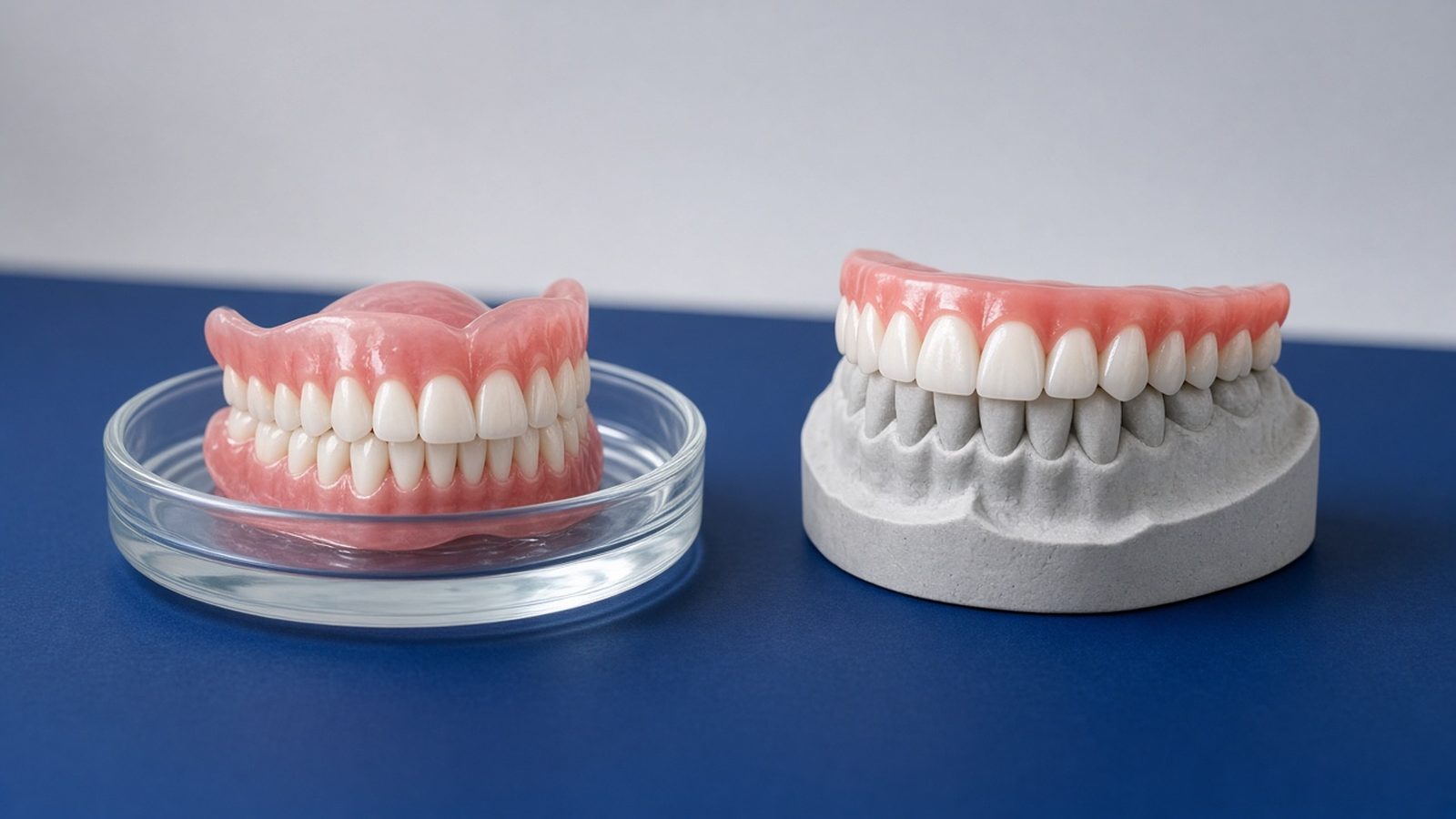
Traditional dentures. Dentures need no implant surgery, which can make them a practical choice when surgery is not advisable. But they rest on the gums, and a dry mouth, which is more common with diabetes, can make a denture less comfortable to wear. Cleveland Clinic notes that people with diabetes are more prone to thrush and that dentures, especially when worn constantly, can also lead to fungal infections, so removing and cleaning the denture every day matters. A lower denture in particular can move while chewing, and NIDDK points out that tooth loss and mouth problems can make it harder to follow the meal plan that helps you manage diabetes. Our comparison of All-on-X, implant dentures and traditional dentures walks through the trade-offs in more detail.
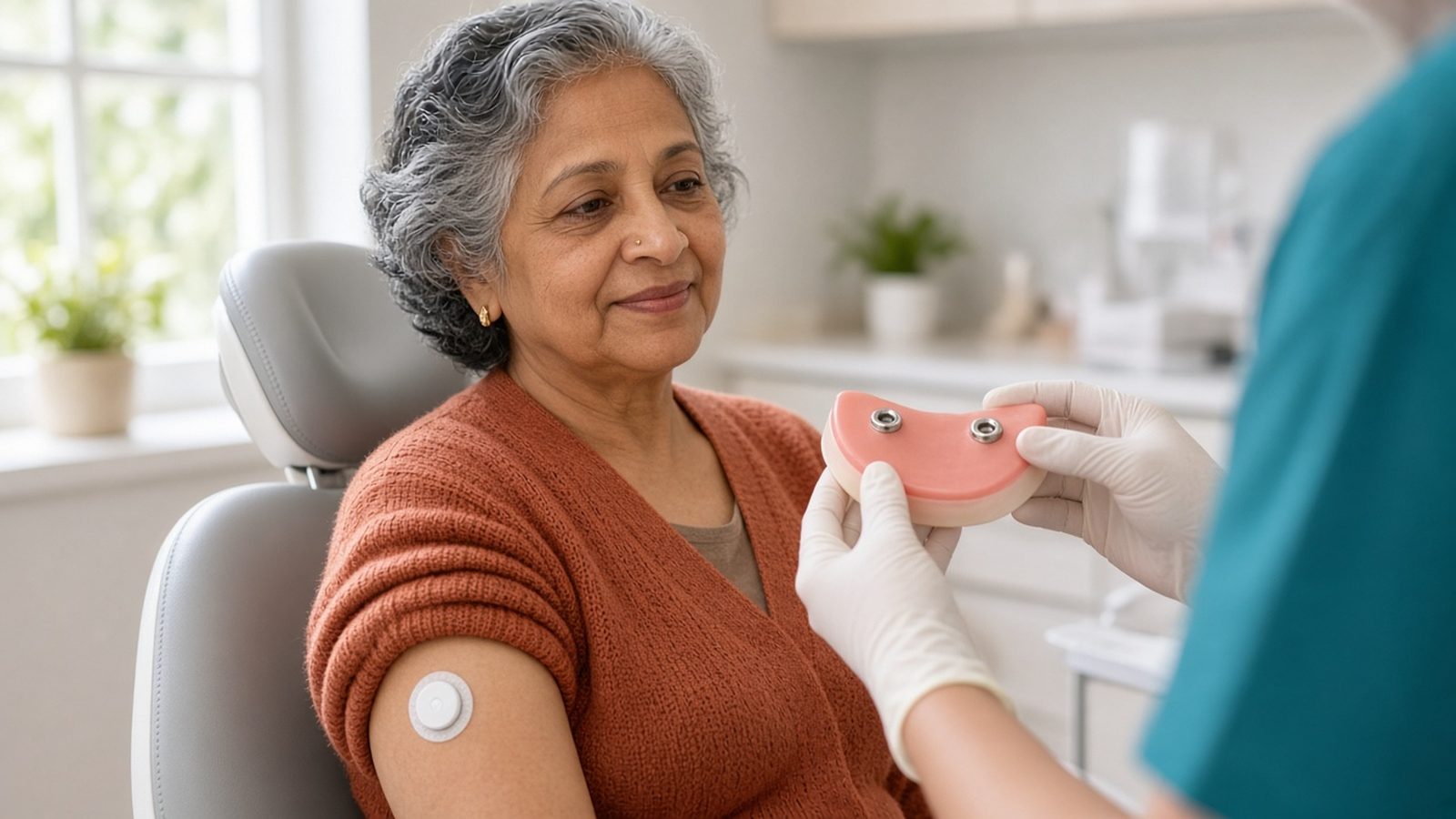
Implant overdentures. A snap-on overdenture clips onto two or more implants and comes out for cleaning. It is directly relevant here because one of the best-known studies of implants in people with diabetes used exactly this design. Researchers at UT Health San Antonio, led by Thomas Oates, placed two lower implants in 117 people without teeth, some without diabetes, some with well-controlled type 2 diabetes and some with poorly controlled diabetes, with A1C values at the start of up to 11.1 percent. After a four-month healing period and one year of wear, implant survival was similar across the groups. The catch was that poorer blood sugar control delayed how quickly the implants became stable. That study was small, followed patients for one year and used a careful protocol, so it does not mean blood sugar can be ignored. It does show why healing time is often planned more conservatively.
Fixed full-arch teeth. A fixed bridge on implants, often called All-on-4 or All-on-X, stays in and does not rest on the gums. Many people find it easier to chew with. It also asks more of the implants and of your cleaning routine, because plaque collects under the bridge and you cannot take it out to scrub it. That matters with diabetes. A 2017 systematic review in the Journal of Clinical Periodontology by Monje and colleagues found that the risk of peri-implantitis, the gum and bone infection that can develop around implants, was about 50 percent higher in people with diabetes than in people without it, even after accounting for smoking. Our guide to cleaning and maintaining All-on-4 teeth shows what daily care involves, and our article on peri-implantitis treatment explains what happens if that infection develops.
Same-day teeth deserve a separate word. Some patients leave implant surgery with a fixed temporary set of teeth, but same-day teeth are always temporary, and only qualifying patients receive them. When blood sugar control is uncertain, a team may prefer a staged plan that gives implants more time to heal before they carry teeth. Our article on dental implants with diabetes and other medical conditions covers A1C targets, staged versus same-day plans and surgery-day glucose in depth, so we do not repeat that here. Our article on same-day temporary teeth vs final teeth explains the difference between the two.
If you smoke as well, the risks add up. Our article on smoking and dental implants explains the evidence and realistic quit windows.
Getting your mouth and your numbers ready
Before extractions or implant surgery, bring your physician into the plan early. Ask how to adjust medicines and glucose checks around the procedure, and bring recent lab results to your dental consultation.
NIDDK notes that high blood glucose raises the risk of infection after mouth surgery and can slow healing. It suggests telling your doctor about planned oral surgery and asking how often to check your blood glucose before and after, whether any medicine doses or timing should change, and how to manage soreness afterward. Never stop or change a diabetes medicine on your own because of a dental appointment.
For your dental consultation, it helps to bring:
- Your most recent A1C result and the date it was drawn, plus earlier results if you have them
- A current list of all medicines and doses, including insulin, GLP-1 medicines and blood thinners
- Your physician's name and contact details
- Any recent dental X-rays and records of past gum treatment
- A note of any diabetes complications, such as kidney, eye, heart or nerve problems
Regional Implant Centers provides dental evaluations and documentation that physicians sometimes request, and our dental clearance page lists endocrinologists among the specialists who may ask for one in cases of "poorly controlled diabetes and severe dental disease". Records and letters are shared when they are requested and authorized. Our articles on conditions that may require dental clearance and how dental clearance communication with physicians works explain that process.
Planning treatment from San Antonio
We do not have an office in San Antonio. Our offices are in Hutto, in the Austin area, and in Katy, near Houston. For most of the San Antonio area, Hutto is the shorter drive.
Our Hutto office is at 201 E Wilco Hwy, Suite 203, Hutto, TX 78634. Its posted hours are Monday through Thursday, 8 to 5, with Fridays for surgeries only. It has CBCT imaging, performs bone grafting and sinus work, and has a dentist anesthesiologist on site for sedation and anesthesia. Our Katy office is at 707 S Fry Rd, Suite 150, Katy, TX 77450, and is home to our in-house dental lab. Both offices offer traditional dentures, snap-on implant overdentures and fixed full-arch teeth.
From San Antonio, New Braunfels and Schertz, the drive to Hutto follows the I-35 corridor, and some drivers use the SH 130 toll road. With diabetes, plan the travel as part of your care: pack your meter or sensor supplies, medicines and a snack, and ask the team how fasting instructions affect your medicine timing on surgery day. After sedation you will need a responsible adult to drive you home. You can start with a phone consultation before deciding whether an in-person visit makes sense, and day-to-day gum care and cleanings can stay with your local dentist. Our guide to full-mouth dental implants from San Antonio covers the visit schedule.
How our team approaches tooth loss when you have diabetes
At Regional Implant Centers, specialists plan the final teeth, the surgery and the anesthesia together, and your medical history is part of that plan from the first visit.
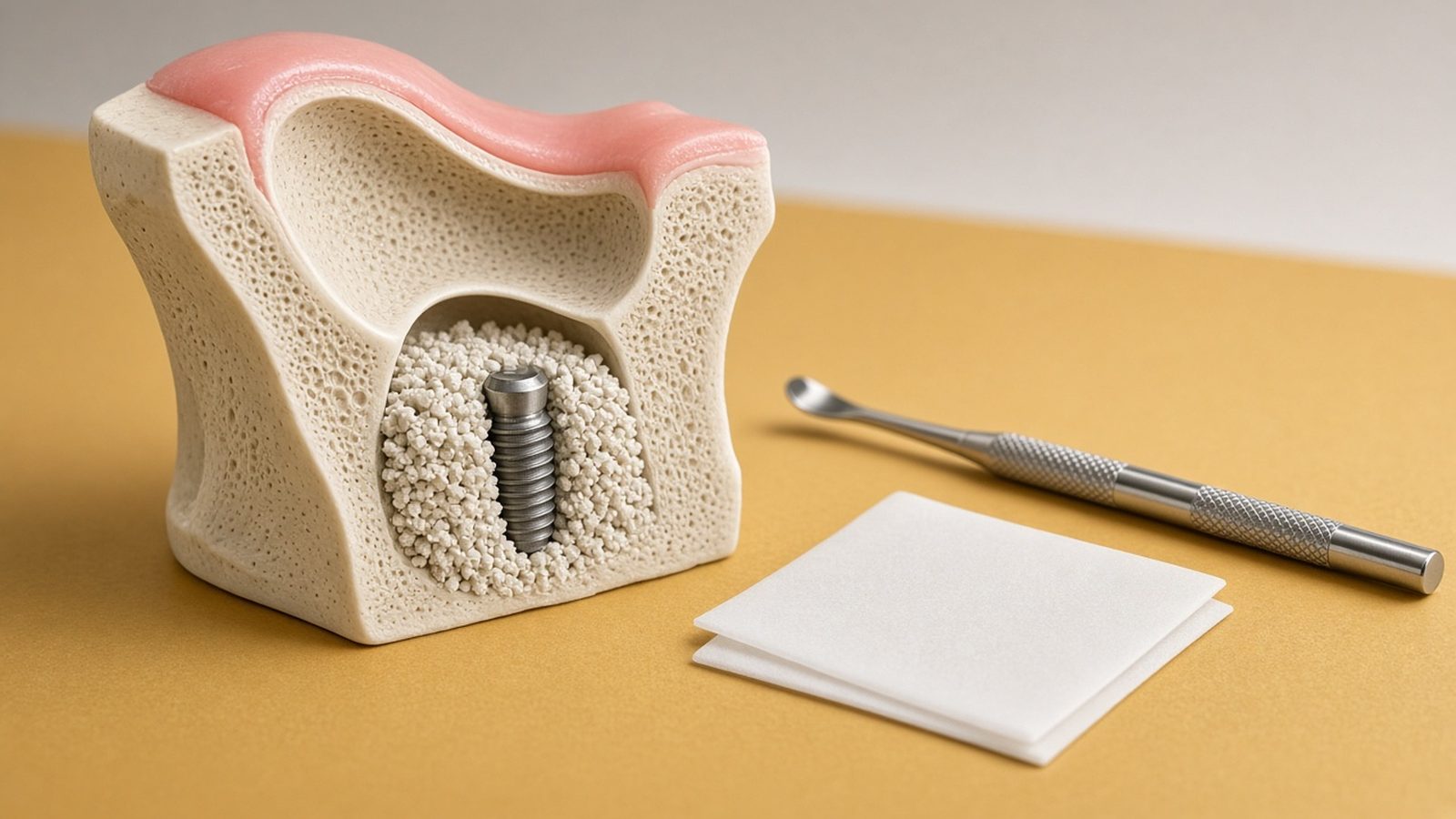
Under our RISE Protocol, the evaluation covers overall oral health, bone structure, bite, facial anatomy, medical history, airway considerations and long-term goals. A prosthodontist maps out the bite, facial support and long-term plan for your new teeth before surgery begins. 3D CBCT imaging shows the bone that is left after years of gum disease, and our oral surgeons handle extractions, bone grafting and reconstruction and implant placement when they are appropriate. For people whose upper jaw bone is too thin for standard implants, RIC also offers zygomatic and pterygoid implants, performed by Dr. Dan Holtzclaw and Dr. Enrique Tabarini, when they are appropriate. Not every case can be treated with implants, and part of a good consultation is hearing when another option is the safer choice.
Our anesthesia and patient comfort page explains the options, which may include IV sedation or general anesthesia, with continuous monitoring when sedation is used. Your doctor will discuss the most appropriate option for you, including how it fits with your diabetes medicines.
Long-term care counts as much as surgery. RIC does not offer a traditional implant warranty. After your final teeth are delivered, ongoing protection comes through a required Maintenance Package, and enrollment must begin within 30 days of delivery. Our implant warranty page lists what is not covered, and "uncontrolled medical conditions" is on that list, along with smoking and missed maintenance. That is one more reason steady blood sugar control is part of keeping implant teeth healthy.
Insurance and financing
Medical insurance may help with surgical parts of treatment, such as extractions or bone grafting, but implants, the prosthesis and temporary teeth are billed to the patient. Coverage is never guaranteed.
When a medical plan helps with treatment at RIC, it is for surgical professional services, such as extractions, bone grafting and bone shaping. Non-surgical parts, including implants, the prosthesis and temporaries, are billed to the patient separately. Only PPO plans work for our out-of-network oral surgery benefits, and RIC cannot bill Federal Employee Program (FEP) Blue Cross Blue Shield plans. If you have a PPO plan with oral surgery coverage, it is worth checking whether it may help with the surgical part of your care, but please verify your benefits with us and your carrier before you decide. Our Insurance Advantage team reviews dental and medical benefits and explains estimated out-of-pocket costs, and our insurance disclaimer explains why no estimate is a guarantee.
Before treatment, you receive a detailed plan outlining recommended care, estimated insurance benefits, financing options and your expected out-of-pocket investment. Financing is available through independent third-party companies, and approval and terms are set by each provider.
Questions to ask before you decide
These questions help you compare plans and make sure your diabetes is part of the conversation, wherever you go for care.
- Which of my teeth can realistically be saved with gum treatment, and for how long?
- Should I have periodontal treatment first and recheck my A1C before deciding on extractions?
- With my current A1C and medicines, would you recommend a staged plan or same-day temporary teeth, and why?
- How will you coordinate with my physician, and what will you send them?
- If I choose fixed teeth, how will I clean under them, and how often will I need professional maintenance?
- Would a removable option be easier for me to keep healthy, given my hands, eyesight or schedule?
- What does the written estimate include, and what is billed separately?
Frequently asked questions
Does diabetes cause tooth loss?
Not directly. High blood sugar makes gum disease more likely, more severe and slower to heal, and untreated gum disease destroys the bone that holds teeth. NIDDK reports that almost 25 percent of U.S. adults age 50 and older with diabetes have severe tooth loss, compared with about 16 percent of those without diabetes.
Can treating gum disease lower my A1C?
It may help modestly. A 2022 Cochrane review found that deep cleaning below the gumline lowered A1C by an average of 0.43 percentage points three to four months after treatment, with moderate-certainty evidence. It does not replace diabetes medicines or other care, and results vary from person to person.
Can I get dental implants if I have diabetes?
Many people with diabetes can. Research links well-controlled diabetes with implant results similar to those in people without diabetes, while poorer control is linked to slower healing and more peri-implantitis. Your implant team and physician should plan the timing together. Not everyone is a candidate.
Are dentures or implants better for someone with diabetes?
Neither is better for everyone. Dentures avoid implant surgery but can be less comfortable with a dry mouth and may move while chewing. Implant overdentures and fixed implant teeth are more stable but need healing time and careful long-term cleaning. The right choice depends on your health, bone, hands and goals.
Is there a Regional Implant Centers office in San Antonio?
No. Our offices are in Hutto, in the Austin area, and in Katy, near Houston. For most of the San Antonio area, Hutto is the shorter drive. You can start with a phone consultation, and routine gum care can stay with your local dentist.
Talk with our team about tooth loss and diabetes
If you live in San Antonio, New Braunfels, Schertz, Boerne or nearby and diabetes has taken a toll on your teeth, a consultation can help you sort out what can be saved and what your realistic replacement options are. Bring your recent A1C, your medicine list and your physician's contact details. If you come in, you will have a clinical exam, 3D imaging when indicated, and a written plan with estimated insurance benefits, financing options and your expected out-of-pocket investment before anything begins. Qualified patients receive a complimentary consultation, CBCT scan and insurance benefits evaluation. Schedule a consultation by phone or in person at our Hutto office, or call (832) 632-7037. Houston-area patients can book with our Katy office.
Sources & Resources
- National Institute of Diabetes and Digestive and Kidney Diseases. Diabetes, Gum Disease, & Other Dental Problems.
- Centers for Disease Control and Prevention. Oral Health and Diabetes.
- Simpson TC, Clarkson JE, Worthington HV, et al. Treatment of periodontitis for glycaemic control in people with diabetes mellitus. Cochrane Database of Systematic Reviews. 2022.
- Sanz M, Ceriello A, Buysschaert M, et al. Scientific evidence on the links between periodontal diseases and diabetes: consensus report of the International Diabetes Federation and the European Federation of Periodontology. Journal of Clinical Periodontology. 2018.
- Luo H, Pan W, Sloan F, Feinglos M, Wu B. Forty-year trends in tooth loss among American adults with and without diabetes mellitus. Preventing Chronic Disease. 2015.
- Oates TW, Galloway P, Alexander P, et al. The effects of elevated hemoglobin A1c in patients with type 2 diabetes mellitus on dental implants: survival and stability at one year. Journal of the American Dental Association. 2014.
- Monje A, Catena A, Borgnakke WS. Association between diabetes mellitus/hyperglycaemia and peri-implant diseases: systematic review and meta-analysis. Journal of Clinical Periodontology. 2017.
- Cleveland Clinic. Oral Health Problems and Diabetes.
- University Health. Diabetes in Bexar County (fact sheet, July 2025).
This article is general patient education and is not a diagnosis or treatment plan. Do not stop or change any diabetes medicine without talking to your physician. Whether teeth can be saved, and whether dentures, implant overdentures or fixed implant teeth suit you, depends on an individual clinical exam, imaging and your overall health. Insurance coverage is never guaranteed, and financing is provided by independent third-party companies. Regional Implant Centers has offices in Katy and Hutto, Texas, and does not have an office in San Antonio. Outcomes vary, and implant treatment is not appropriate for every patient.
Ready to Learn What Is Possible?
Schedule a consultation with Regional Implant Centers.
Schedule ConsultationFrequently Asked Questions
Does diabetes cause tooth loss?
Not directly. High blood sugar makes gum disease more likely, more severe and slower to heal, and untreated gum disease destroys the bone that holds teeth. NIDDK reports that almost 25 percent of U.S. adults age 50 and older with diabetes have severe tooth loss, compared with about 16 percent of those without diabetes.
Can treating gum disease lower my A1C?
It may help modestly. A 2022 Cochrane review found that deep cleaning below the gumline lowered A1C by an average of 0.43 percentage points three to four months after treatment, with moderate-certainty evidence. It does not replace diabetes medicines or other care, and results vary from person to person.
Can I get dental implants if I have diabetes?
Many people with diabetes can. Research links well-controlled diabetes with implant results similar to those in people without diabetes, while poorer control is linked to slower healing and more peri-implantitis. Your implant team and physician should plan the timing together. Not everyone is a candidate.
Are dentures or implants better for someone with diabetes?
Neither is better for everyone. Dentures avoid implant surgery but can be less comfortable with a dry mouth and may move while chewing. Implant overdentures and fixed implant teeth are more stable but need healing time and careful long-term cleaning. The right choice depends on your health, bone, hands and goals.
Is there a Regional Implant Centers office in San Antonio?
No. Our offices are in Hutto, in the Austin area, and in Katy, near Houston. For most of the San Antonio area, Hutto is the shorter drive. You can start with a phone consultation, and routine gum care can stay with your local dentist.
This content is educational and not a substitute for a consultation.