Patient Education
Smoking and Dental Implants: What San Antonio Smokers and Vapers Should Know
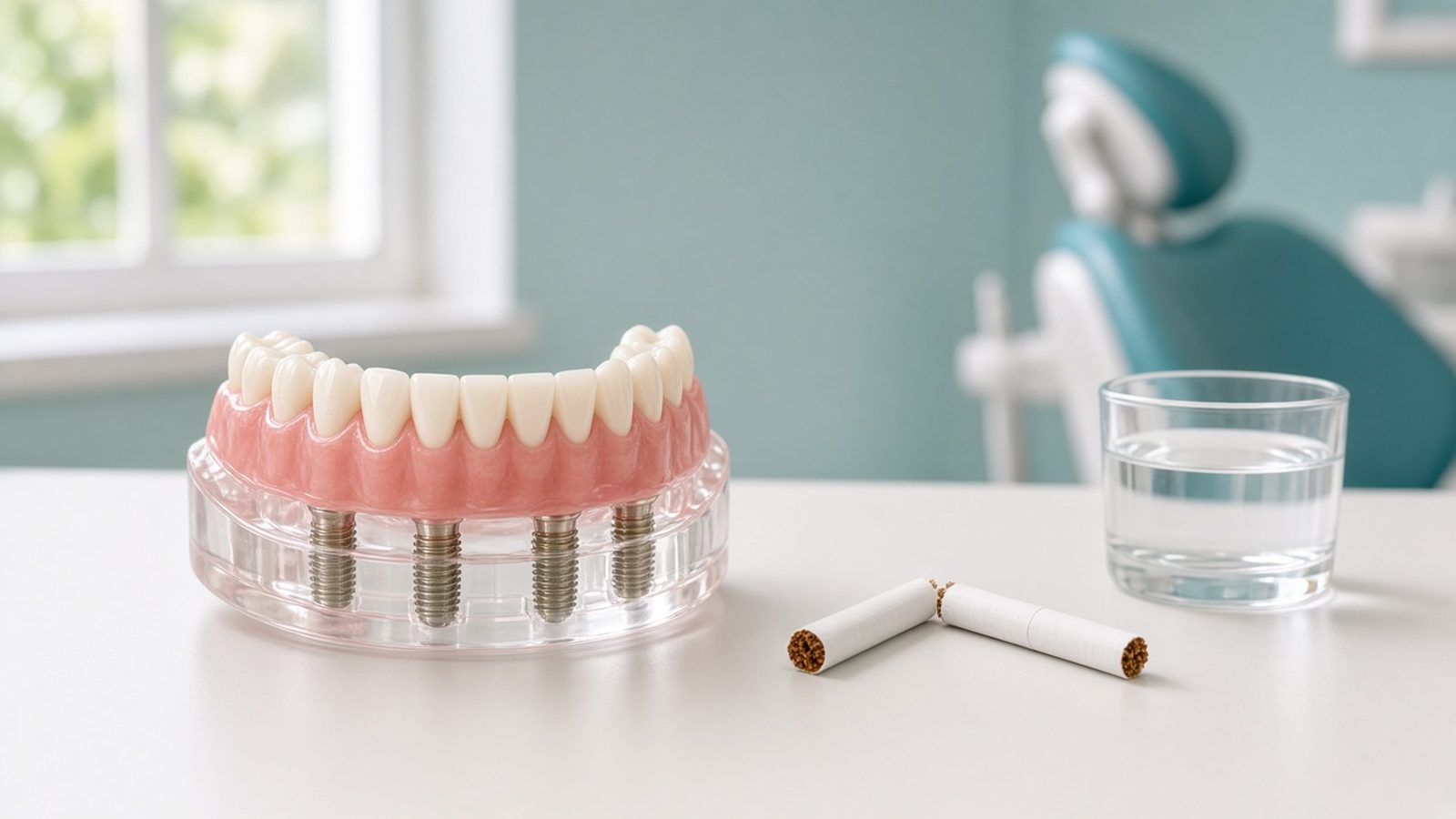
How smoking and vaping affect dental implants, grafts and full-arch teeth, when to stop before surgery, and how San Antonio patients can plan care.
Smoking and dental implants can work together, but the odds are not the same as for someone who does not smoke, and how much it matters depends on what you use, how much, and what your treatment involves. If you live in San Antonio, New Braunfels, Schertz or Boerne, you need teeth replaced, and you smoke, vape, use a hookah or keep a nicotine pouch in your lip, this article covers what the research shows, what it cannot answer yet, and how to plan around it. Regional Implant Centers does not have an office in San Antonio. Our offices are in Hutto, in the Austin area, and in Katy, near Houston. This is general education, not a diagnosis, and your own surgeon sets the plan for your case.
The short answer
Smoking does not automatically rule out dental implants, but it raises the chance that an implant fails, loses bone or gets infected later. Stopping before and after surgery helps, and there is not yet enough research to call vaping, heated tobacco or nicotine pouches safe.
That leaves three practical steps. Tell your implant team the full truth about what you use. Ask your surgeon how long to stop before and after surgery for your specific plan, and use real help to do it. Then plan for closer maintenance for as long as you have implants, because the risk from smoking does not end when the gums heal.
What the research says about smoking and implant failure
The most recent large review found that cigarette smokers had about two and a half times the odds of losing an implant compared with nonsmokers, plus more bone loss around the implants. That is a higher risk, not a promise that an implant will fail.
In 2026, a team led by Elena Calciolari published a systematic review in Clinical Oral Implants Research covering 44 studies, most of them on cigarette smokers, with follow-up from 1 to 17 years. Implant survival was lower in smokers at both the implant level and the patient level. Smokers also lost on average about 0.64 mm more of the bone that surrounds the top of the implant, and most of the studies that looked at peri-implantitis found more of it in smokers. The authors rated the certainty of the evidence as low, partly because smoking status is self-reported and often underreported, and they wrote that smoking is not an absolute contraindication for implants. They also said counseling to help patients stop smoking should always be part of the treatment plan.
The U.S. Food and Drug Administration says the same thing in plainer words on its dental implant page: smoking may affect the healing process and decrease the long-term success of the implant, and it lists delayed healing, which may be more likely in people who smoke, among the reasons an implant can fail.
Why would smoking matter so much for a piece of titanium? An implant only works if bone grows tightly against it, and that healing takes time. The World Health Organization's summary on tobacco and surgery explains that recovery after any surgery raises the body's need for oxygen and nutrients, and that active smoking is thought to interfere with that process. An implant site is a small surgical wound that has to heal well enough for bone to lock onto the implant, and then stay healthy for years.
Peri-implantitis: the risk that shows up years later
Smoking matters long after surgery. Smokers are more likely to develop peri-implantitis, the infection-driven inflammation that destroys bone around an implant, and the risk appears to fall the longer someone has been smoke-free.
A 2023 systematic review in Clinical Oral Implants Research pooled seven prospective studies with 702 patients and 1,959 implants. Smokers had a higher risk of peri-implantitis at both the implant and patient level, with patient-level risk about 2.8 times that of nonsmokers. The authors rated this as moderate-certainty evidence, which is stronger than much of the implant literature.
A 2022 study of 350 people in Brazil who had worn implants for more than five years is useful because it separated current smokers from former smokers. Peri-implantitis was found in 30.5% of current smokers, 19.7% of former smokers and 18.2% of people who had never smoked. The more someone had smoked over their life, the higher the risk, and the risk dropped as the years since quitting went up. It was a single cross-sectional study, so it shows a pattern rather than proof, but the message is encouraging: quitting appears to help even if you already have implants.
If you already have implants and notice bleeding, swelling, pus or a bad taste around them, our guide to peri-implantitis treatment for San Antonio patients covers the warning signs and what treatment can look like.
Vaping, hookah, heated tobacco and nicotine pouches
There is not enough implant research to call vaping, heated tobacco or nicotine pouches safe. Early e-cigarette studies look better than cigarettes, but they are small, and hookah and smokeless tobacco did not look safer than cigarettes.
The 2026 Calciolari review asked this exact question. It searched for studies on heated tobacco, e-cigarettes and vapes, and products you hold in your mouth rather than inhale, such as chewing tobacco, snus and nicotine pouches. It found only one e-cigarette study and one waterpipe (hookah) study that met its standards, and it concluded that there was not enough data on these products to judge their effect on implants.
A 2024 network meta-analysis in Nicotine and Tobacco Research compared 39 studies of people with implants who used cigarettes, e-cigarettes, waterpipes or smokeless tobacco. Nonsmokers had the least bone loss around their implants. Cigarette smokers, hookah users and smokeless tobacco users all had significantly more. E-cigarette users also had worse measurements than nonsmokers, but in many outcomes the difference was not statistically significant. The authors did not call vaping harmless. They said people who use any nicotine product should get education, proper maintenance and support to quit, and that better studies are needed, including on heated tobacco.
So for now, the honest answer is that nobody can tell you a vape, a heated tobacco device or a pouch is safe for a new implant. If you are thinking of switching to a vape just to get through surgery, talk with your surgeon first. The reviews above do not show that switching makes implants as safe as not using nicotine at all.
How long should you stop smoking before and after implant surgery?
There is no single number every surgeon uses. Research on surgery in general supports stopping at least about four weeks before an operation, and implant teams usually ask you to stay off tobacco through early healing. Your surgeon sets the window for your plan.
The WHO's 2020 summary on tobacco and postsurgical outcomes reports that people who quit about four weeks before surgery have fewer complications after it, and that longer time without smoking is linked to better results. It also addresses a common worry: quitting only a short time before surgery has not been shown to make things worse than continuing to smoke. If your surgery is close, stopping now is still worth it.
Implant-specific evidence on timing is limited. A small 1996 study from a dental hospital in Scotland followed 223 implants in 78 patients. Smokers who followed a stop-smoking protocol around their surgery did not have significantly more early failures than nonsmokers, while smokers who kept smoking did. It was one surgeon's patients and only early results, but it fits the general surgery research.
You may see numbers online ranging from a few hours to several months. They differ because the cases differ. A single implant in healed bone asks less of your healing than a bone graft, a sinus lift or a full arch of teeth placed on implants the same day. Ask your surgeon three questions: how long before surgery, how long after, and whether that applies to vaping and pouches too.
Smoking with bone grafts, sinus lifts and full-arch implants
The more your treatment depends on growing new bone, the more smoking matters. Grafts, sinus lifts and full-arch treatment all ask more of your healing, so they deserve the most careful quit plan.
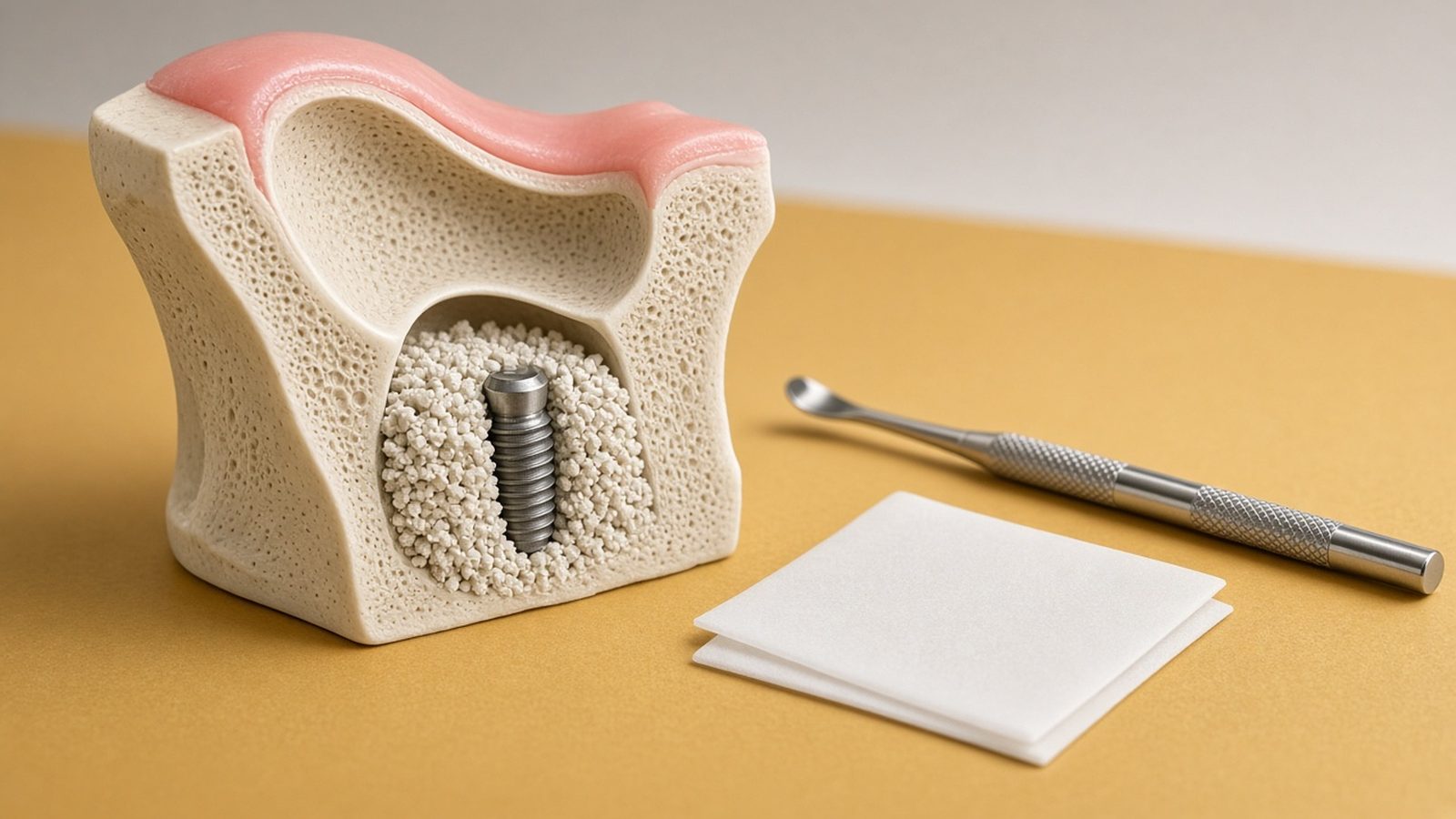
The Calciolari review included cases where bone was rebuilt before or during implant placement, and grafted cases are where smokers' healing is put to the hardest test. Results in grafted upper jaws vary between studies. A long-term study of more than 2,100 implants placed into sinus grafts found no significant difference in failure between smokers and nonsmokers at nine years, but its authors credited a careful protocol that included sticking to a smoking cessation plan. In other words, the good result came with the quit plan, not without it.
At our Hutto office, the closer of our two offices for most of the San Antonio area, our team performs bone grafting and sinus work and has CBCT 3D imaging on site. Our 3D cone beam CT shows bone volume, sinuses and nerves before anyone decides whether you need a graft. Our bone and tissue reconstruction page explains when grafting comes into a plan, and our article on options after a failed bone graft covers what happens when a graft does not take.
For full-arch treatment, our RISE Protocol has a prosthodontist plan the final teeth before surgery, with the surgeon, the anesthesia provider and lab technicians working from the same plan. That planning is the right moment to talk about smoking, because it can change how many implants are recommended, whether a graft is needed and how healing visits are scheduled. Not every mouth is a candidate for fixed teeth, and smoking is one of several factors your specialists weigh.
If you cannot quit completely
Tell your team anyway. A plan built on the truth is safer than one built on a guess, and cutting back, stopping for the healing window and coming in for closer maintenance all count.
The Calciolari review notes research suggesting that at least 1 in 10 smokers do not tell their healthcare providers they smoke, usually because of stigma. We understand why. But your surgeon, your anesthesia provider and your hygienist each make decisions based on what you tell them, and they cannot plan around something they do not know about.
Things to share at your consultation:
- Every product you use: cigarettes, cigars, vapes, heated tobacco, hookah, dip or chew, nicotine pouches and cannabis
- How much you use each day and for how many years
- Past attempts to quit and what helped
- Other conditions that affect healing, such as diabetes or gum disease
- Your medications, including any you use to help you quit
Free help exists. The Texas Tobacco Quitline at 1-877-YES-QUIT (1-877-937-7848), or online at yesquit.org, offers confidential quit support to Texas residents for all tobacco products, including e-cigarettes. Adults can get quit coaching and nicotine replacement therapy, and services are offered in English and Spanish. The WHO summary found that the most effective programs before surgery combine weekly support, quit medicines and referral to a telephone quitline, starting at least four weeks before the operation. Your physician can tell you which quit medicines fit your health, and your surgeon can tell you which ones fit your implant plan.
If you have other health conditions in the mix, our articles on dental implants with diabetes and dental implants with gum disease explain how those risks are managed.
After treatment: smoking and your Maintenance Package
Implants need professional care for life, and smoking is one of the habits our Maintenance Package terms specifically list as affecting coverage.
Regional Implant Centers does not offer a traditional implant warranty. Our implant warranty page explains that trauma, accidents, neglect, poor oral hygiene, smoking, uncontrolled medical conditions, grinding without protection, or not following instructions are not warranty-covered events. Our Maintenance Package terms say coverage may be voided for reasons that include smoking. Enrollment must begin within 30 days of final prosthesis delivery, maintenance visits take place at Regional Implant Centers unless your written agreement states otherwise, and no package guarantees that implants or prosthetics will never need adjustment, repair or replacement. Read those terms before treatment and ask us about anything that is unclear.
The Calciolari authors also recommend that smoking status guide how often patients come back for implant maintenance. If you keep smoking or vaping, expect your team to suggest closer follow-up, and watch for bleeding, swelling or a bad taste around your implants between visits. Our guide to how long dental implants last covers the other habits that matter over the years, and our All-on-4 recovery and diet guide covers the first weeks.
Planning implant treatment from San Antonio
We do not have an office in San Antonio. Our offices are in Hutto, in the Austin area, and in Katy, near Houston, and for most of the San Antonio area Hutto is the shorter drive.
Our Hutto office is at 201 E Wilco Hwy, Suite 203, Hutto, TX 78634. Its posted hours are Monday through Thursday 8 to 5, with Fridays for surgeries only. It has CBCT imaging, performs bone grafting and sinus work, and has a dentist anesthesiologist on site for sedation and anesthesia. Our Katy office is at 707 S Fry Rd, Suite 150, Katy, TX 77450, and is where our in-house dental lab is located.
From San Antonio, New Braunfels and Schertz, the drive to Hutto runs up the I-35 corridor, and some drivers use the SH 130 toll road to stay east of central Austin. If you smoke, a long drive can be a trigger, so plan for it on surgery day and at follow-up visits. After sedation you will need a responsible adult to drive you home. You can start with a phone consultation before deciding whether an in-person visit makes sense. Our guide to full-mouth dental implants from San Antonio covers the visit schedule in more detail.
How insurance and financing fit in
Medical insurance may help with some surgical parts of a plan, but at our office it does not pay for implants, temporary teeth or final teeth, and coverage is never guaranteed.
At Regional Implant Centers, we bill medical insurance only for surgical professional services, such as extractions, bone grafting and alveoloplasty (smoothing and reshaping the bone). Implants, temporary teeth and the final prosthesis are billed to the patient separately. Only PPO plans work for out-of-network oral surgery benefits, and a PPO medical plan with oral surgery coverage may be worth checking, but please verify your benefits with our team before treatment. We cannot bill Federal Employee Program (FEP) Blue Cross Blue Shield plans. Our Insurance Advantage team reviews dental and medical benefits, and our insurance disclaimer explains that a benefit estimate or preauthorization is not a guarantee of payment.
Financing is available through independent third-party companies listed on our financing page, including Cherry, Proceed, CareCredit and Sunbit. Approval, rates and terms are set by each lender, not by Regional Implant Centers.
Frequently asked questions
Can I get dental implants if I smoke?
Often, yes. Smoking is not an absolute bar to implants, but it raises the risk of implant failure, bone loss and peri-implantitis. Your surgeon will look at how much you smoke, your bone and gum health, and the treatment you need, and will usually ask you to stop for a period before and after surgery.
Is vaping better than smoking for dental implants?
It may be less harmful than cigarettes, but there is not enough research to call it safe for implants. A 2024 review found e-cigarette users still had worse measurements around their implants than nonsmokers, though many differences were not statistically significant. A 2026 review found too little data on vaping, heated tobacco and nicotine pouches to judge them.
How long before implant surgery should I stop smoking?
Ask your surgeon for the exact window for your plan. Research on surgery in general links stopping about four weeks or more before surgery with fewer complications, and implant teams usually ask you to stay off tobacco through early healing. If surgery is close, quitting now still makes sense, because quitting shortly before surgery has not been shown to make things worse.
Can I use nicotine pouches or a nicotine patch after implant surgery?
Ask your surgeon before using any nicotine product after surgery. Implant research on nicotine pouches is lacking, and anything placed in your mouth sits near healing tissue. Nicotine replacement is part of many quit programs, so ask your physician and surgeon together which option fits your health and your implant plan.
Does smoking affect my implant warranty?
Regional Implant Centers does not offer a traditional implant warranty. Our warranty page lists smoking among events that are not warranty-covered, and our Maintenance Package terms say coverage may be voided for reasons that include smoking. Read the terms before treatment and ask us about anything that is unclear.
Talk with our team about implants if you smoke or vape
If you are in San Antonio, New Braunfels, Schertz, Boerne or nearby, you need teeth replaced, and you smoke or vape, the first step does not require a drive. Tell us what you use and how much, and we will tell you honestly how it affects your options. You will have a clinical exam, 3D imaging when indicated, and a written plan with estimated insurance benefits, financing options and your expected out-of-pocket investment before anything begins. Qualified patients receive a complimentary consultation, CBCT scan and insurance benefits evaluation. Schedule a consultation by phone or in person, choosing our Hutto office or our Katy office, or call (832) 632-7037.
Sources & Resources
- Calciolari E, Corbella S, Dourou M, Ercal P, Donos N. Tobacco Smoking and Smoke-Free Products as Risk Factors for Dental Implants: A Systematic Review. Clinical Oral Implants Research, 2026.
- Reis INR, do Amaral GCLS, Hassan MA, et al. The influence of smoking on the incidence of peri-implantitis: A systematic review and meta-analysis. Clinical Oral Implants Research, 2023.
- Costa FO, Lages EJP, Cortelli SC, et al. Association between cumulative smoking exposure, span since smoking cessation, and peri-implantitis: a cross-sectional study. Clinical Oral Investigations, 2022.
- Vamos O, Komora P, Gede N, et al. The Effect of Nicotine-Containing Products on Peri-Implant Tissues: A Systematic Review and Network Meta-Analysis. Nicotine and Tobacco Research, 2024.
- Bain CA. Smoking and implant failure: benefits of a smoking cessation protocol. International Journal of Oral and Maxillofacial Implants, 1996.
- Peleg M, Garg AK, Mazor Z. Healing in smokers versus nonsmokers: survival rates for sinus floor augmentation with simultaneous implant placement. International Journal of Oral and Maxillofacial Implants, 2006.
- World Health Organization. Tobacco and postsurgical outcomes. WHO Tobacco Knowledge Summaries, 2020.
- U.S. Food and Drug Administration. Dental Implants: What You Should Know
- Texas Tobacco Quitline. Yes Quit
This article is general patient education and is not a diagnosis or treatment plan. Talk with your surgeon and physician before changing any medication or nicotine product, especially around surgery. Treatment options and timelines depend on an individual clinical evaluation and imaging. Insurance coverage is never guaranteed, and financing is provided by independent third-party companies. Regional Implant Centers has offices in Katy and Hutto, Texas, and does not have an office in San Antonio. Outcomes vary, and implant treatment is not appropriate for every patient.
Ready to Learn What Is Possible?
Schedule a consultation with Regional Implant Centers.
Schedule ConsultationFrequently Asked Questions
Can I get dental implants if I smoke?
Often, yes. Smoking is not an absolute bar to implants, but it raises the risk of implant failure, bone loss and peri-implantitis. Your surgeon will look at how much you smoke, your bone and gum health, and the treatment you need, and will usually ask you to stop for a period before and after surgery.
Is vaping better than smoking for dental implants?
It may be less harmful than cigarettes, but there is not enough research to call it safe for implants. A 2024 review found e-cigarette users still had worse measurements around their implants than nonsmokers, though many differences were not statistically significant. A 2026 review found too little data on vaping, heated tobacco and nicotine pouches to judge them.
How long before implant surgery should I stop smoking?
Ask your surgeon for the exact window for your plan. Research on surgery in general links stopping about four weeks or more before surgery with fewer complications, and implant teams usually ask you to stay off tobacco through early healing. If surgery is close, quitting now still makes sense, because quitting shortly before surgery has not been shown to make things worse.
Can I use nicotine pouches or a nicotine patch after implant surgery?
Ask your surgeon before using any nicotine product after surgery. Implant research on nicotine pouches is lacking, and anything placed in your mouth sits near healing tissue. Nicotine replacement is part of many quit programs, so ask your physician and surgeon together which option fits your health and your implant plan.
Does smoking affect my implant warranty?
Regional Implant Centers does not offer a traditional implant warranty. Our warranty page lists smoking among events that are not warranty-covered, and our Maintenance Package terms say coverage may be voided for reasons that include smoking. Read the terms before treatment and ask us about anything that is unclear.
This content is educational and not a substitute for a consultation.