Full-Mouth Rehabilitation
Severe Tooth Decay and Dental Implants: What Dallas-Fort Worth Patients Should Weigh
When severe decay means saving teeth, when full-arch implants make sense, what infection does to bone, and how Dallas-Fort Worth patients can plan care.
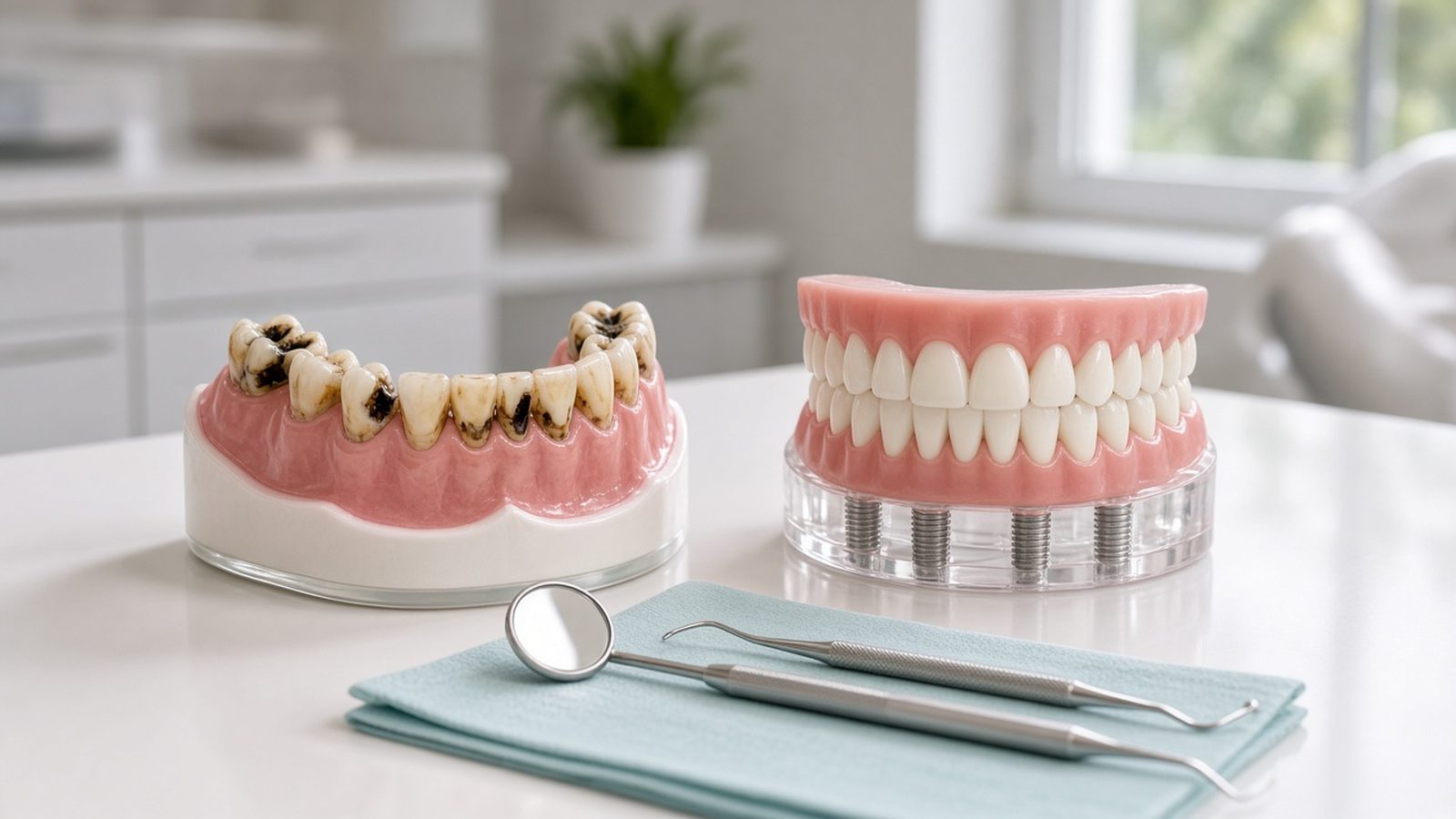
Severe tooth decay and dental implants come up together when cavities have spread across many teeth, a few have broken off at the gumline, and every dental visit seems to end with another root canal or crown on the list. At some point the question changes from "which tooth is next?" to "should I keep fighting for these teeth, or replace them?" If you live in Dallas, Fort Worth, Plano, Frisco, McKinney, Irving or elsewhere in the Metroplex, this article walks through how that decision is usually made, what heavy decay does to the bone an implant needs, and when replacing a full arch is worth discussing. Regional Implant Centers does not have an office in Dallas-Fort Worth. Our offices are in Hutto, near Austin, and in Katy, near Houston. This is general education, not a diagnosis.
The short answer
Severe decay does not automatically mean you need implants, and having implants placed does not fix the habits or conditions that caused the decay. The decision should be made tooth by tooth first, and only then for the whole mouth.
Some badly decayed teeth can still be saved with a filling, crown or root canal. Others have too little sound structure left, or have broken below the gumline, and cannot be restored with a reasonable outlook. When most of the teeth in an arch fall into that second group, keeping the few good ones and replacing the rest piece by piece can cost more time, money and comfort than planning the arch as a whole. Where that line falls is different for every mouth, and it takes an exam and imaging to find it.
How decay goes from a cavity to a tooth that cannot be saved
Decay is a slow process at first, and early on it can even be stopped. It becomes a tooth-loss problem when it reaches the nerve, breaks the tooth down below the gums or causes an infection in the bone.
The National Institute of Dental and Craniofacial Research (NIDCR) explains that decay starts when mouth bacteria turn sugars and starches into acid, which pulls minerals out of the enamel. A white spot is an early sign, and at that stage fluoride and minerals from saliva can repair the enamel. If more mineral is lost than replaced, a cavity forms. Left untreated, NIDCR notes, decay can cause pain, infection and tooth loss, and an infected tooth can form an abscess with facial swelling and fever.
Early decay often causes no symptoms at all. That is one reason people who have gone years between visits are surprised to learn how many teeth are involved. By the time a tooth hurts, the decay is often deep.
Dentists generally look at a handful of things when deciding whether a decayed tooth is worth saving:
- How much sound tooth is left above the gums to hold a filling or crown
- Whether the decay or a break extends below the gumline or into the root
- Whether the nerve is involved and a root canal would be needed, and whether the root could support a crown afterward
- The health of the gums and bone around the tooth
- Where the tooth sits and what job it does in your bite
A 2009 paper in the Journal of Periodontology by a group at the University of Michigan laid out a color-coded chart for exactly this decision, weighing factors such as remaining tooth structure, root canal status, gum disease and the patient's overall risk. The authors made a point that works in both directions: implants can be a better option than heroic efforts to keep a hopeless tooth, but poor reasons for extraction have also cost people teeth that could have been saved. A good plan respects both.
Why one tooth at a time stops working for some people
When decay keeps coming back on tooth after tooth, the real problem is usually the conditions in the mouth, not any single tooth. Repairing each one can turn into a cycle that never gets ahead.
A filling or crown fixes the hole, not the reason the hole formed. When the same mouth produces new decay every year, it helps to ask why. Common reasons include frequent sugary or starchy snacks and drinks, gaps in brushing and cleaning between teeth, receding gums that expose softer root surfaces, and dry mouth. NIDCR notes that older adults with gum recession can get decay on exposed roots, and that dry mouth raises the risk of decay because saliva helps keep harmful germs in check. Medicines for high blood pressure, depression and bladder control often cause dry mouth, and so can diabetes, Sjogren's disease and radiation to the head and neck.
If you have had several crowns or bridges fail over the years, our article on failing crowns and bridges covers that pattern in detail. Severe decay is related but often starts earlier: many of the teeth involved have never been crowned at all.
Signs that a whole-arch conversation may be worth having include:
- Most of the remaining teeth in an arch need a root canal, crown or extraction
- Teeth are breaking off at the gumline
- New decay keeps appearing under or around recent fillings and crowns
- You have had repeated abscesses or swelling
- Missing teeth are already making it hard to chew, and the remaining ones are unreliable
None of these alone decides anything. They are reasons to ask for a full evaluation rather than another single-tooth repair.
What heavy decay does to the bone an implant needs
Decay itself attacks teeth, not bone, but the infections, extractions and years of missing teeth that often follow it can leave less bone to work with. That affects how implants are planned and whether grafting comes first.
A deep cavity that reaches the nerve can let infection travel out through the root tip into the jawbone, where it can create an area of bone loss around the root. Broken roots left in place for a long time can do the same. Once a tooth is removed, the bone that held it gradually remodels, so a tooth lost years ago often leaves a thinner ridge than a tooth removed recently.
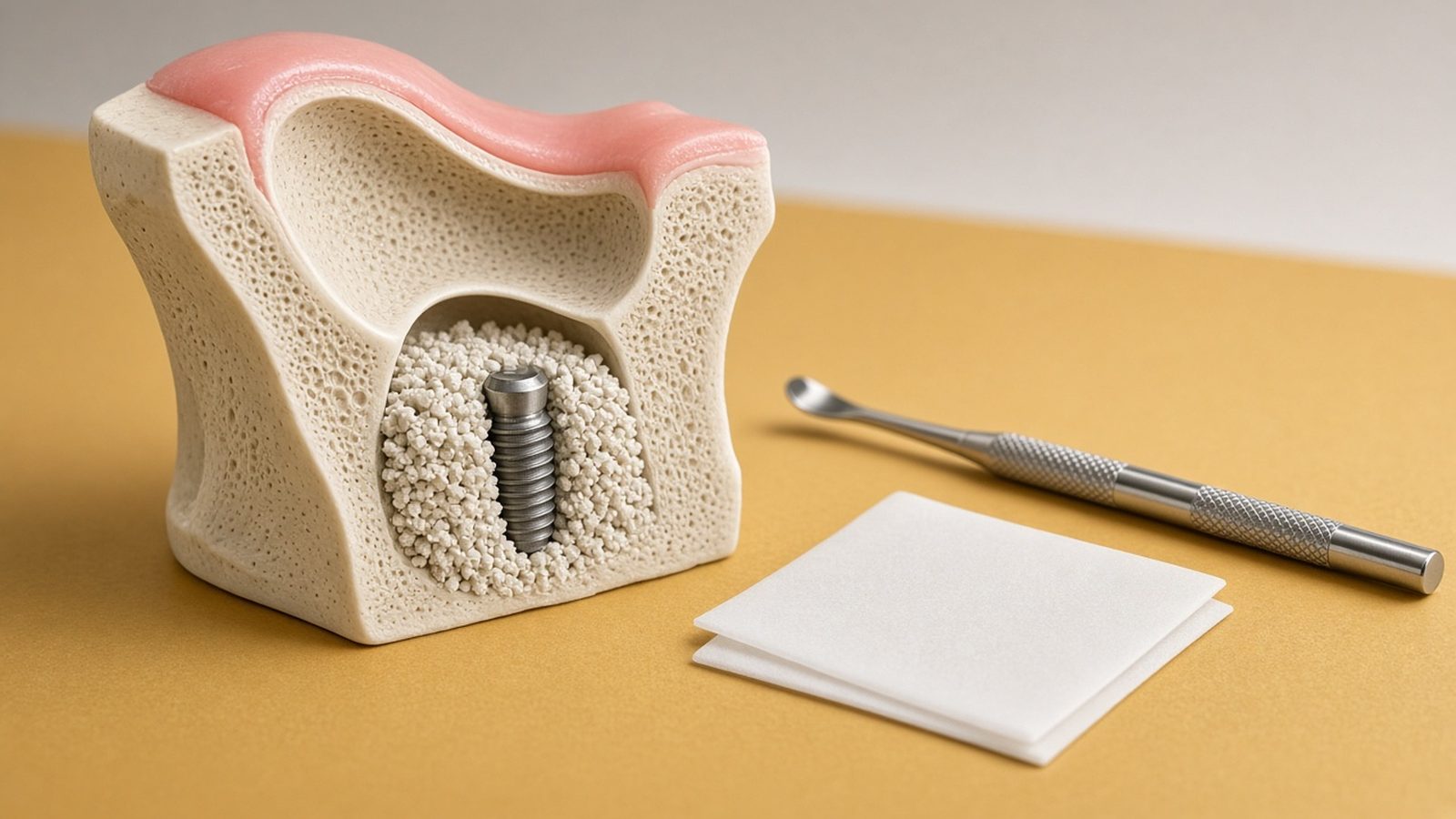
This is why imaging matters before anyone decides on implants. Our 3D cone beam CT scanning shows bone volume, nerve pathways and sinus position, and it can show infection around the roots that a flat X-ray may miss. When the bone is thin, a plan may call for grafting first, a different implant layout or another approach altogether. Our page on why bone grafting may be needed before dental implants explains the basics, and our article on being told you are not a candidate covers options when bone is very limited.
Can implants go in the same day badly decayed teeth come out?
Sometimes. Research shows implants can heal well when they are placed right after removing infected teeth, as long as the sockets are cleaned thoroughly and the implant is held firmly by the bone. Some cases still do better with a healing period first.
Placing an implant into a fresh socket is called immediate placement. A 2015 systematic review by Chrcanovic and colleagues found high survival rates in studies where implants were placed immediately after removing teeth with root-tip or gum infections, provided the socket was carefully cleaned out first. The authors also said more long-term randomized trials were needed and that the benefit of antibiotics in these cases was not yet proven. A 2020 meta-analysis of nine studies and 2,281 sockets found no significant difference in implant survival between infected and non-infected sockets.
There are real limits. A 2019 consensus report from the European Workshop in Periodontology noted that most of the evidence comes from single-tooth cases, so applying it to multiple extractions needs care. The same group listed infection, a damaged socket, the inability to hold the implant firmly in the right position, gum thickness, appearance and general health among the factors that should guide timing. It advised against immediate placement where socket walls are badly damaged, and it noted a small extra risk of early implant loss with immediate placement overall.
For full-arch treatment, the question is often less about each socket and more about whether the remaining bone across the arch can hold enough implants firmly enough to support teeth right away. Many patients are able to leave surgery with a fixed temporary set of teeth on the same day as implant placement, but your treatment plan determines whether immediate teeth are appropriate for you. Those same-day teeth are temporary, and the final teeth come later. Our article on temporary versus final teeth explains the difference, and what happens on full-arch surgery day walks through the day itself.
Staged treatment: when waiting is the safer plan
When infection is active, swelling is present or bone is badly damaged, removing teeth first and letting the area heal before implants go in can be the more predictable path, even though it takes longer.
Our oral surgery page explains that treatment may be completed in one visit or staged over time, and lists extractions, including full-mouth extractions when clinically appropriate, socket preservation, bone grafting, bone shaping and treatment of infection and severe disease. A staged plan might remove failing teeth and treat infection, give the bone time to heal, then place implants once the foundation is ready. You would wear a temporary option in the meantime so you are not left without teeth.
For DFW patients, staging has a practical cost: more trips. That is worth raising at the consultation so the plan accounts for your travel, not just the clinical sequence.
What changes after the teeth are replaced, and what does not
Implants and implant-supported teeth cannot get cavities, but the gums and bone around them can still become inflamed and infected. The habits that caused decay still matter.
Replacing decayed teeth removes the decay, but it does not change your diet, your saliva or your cleaning routine. Bacterial plaque builds up on implant teeth the same way it does on natural teeth, and gum inflammation around implants can progress to bone loss if it is not treated. Dry mouth, frequent snacking and smoking can still affect healing and long-term health. If you smoke or vape, our article on smoking and dental implants covers what the research shows.
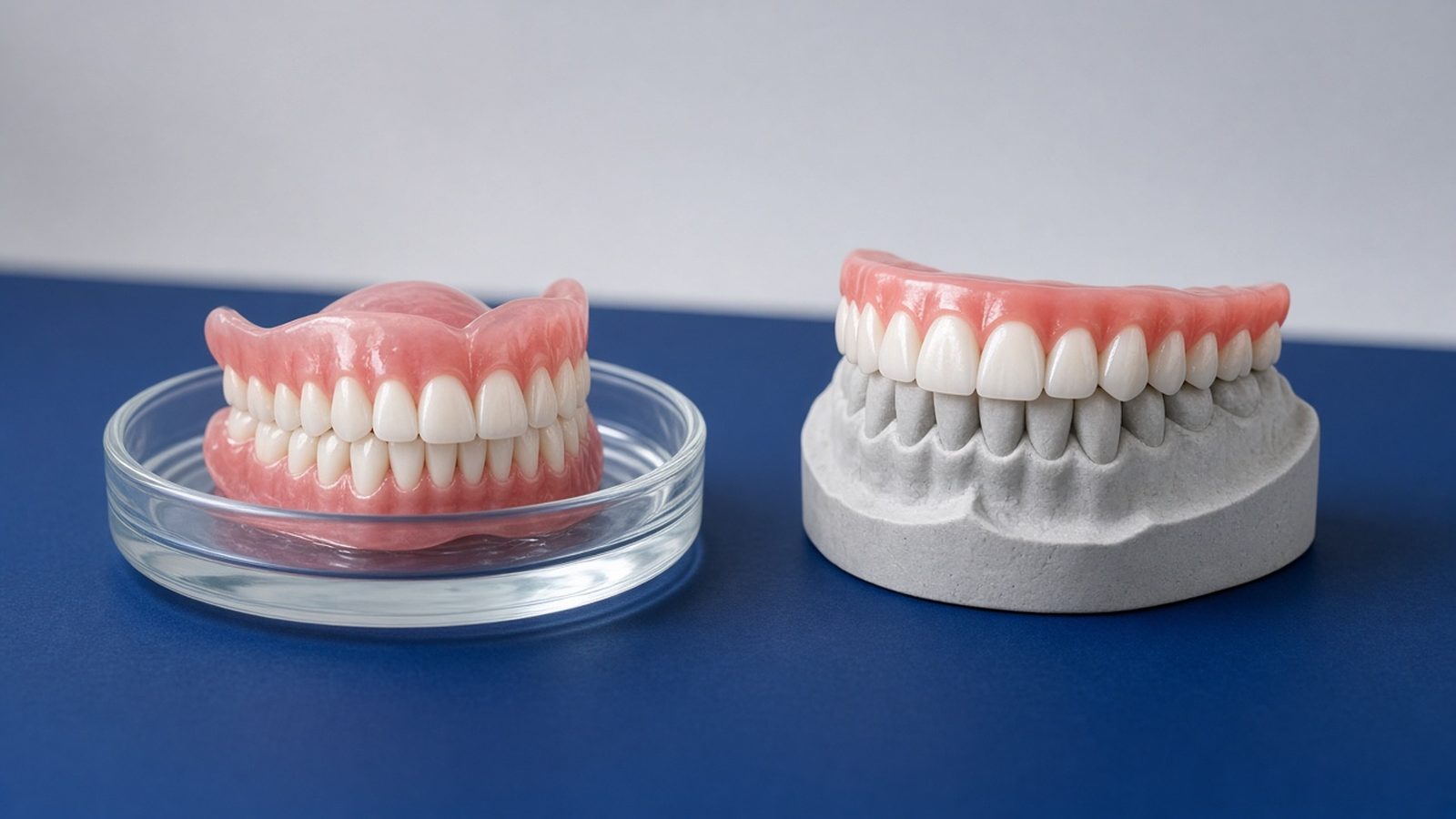
It is also not always all or nothing. Depending on bone, budget and preference, the options for an arch can include traditional dentures, snap-on implant overdentures and fixed full-arch teeth, all offered at both of our offices. Our comparison of All-on-X, implant dentures and dentures lays out the trade-offs. If you have gum disease as well as decay, our article on dental implants with gum disease covers how that changes planning.
After treatment, Regional Implant Centers does not offer a traditional implant warranty. Our implant warranty page explains which events are not covered, including neglect, poor oral hygiene and smoking. Our Maintenance Package must begin within 30 days of final prosthesis delivery, and its terms explain what can void coverage. Read both before treatment.
How our team evaluates a mouth with severe decay
Our first job is to sort out which teeth are failing, why they failed and what the bone can support. Replacing teeth is one option among several, not the starting assumption.
Our general dentistry page puts it this way: our goal is not simply to replace teeth, and whenever possible it is to help you keep your natural teeth healthy for life. When the evaluation points toward full-arch treatment, our RISE Protocol sets the order of work. A prosthodontist plans the final teeth before surgery, and the surgeon, the anesthesia provider and our lab technicians work from that same plan, so implant positions are chosen around the teeth you will end up with.
At our Hutto office, our team performs bone grafting and sinus work, has CBCT imaging on site and has a dentist anesthesiologist on site for sedation and anesthesia. Our in-house dental lab is at our Katy office, where technicians can see you in person while they refine tooth shape, shade and smile line. For patients with very limited upper bone, our surgeons Dr. Dan Holtzclaw and Dr. Enrique Tabarini also perform zygomatic and pterygoid implants, though these are not right for everyone.
Not every mouth is a candidate for implants, and some people are better served by restoring the teeth they have. You should leave the evaluation knowing which teeth could be saved, which could not and why.
Planning care from Dallas-Fort Worth
We do not have an office in the Metroplex. For most DFW patients, our Hutto office is the shorter drive, and you can start with a phone consultation before deciding whether to travel.
Our Hutto office is at 201 E Wilco Hwy, Suite 203, Hutto, TX 78634, northeast of Austin. Its posted hours are Monday through Thursday 8 to 5, with Fridays for surgeries only. Our Katy office is at 707 S Fry Rd, Suite 150, Katy, TX 77450, on the west side of Houston, and is home to our lab. From Dallas or Fort Worth, Hutto is roughly a three- to four-hour drive down I-35 without traffic delays, and Katy is longer. Our article on full-mouth dental implants from Dallas has city-by-city distances, flight options and a way to count trips.
If an active infection is causing swelling or pain now, do not wait for a long-distance appointment. See a dentist near you promptly, and if you have trouble breathing or swallowing, swelling that spreads quickly or a high fever, call 911 or go to the nearest emergency room. Keep your DFW dentist involved, too, especially if some of your teeth can be saved.
How insurance and financing fit in
Medical insurance may help with some surgical parts of a plan, but at our office it does not pay for implants, temporary teeth or final teeth, and coverage is never guaranteed.
At Regional Implant Centers, we bill medical insurance only for surgical professional services, such as extractions, bone grafting and alveoloplasty (smoothing and reshaping the bone). Implants, temporary teeth and the final prosthesis are billed to the patient separately. Only PPO plans work for out-of-network oral surgery benefits, and a PPO medical plan with oral surgery coverage may be worth checking, but please verify your benefits with our team before treatment. We cannot bill Federal Employee Program (FEP) Blue Cross Blue Shield plans. Our Insurance Advantage team reviews dental and medical benefits, and our insurance disclaimer explains that a benefit estimate or preauthorization is not a guarantee of payment. Our article on whether insurance covers All-on-4 for DFW patients goes into more detail.
Financing is available through independent third-party companies listed on our financing page, including Cherry, Proceed, CareCredit and Sunbit. Approval, rates and terms are set by each lender, not by Regional Implant Centers.
Frequently asked questions
Do I need dental implants if all my teeth are decayed?
Not necessarily. Some decayed teeth can still be saved with fillings, crowns or root canals, while others have too little sound structure left. The decision should be made tooth by tooth after an exam and imaging. When most teeth in an arch cannot be saved with a reasonable outlook, replacing the whole arch may be worth discussing.
Can implants be placed the same day decayed or infected teeth are removed?
Sometimes. Studies have found that implants placed right after removing infected teeth can heal well when the sockets are cleaned thoroughly and the implant is held firmly by the bone. Active infection, swelling or badly damaged sockets may make a healing period first the safer choice. Your surgeon decides based on your exam and 3D imaging.
Can dental implants get cavities?
No. Implants and the teeth attached to them cannot decay. The gums and bone around implants can still become inflamed and infected, so daily cleaning and professional maintenance still matter, and the habits that led to decay still affect your long-term results.
Does severe decay mean I will need a bone graft?
Not always. Decay attacks teeth rather than bone, but infection at the root tips, broken roots and teeth missing for years can leave less bone. A 3D CBCT scan shows how much bone is available and whether grafting, a different implant layout or another approach makes sense.
Does Regional Implant Centers have an office in Dallas or Fort Worth?
No. Our offices are in Hutto, near Austin, and in Katy, near Houston. For most DFW patients Hutto is the shorter drive, and you can start with a phone consultation before deciding whether to travel.
Talk with our team about severe decay
If you live in Dallas, Fort Worth, Plano, Frisco, McKinney, Irving or nearby and are tired of repairing one decayed tooth after another, the first step does not require a drive. Tell us what has been done so far and what your dentist has found, and we will tell you honestly whether full-arch treatment makes sense or whether saving your teeth is the better path. If you come in, you will have a clinical exam, 3D imaging when indicated, and a written plan with estimated insurance benefits, financing options and your expected out-of-pocket investment before anything begins. Qualified patients receive a complimentary consultation, CBCT scan and insurance benefits evaluation. Schedule a consultation by phone or in person, choosing our Hutto office or our Katy office, or call (832) 632-7037.
Sources & Resources
- National Institute of Dental and Craniofacial Research. Tooth Decay
- National Institute of Dental and Craniofacial Research. Dry Mouth
- Avila G, Galindo-Moreno P, Soehren S, Misch CE, Morelli T, Wang HL. A novel decision-making process for tooth retention or extraction. Journal of Periodontology, 2009.
- Chrcanovic BR, Martins MD, Wennerberg A. Immediate placement of implants into infected sites: a systematic review. Clinical Implant Dentistry and Related Research, 2015.
- Saijeva A, Juodzbalys G. Immediate Implant Placement in Non-Infected Sockets versus Infected Sockets: a Systematic Review and Meta-Analysis. Journal of Oral and Maxillofacial Research, 2020.
- Tonetti MS, Jung RE, Avila-Ortiz G, et al. Management of the extraction socket and timing of implant placement: Consensus report and clinical recommendations of group 3 of the XV European Workshop in Periodontology. Journal of Clinical Periodontology, 2019.
This article is general patient education and is not a diagnosis or treatment plan. Whether a tooth can be saved, and whether implants are appropriate, depends on an individual clinical evaluation and imaging. Insurance coverage is never guaranteed, and financing is provided by independent third-party companies. Regional Implant Centers has offices in Katy and Hutto, Texas, and does not have an office in the Dallas-Fort Worth area. Outcomes vary, and implant treatment is not appropriate for every patient.
Ready to Learn What Is Possible?
Schedule a consultation with Regional Implant Centers.
Schedule ConsultationFrequently Asked Questions
Do I need dental implants if all my teeth are decayed?
Not necessarily. Some decayed teeth can still be saved with fillings, crowns or root canals, while others have too little sound structure left. The decision should be made tooth by tooth after an exam and imaging. When most teeth in an arch cannot be saved with a reasonable outlook, replacing the whole arch may be worth discussing.
Can implants be placed the same day decayed or infected teeth are removed?
Sometimes. Studies have found that implants placed right after removing infected teeth can heal well when the sockets are cleaned thoroughly and the implant is held firmly by the bone. Active infection, swelling or badly damaged sockets may make a healing period first the safer choice. Your surgeon decides based on your exam and 3D imaging.
Can dental implants get cavities?
No. Implants and the teeth attached to them cannot decay. The gums and bone around implants can still become inflamed and infected, so daily cleaning and professional maintenance still matter, and the habits that led to decay still affect your long-term results.
Does severe decay mean I will need a bone graft?
Not always. Decay attacks teeth rather than bone, but infection at the root tips, broken roots and teeth missing for years can leave less bone. A 3D CBCT scan shows how much bone is available and whether grafting, a different implant layout or another approach makes sense.
Does Regional Implant Centers have an office in Dallas or Fort Worth?
No. Our offices are in Hutto, near Austin, and in Katy, near Houston. For most DFW patients Hutto is the shorter drive, and you can start with a phone consultation before deciding whether to travel.
This content is educational and not a substitute for a consultation.