Full-Mouth Rehabilitation
Zirconia vs. Acrylic Full-Arch Teeth: How Houston Patients Can Choose Their Final Bridge
Zirconia and acrylic both work for final full-arch teeth, but they wear, break and age differently. Here is how to choose the material for your bridge.
If you are planning All-on-4 or All-on-X treatment, someone will eventually ask what you want your final teeth made of. Quotes from Houston-area offices often show two options that look alike until you notice that one line says acrylic, the other says zirconia, and the totals are far apart. The choice between zirconia vs. acrylic full-arch teeth affects how your bridge looks after years of coffee, how it handles a hard bite, what a repair involves and what the bridge is likely to need over the next decade. This guide explains what each material actually is, what the research shows and how to make the decision with your team. It is written for patients in Katy, Cypress, Sugar Land, Fulshear, Richmond, Memorial and the rest of West Houston.
One note on scope. This article is about the final bridge, the one you live with after healing is done. The temporary teeth you wear during healing are a separate topic, covered in our guide to same-day temporary teeth vs. final teeth. If you grind or clench, our article on teeth grinding and All-on-4 goes deeper on protecting a bridge from heavy forces. Here the question is narrower: zirconia or acrylic, and what that choice really means.
The short answer
Both materials can work for final full-arch teeth. Zirconia generally wears less, resists stains and, in several studies, needed fewer repairs, but it costs more at the start, weighs more and is harder to fix when it does break. Acrylic is lighter, easier to adjust and repair, and less expensive upfront, but it tends to wear, stain and need more upkeep over the years.
The research leans toward zirconia for long-term durability, with real caveats. Much of it comes from observational studies rather than randomized trials, many follow patients for only a few years, and "zirconia" in one study is not always the same design as "zirconia" in another. That is why the single word on your quote matters less than the whole design: the material, what is inside it, how thick it is, how the bite is balanced and what the bridge bites against.
What "acrylic" and "zirconia" mean in a full-arch bridge
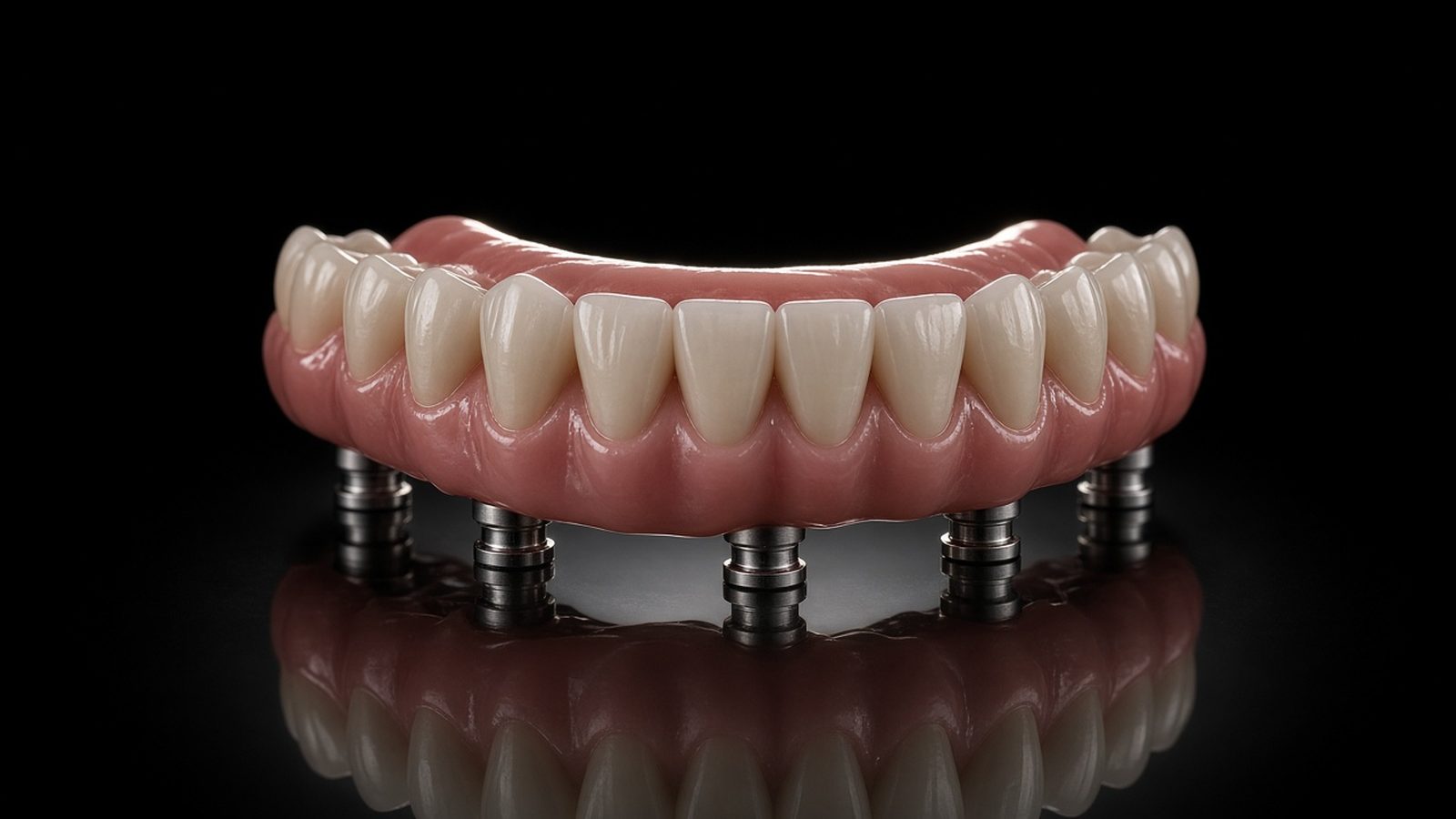
An acrylic final bridge is usually made of denture-style teeth and pink acrylic gums built around a metal framework. A zirconia bridge is milled from a block of ceramic, either solid (monolithic) or with porcelain layered on top, and it may sit over a titanium framework.
Acrylic in dentistry usually means PMMA, short for polymethyl methacrylate, the same family of resin used in traditional dentures. Used alone, it is not stiff enough to span a whole arch for years, so a final acrylic bridge normally has a metal bar or framework inside it. You may see it called a metal-acrylic bridge, a fixed denture or a hybrid.
Zirconia is zirconium dioxide, a ceramic that is milled by computer from a solid block and then fired until it becomes very hard. A monolithic zirconia bridge is one solid piece, with color added by stains rather than a separate layer. A layered zirconia bridge has porcelain fused over the zirconia, usually to make the front teeth look more lifelike. Some designs layer only the pink gum area. Others bond a zirconia exterior over a titanium framework for extra rigidity.
The labels get confusing fast. "Hybrid" is used for acrylic-on-metal bridges, for zirconia on titanium and for newer composite materials. When you hear the word, ask exactly what the bridge is made of, inside and out.
One more point that trips people up: this choice is about the teeth, not the implants. The U.S. Food and Drug Administration notes that most dental implant systems are made of titanium or zirconium oxide. The implants in a full-arch case are usually titanium, whatever the bridge on top is made of.
What the research shows
Studies generally find that zirconia full-arch bridges wear less and need fewer repairs than metal-acrylic bridges, with no clear difference in how long the implants themselves survive. Most of the evidence is observational and short to medium term, so it is a lean, not a verdict.
A 2020 study in the International Journal of Oral and Maxillofacial Implants followed 74 full arches, 43 metal-acrylic and 31 zirconia, for an average of almost nine years. At five years, 93.7 percent of the zirconia bridges were still in service, compared with 83.0 percent of the metal-acrylic bridges, and late complications showed up more often with metal-acrylic. In both groups, the most common minor problem was a single chipped or broken tooth. The study found no difference in peri-implantitis, an infection of the gum and bone around implants, or in implant failure. The zirconia bridges cost more to make, but because they had fewer complications, the authors found that maintenance and repair costs did not differ greatly between the groups over time.
A 2026 meta-analysis in the Journal of Clinical and Experimental Dentistry reviewed 12 studies comparing zirconia over a metal framework with metal-acrylic bridges. The zirconia group showed significantly less wear and a lower risk of peri-implantitis, and bone loss around the implants also favored zirconia. The authors found no significant difference in implant survival, framework fractures, appearance or speech. They were also candid that most of the studies carried a moderate to critical risk of bias, mainly because patients were not randomly assigned to one material or the other.
A 2026 systematic review in the Journal of Prosthetic Dentistry looked specifically at wear. Wear-related problems, including severe wear, chipping, loose screws and broken frameworks, were reported more often with metal-acrylic full-arch bridges. Grinding and going without a protective night appliance were frequently linked to more problems.
Zirconia has its own pattern. A 2017 systematic review in the European Journal of Oral Implantology combined 12 studies covering 285 one-piece zirconia full-arch bridges in 223 patients. Only 1.4 percent failed, all from fractures, but 16.1 percent had some complication, and almost all of those were chips in the porcelain layer. The authors suggested that monolithic zirconia with only surface stains, or zirconia layered only at the gums, might avoid much of that chipping. An updated 2021 review of 17 studies on monolithic and minimally layered zirconia reported high short-term success and low complication rates, while noting that strong long-term evidence is still lacking.
Put together, the studies point the same way. Solid or minimally layered zirconia holds its shape well, acrylic teeth wear and break more often, and layered porcelain is where zirconia tends to chip. None of these studies can tell you which material is right for your mouth.
Zirconia vs. acrylic, side by side
This table summarizes the general trade-offs. Your own bite, bone, habits and opposing teeth can shift any row.
| Acrylic (PMMA) on a metal framework | Zirconia (monolithic, layered or over titanium) | |
|---|---|---|
| Wear | Teeth gradually wear and the bite can flatten | Holds its shape well; layered porcelain can chip |
| Appearance over time | Can stain or dull, especially with coffee, tea or tobacco | Resists staining; color stays more stable |
| Typical problems | Chipped or detached teeth, worn surfaces | Porcelain chips on layered designs; rarely, a fracture of the bridge |
| Repairs | Often simpler: teeth can be replaced or rebuilt | A small chip may be polished; a fracture usually means a remake |
| Weight and feel | Lighter | Heavier; most people adjust, some notice it |
| Sound | Softer contact when teeth meet | Some people notice a firmer click, especially zirconia against zirconia |
| Adjusting later | Easier to add to or reshape | Harder to change once milled |
| Upfront cost | Lower | Higher |
When acrylic still makes sense
Acrylic is not simply the budget option. It has real advantages when changes are expected, when a lighter bridge matters, when a design needs testing, and in removable overdentures.
Acrylic is easy to add to, reshape and repair. That makes it the usual material for trial teeth: a prototype bridge that lets you and your team test the bite, speech, lip support and tooth shape before a final design is milled. It also suits situations where the gums or bone are still expected to change, or where future adjustments are likely.
It is also the standard material for most removable dentures and snap-on implant overdentures, which have denture teeth set in an acrylic base. Both of our offices offer traditional dentures, snap-on implant overdentures and fixed full-arch teeth, and our comparison of All-on-X, implant dentures and traditional dentures explains how those options differ.
And yes, budget is a fair consideration. A lower upfront cost can make fixed teeth possible sooner. The trade-off is likely upkeep later, so ask what repairs or a future replacement would involve before you decide.
When zirconia tends to fit
Zirconia is often chosen when long-term wear, stain resistance and a smooth, cleanable surface matter most, as long as there is enough room in the mouth for a strong design.
Zirconia is strong, but it needs enough thickness to stay strong, especially where the bridge connects between implants and at the back ends. The room available between your upper and lower jaws, which depends on your bone, your bite and the planned tooth position, shapes what a safe zirconia design looks like. That is one reason the material decision belongs to a prosthodontist who is planning the whole bite, not a menu choice.
What the bridge bites against also matters. Natural teeth, another implant bridge and a removable denture all behave differently. A common worry is that zirconia will wear down natural teeth on the other side. The 2026 wear review found that only one study had measured this, and it found no significant difference between the prosthetic materials studied and natural enamel. That is reassuring but thin, so it is reasonable to ask your team how they will polish and adjust the bridge to protect your remaining teeth.
If you grind your teeth, no material solves the problem on its own. The bite design, the material and a custom nightguard work together, as our grinding and All-on-4 guide explains.
Zirconia can break, too
No full-arch material is unbreakable. Zirconia problems are usually chips in a porcelain layer and, less often, a crack through the bridge, and a crack usually means a new bridge rather than a quick fix.
When an acrylic bridge breaks, the damage is usually a chipped or detached tooth, and the repair can often be done by replacing or rebuilding that tooth. When a zirconia bridge chips, a small edge may simply be polished smooth. A fracture through the zirconia is another matter, since the bridge generally has to be remade. Design details such as thickness, how far teeth extend past the last implant and how evenly the bite is balanced all affect that risk. So does fit: a bridge that does not sit passively on every implant keeps stress on the screws and the material.
Our implant warranty page is plain about this: there is no guarantee that implants or prosthetics will never need adjustment, repair or replacement. The Silver and Gold tiers of our Maintenance Package include a prosthesis repair service that starts with an evaluation of the zirconia bridge, with or without a bar, and a decision on whether to repair or remake it.
How to choose: the questions that decide it
The material should follow your bite, your space, your habits, what you value most and what you can maintain. Five questions usually settle it.
First, what does the bridge bite against? Second, do you grind or clench, and will you wear a nightguard every night? Third, how much room is there for the bridge, and does that room support a strong zirconia design? Fourth, how do you weigh a lower upfront cost against the likelihood of more repairs or a replacement later? Fifth, how much do appearance and stain resistance matter to you over many years?
It is common to start out sure you want the toughest-sounding material, only to find that the space in your mouth or a removable plan makes more sense. It is just as common to assume acrylic is the only realistic choice when a zirconia design would fit your goals better. Neither answer is wrong. A good plan explains why one fits you better.
How to read the material line on a full-arch quote
"Zirconia" or "acrylic" on a quote is only part of the story. Ask what kind, what is inside it, whether a trial bridge is part of the plan and what repairs involve later.
If you are comparing plans, these questions make the material line easier to judge:
- Is the zirconia monolithic, layered with porcelain or bonded over a titanium framework?
- If the final is acrylic, what framework is inside it, and what kind of teeth?
- Will I try in a prototype before the final bridge is made?
- Are the temporary and the final bridge both included, and what happens if the temporary breaks?
- Who designs and makes the bridge, and will the technician see me in person?
- What does a repair or remake involve for this material, and is a nightguard included?
Our article on how to avoid failed implant dentistry covers broader questions to ask before you accept any plan.
How our Katy team chooses final teeth with you
At Regional Implant Centers, the prosthodontist plans your final teeth before surgery, and the material is chosen for your bite, your face and what the bridge will bite against. Our final options include a Monolithic Zirconia Full Arch and Titanium-Reinforced Zirconia, and our in-house dental lab is at our Katy office.
Under our RISE Protocol, your prosthodontist maps out your bite, facial support, speech and the long-term plan for your new teeth before surgery begins. Dr. Polyxeni Konti, our prosthodontist, serves patients at the Katy office. Our article on how prosthodontists design implant-supported teeth explains that role, and why the final teeth should guide surgery planning explains why the material and shape are considered before any implant is placed.
Our full-mouth implants page lists the final options. The Monolithic Zirconia Full Arch is solid zirconia, and we describe it as ideal for patients for whom esthetics and cleansability matter most. Titanium-Reinforced Zirconia puts a titanium framework inside a zirconia shell; the page lists increased rigidity and enhanced support among its features and says it is designed for demanding cases. The same page lists our NanoBio Hybrid, and your prosthodontist can explain how it compares for your case. We do not think any one material is right for everyone.
Our in-house dental lab in Katy is where technicians work beside the surgical and restorative team. Seeing you in person helps them refine tooth shape, shade, lip support and smile line, and before the final bridge is completed, the team evaluates your bite, speech, lip support, cleansability and comfort. Our post on why an in-house lab matters goes into more detail. After surgery, we use photogrammetry when appropriate to record the exact position of each implant, so the final bridge can be designed for a passive fit, which helps reduce stress on the implants, screws and materials. Planning starts with CBCT imaging and the SegMark Workflow, which brings your scans, bite records, facial references and restorative goals into one plan.
Surgery is handled by our surgical specialists, with a dedicated anesthesia provider focused on your safety, comfort and monitoring. For patients with severe upper-jaw bone loss, Dr. Dan Holtzclaw and Dr. Enrique Tabarini perform zygomatic and pterygoid implants in selected cases, which can change the shape and design of the final bridge. These approaches are not right for everyone.
The Katy office is at 707 S Fry Rd, Suite 150, and serves patients from Katy, Cypress, Sugar Land, Fulshear, Richmond, Memorial and West Houston. Hours are Monday through Thursday, 8 AM to 5 PM, with Fridays reserved for surgery. Before treatment begins, you receive a detailed treatment plan that outlines the recommended care, estimated insurance benefits, financing options and your expected out-of-pocket cost. Ask that the final bridge material be named in it. Our Insurance Advantage team reviews your benefits, though coverage is never guaranteed, and financing is available through independent third-party lenders. After your final teeth are delivered, enrollment in a required Maintenance Package begins within 30 days. It is not dental insurance or a warranty, and our warranty page notes that damage from bruxism without protection is not a covered event, which is one more reason a nightguard matters if you grind.
Frequently asked questions
Is zirconia better than acrylic for All-on-4 final teeth? Often, but not always. Studies generally show zirconia wears less, resists stains and needs fewer repairs than acrylic on a metal framework. Acrylic is lighter, easier to repair and less expensive upfront. The better choice depends on your bite, the space available, what the bridge bites against and your habits.
How long do zirconia and acrylic full-arch bridges last? There is no fixed number for either. In one study that followed patients for an average of almost nine years, about 94 percent of zirconia bridges and 83 percent of metal-acrylic bridges were still in service at five years. Care, grinding, bite design and maintenance visits affect how long any bridge lasts.
Can a zirconia bridge be repaired if it chips or breaks? A small chip can sometimes be polished smooth. Chips in a porcelain layer may need lab work, and a crack through the zirconia usually means a new bridge. Acrylic bridges are generally simpler to repair because individual teeth can be replaced or rebuilt.
Will a zirconia bridge wear down my natural teeth? The evidence is limited. A 2026 review found only one study that measured wear on opposing teeth, and it found no significant difference between the prosthetic materials and natural enamel. Careful polishing and bite adjustment matter, so ask your team how they protect your remaining teeth.
Can I switch from acrylic to zirconia later? Often, yes. If the implants are healthy and well positioned, a new zirconia bridge can usually be made for the same implants. Your team will check the implants, the bite and the space available before recommending the change.
Talk with our Katy team about your final teeth
If you are comparing zirconia and acrylic, or trying to make sense of a quote that lists both, a consultation is the place to sort it out. Schedule a Houston-area consultation, in person at our Katy office or by phone, or call (832) 632-7037. Qualified patients receive a complimentary consultation, advanced CBCT scan and insurance benefits evaluation. Bring any plan or quote you already have, and by the end of the appointment you will have a clear understanding of your next steps.
Sources & Resources
- U.S. Food and Drug Administration: Dental Implants: What You Should Know
- Barootchi S, Askar H, Ravida A, Gargallo-Albiol J, Travan S, Wang HL. Long-term clinical outcomes and cost-effectiveness of full-arch implant-supported zirconia-based and metal-acrylic fixed dental prostheses: a retrospective analysis. International Journal of Oral and Maxillofacial Implants, 2020;35(2):395-405.
- Marinkovic D, Gutierrez R, Frey M, Collao F, Moreno Y, Miranda C. Prosthetic and biological complications of metal-zirconia versus metal-acrylic implant-supported screw-retained complete-arch prostheses: a systematic review and meta-analysis. Journal of Clinical and Experimental Dentistry, 2026;18(5):e704-e715.
- Sanz E, Vasquez-Ramos S, Mosaddad SA, Revilla-Leon M, Gomez-Polo M. Prosthesis wear and complications in various materials used for fixed implant-supported prostheses: a systematic review. Journal of Prosthetic Dentistry, 2026;136(2):401-411.
- Bidra AS, Rungruanganunt P, Gauthier M. Clinical outcomes of full arch fixed implant-supported zirconia prostheses: a systematic review. European Journal of Oral Implantology, 2017;10 Suppl 1:35-45.
- AlTarawneh S, Thalji G, Cooper L. Full-arch implant-supported monolithic zirconia fixed dental prostheses: an updated systematic review. International Journal of Oral Implantology, 2021;14(1):13-22.
This article is general education, not a diagnosis or treatment recommendation. Whether full-arch implants suit you, which final material fits your bite, and the timeline and cost of treatment depend on an individual clinical evaluation. Same-day teeth are temporary and offered only to qualifying patients. Insurance coverage is never guaranteed, and financing is provided by independent third-party companies. Regional Implant Centers has offices in Katy and Hutto, Texas.
Ready to Learn What Is Possible?
Schedule a consultation with Regional Implant Centers.
Schedule ConsultationFrequently Asked Questions
Is zirconia better than acrylic for All-on-4 final teeth?
Often, but not always. Studies generally show zirconia wears less, resists stains and needs fewer repairs than acrylic on a metal framework. Acrylic is lighter, easier to repair and less expensive upfront. The better choice depends on your bite, the space available, what the bridge bites against and your habits.
How long do zirconia and acrylic full-arch bridges last?
There is no fixed number for either. In one study that followed patients for an average of almost nine years, about 94 percent of zirconia bridges and 83 percent of metal-acrylic bridges were still in service at five years. Care, grinding, bite design and maintenance visits affect how long any bridge lasts.
Can a zirconia bridge be repaired if it chips or breaks?
A small chip can sometimes be polished smooth. Chips in a porcelain layer may need lab work, and a crack through the zirconia usually means a new bridge. Acrylic bridges are generally simpler to repair because individual teeth can be replaced or rebuilt.
Will a zirconia bridge wear down my natural teeth?
The evidence is limited. A 2026 review found only one study that measured wear on opposing teeth, and it found no significant difference between the prosthetic materials and natural enamel. Careful polishing and bite adjustment matter, so ask your team how they protect your remaining teeth.
Can I switch from acrylic to zirconia later?
Often, yes. If the implants are healthy and well positioned, a new zirconia bridge can usually be made for the same implants. Your team will check the implants, the bite and the space available before recommending the change.
This content is educational and not a substitute for a consultation.