Oral Infections & Systemic Health
Chronic Tooth Infections and Your Health: What Houston Patients Should Know Before Dental Implants
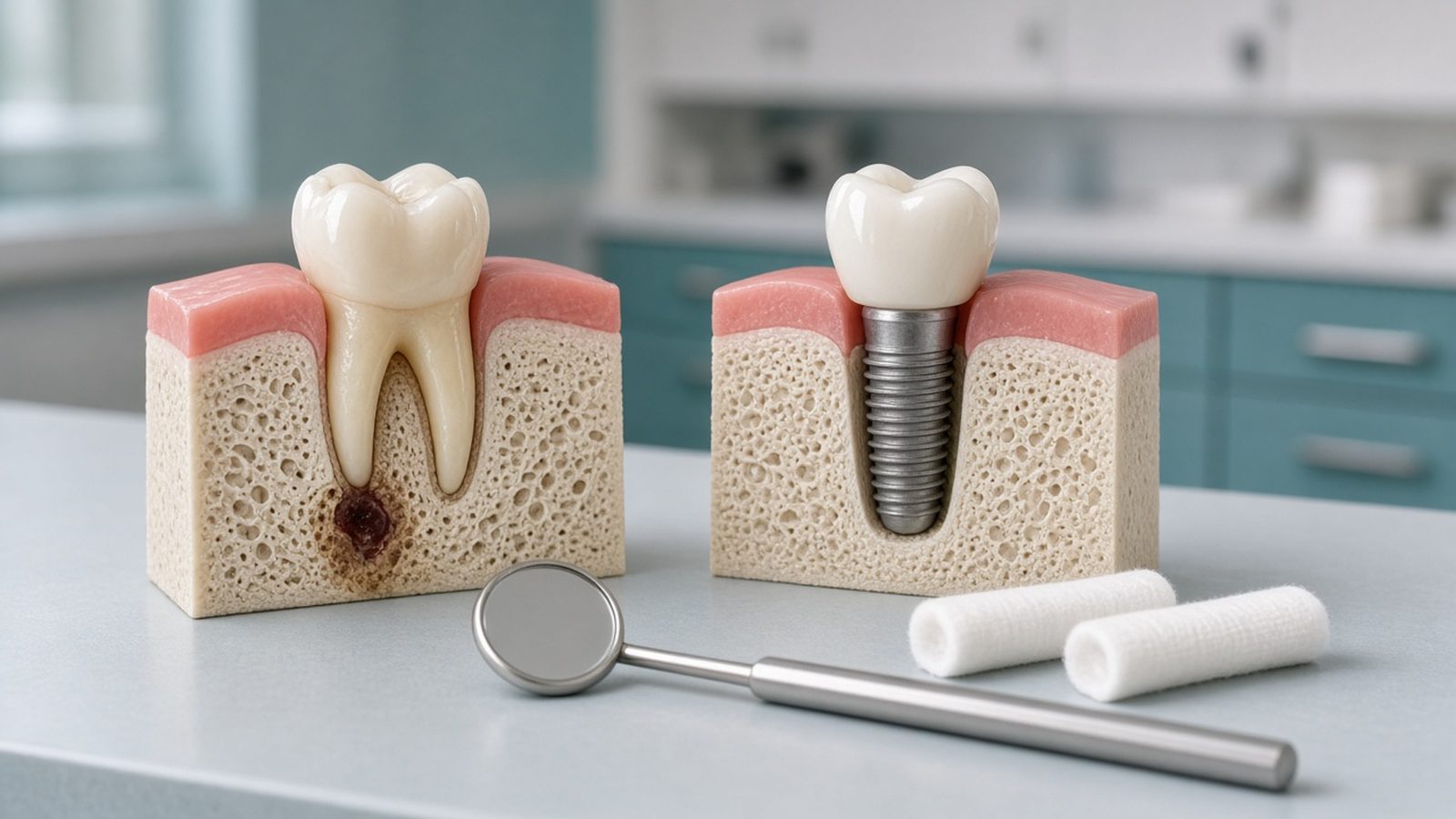
Chronic tooth infections can spread and wear away the bone implants need. Learn what research shows, when to go to the ER and what to tell your physicians.
A chronic tooth infection can sit quietly for months. Maybe a molar aches only when you bite, a small bump on the gum comes and goes, or an old crown has a bad taste around it. If you live in Houston, Katy, Cypress, Sugar Land, Richmond, Fulshear or Memorial and you are weighing dental implants because several teeth are failing, you may also be wondering what those infections are doing to the rest of your body. This article explains what the research does and does not show, which symptoms mean you need care today, why infected teeth are usually treated or removed before implants go in, and what your physicians should know. It is general education, not a diagnosis, and your own plan depends on an exam and imaging.
The short answer
A tooth infection will not heal on its own, and an infection that spreads can become a medical emergency. Long-standing tooth and gum infections are linked with some whole-body conditions in research, but that link has not been proven to be cause and effect, and removing teeth has not been shown to cure or prevent other diseases.
So the reasons to deal with an infected tooth are concrete: it can spread, it destroys the bone around the root, and it gets in the way of any tooth replacement plan, including implants. When a tooth can be saved, root canal treatment is often the first choice. When it cannot, or when many teeth on an arch are failing, the infected teeth are removed and the sites are cleaned before implants are placed, either in the same visit or after a healing period.
What a chronic tooth infection is, and why it can be quiet
Most tooth infections start inside the tooth or in the gum beside it. A chronic infection may cause little pain because pus is draining slowly, but the infection is still active and still damaging bone.
A periapical abscess forms at the tip of a root after bacteria reach the pulp, the soft tissue inside the tooth, through deep decay, a crack or a chip. Mayo Clinic notes it can also follow prior dental work. A periodontal abscess forms in the gum alongside a root and is tied to gum disease. Both are pockets of infection, and both can wear away the bone that holds teeth, and later implants, in place.
MedlinePlus, the National Library of Medicine's consumer health site, lists the typical signs of a tooth abscess:
- A continuous toothache that may be gnawing, sharp, shooting or throbbing
- Pain when chewing, or sensitivity to hot and cold
- A bitter taste or bad breath
- A swollen gum over the tooth that can look like a pimple
- Swollen glands in the neck, fever, or a general sense of feeling unwell
- Swelling of the upper or lower jaw, which it describes as a very serious symptom
The pain sometimes stops on its own. MedlinePlus explains that a toothache may fade once pressure is relieved, but the infection remains active. Mayo Clinic adds that if an abscess ruptures, the pain may improve a lot, making it seem that the problem has gone away, when you still need treatment. That is why people with failing teeth often have more infection than they realize. Several teeth can carry low-grade infections at once, with only one of them hurting.
When a tooth infection is an emergency
Go to an emergency room or call 911 if you have trouble breathing or swallowing, swelling that is spreading into the neck, under the jaw or toward the eye, or facial swelling with a fever. Do not wait for a dental consultation.
Mayo Clinic advises going to the emergency room if you have trouble breathing or swallowing, and if you have a fever with facial swelling and cannot reach your dentist, because these symptoms can mean the infection has spread deeper into the jaw, throat or neck. Other warning signs worth taking seriously:
- Swelling that gets noticeably bigger over hours
- Being unable to open your mouth normally
- Drooling or a muffled voice
- Feeling confused, faint or very ill
These are not theoretical. A study of the U.S. Nationwide Inpatient Sample by Shah and colleagues counted 61,439 hospital stays primarily attributed to periapical abscesses from 2000 to 2008. Eighty-nine percent of those admissions happened on an emergency or urgent basis, and 66 patients died in the hospital. A dental infection that spreads is a medical problem.
If you go to the ER, expect the team there to focus on your airway and the spreading infection. They may start antibiotics or drain the swelling. The tooth that caused it still needs dental treatment afterward, because the source of the infection is still there.
For swelling that stays near one tooth, without fever or trouble swallowing, call a dentist that day. If you are already a Regional Implant Centers patient, call us at (832) 632-7037 and tell us what you are seeing. If you are not sure which situation you are in, choose the emergency room.
What the research shows about tooth infections and the rest of the body
The evidence falls into three groups: what is well established, what is associated but unproven, and what is not supported at all. Keeping them separate protects you from both under-reacting and over-promising.
What is well established
An infection that spreads beyond the tooth can cause serious illness. MedlinePlus lists possible complications of an untreated abscess, including loss of the tooth, blood infection, spread to the soft tissues and jawbone, and spread to other parts of the body, which can cause a brain abscess, inflammation of the heart lining (endocarditis) or pneumonia. Mayo Clinic notes that an upper tooth near the sinus can open into the sinus and infect it, that sepsis is possible, and that the risk of a spreading infection is higher if your immune system is weakened.
What is associated, but not proven to be cause and effect
Researchers have looked for years at whether chronic root-tip infections, called apical periodontitis, are linked with heart and blood vessel disease. A 2022 systematic review and meta-analysis by Noites and colleagues pooled 15 observational studies. Cross-sectional studies showed a weak association, but case-control and cohort studies did not show a significant one, and the authors cautioned that results varied widely between studies. A 2025 umbrella review by Talekar and colleagues, which combined ten earlier systematic reviews, found a moderately higher cardiovascular risk among people with apical periodontitis, while noting that large differences between studies and in how the condition was diagnosed limit any conclusion about cause.
There is also evidence that treating the infection lowers inflammation in the blood. A 2025 systematic review by Jakovljevic and colleagues found that high-sensitivity C-reactive protein, a general marker of inflammation, fell six months after effective root canal treatment, and that interleukin-1 beta fell at 12 months. The authors were careful to say that further studies are needed to learn whether those changes affect the course of any disease.
Gum disease has a longer research record. The American Heart Association reviewed it in a 2012 scientific statement and concluded that observational studies support an association between periodontal disease and atherosclerotic vascular disease, but not a causal relationship, and that there was no evidence periodontal treatment prevents heart disease. Our article on dental implants with heart disease covers that statement and what it means for heart patients planning surgery. For diabetes, which has a two-way relationship with gum disease, see diabetes and tooth loss.
The honest reading: people with chronic oral infections tend to have more of certain health problems, and inflammation is a plausible connection, but no one has shown that clearing a tooth infection prevents a heart attack or improves another illness.
What is not supported
In the early 1900s, the "focal infection theory" held that bacteria in teeth caused arthritis and many other diseases, and healthy and treated teeth were pulled in large numbers to cure them. The American Association of Endodontists explains that the theory rested on flawed research done before modern sterilization, imaging and microbiology, and that it has been discredited. The AAE states there is no credible scientific evidence that root canal treatment causes cancer, heart disease, arthritis, autoimmune disorders or other systemic disease.
We will not tell you that taking out your teeth will cure fatigue, joint pain or any other condition. If someone promises that, ask for the evidence.
Save the tooth or remove it?
When an infected tooth has a sound root, enough bone around it and a realistic path to a lasting restoration, saving it is usually the better choice. Removal makes sense when the tooth cannot be restored or when the whole arch is failing.
The AAE notes that most infected teeth can be treated with a root canal, but not all. Severe damage, extensive decay, fractures below the gum line and too little bone support can make a tooth impossible to save. A root canal also needs a sound restoration over it, often a crown, to last.
The question changes when many teeth are involved. One infected molar in an otherwise healthy mouth is a single-tooth decision. Several abscessed or loose teeth across an arch, with gum disease and broken restorations on top, is an arch-level decision. Saving a few teeth may still leave you with teeth that keep failing one at a time, while a full-arch plan replaces them together. Neither answer fits everyone, and a good evaluation should show you both paths.
Our articles on severe tooth decay and dental implants and dental implants with gum disease go deeper into how that line gets drawn.
Why infected teeth are removed and the sites cleaned before implants
An implant needs healthy bone to fuse with. Infection eats away at that bone and leaves bacteria-laden tissue behind, so the surgeon removes the infected tooth, cleans the socket thoroughly and then decides whether to place the implant right away or after healing.
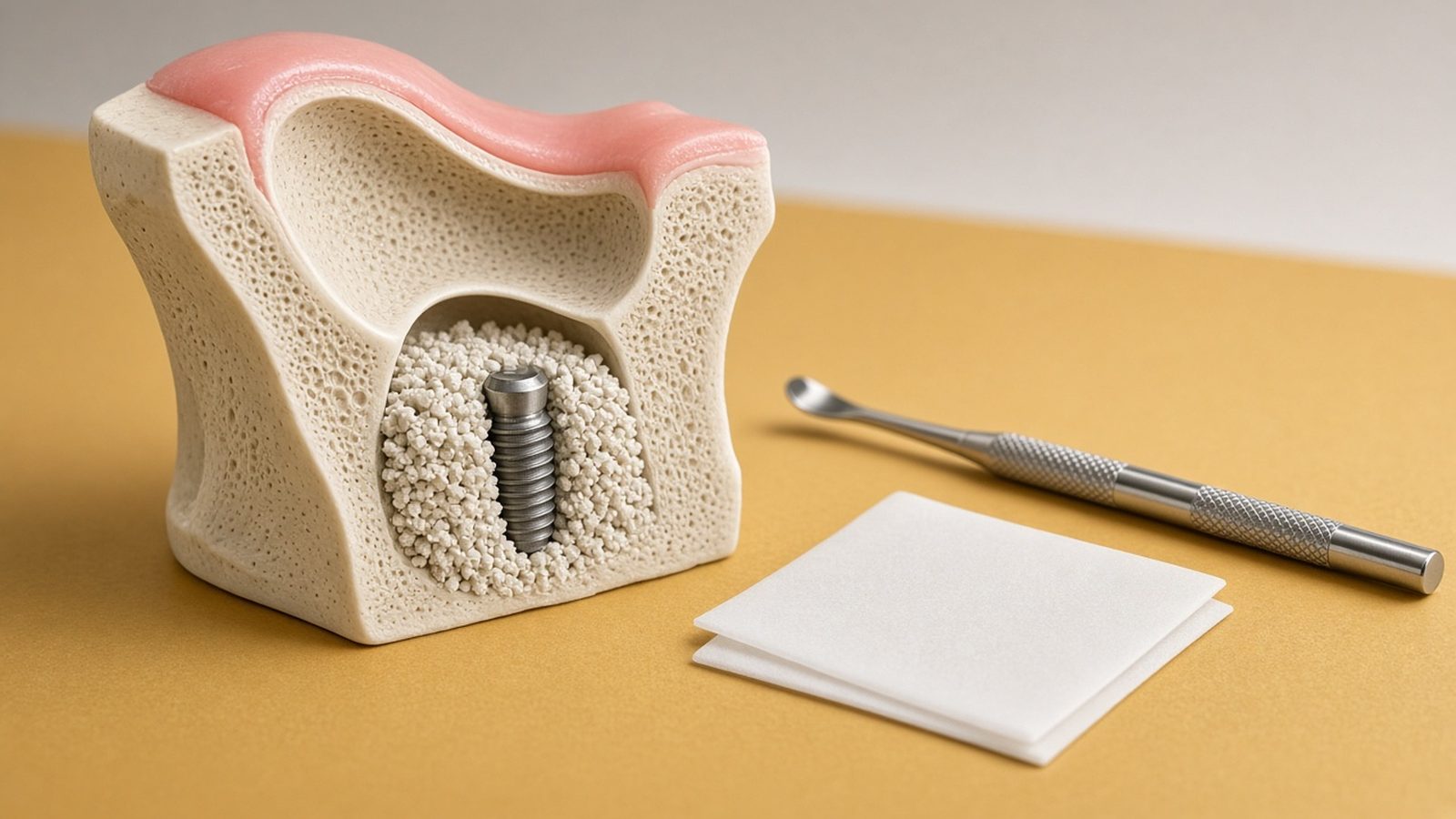
It removes bone. A long-standing abscess can leave a hollow area in the jaw around the root. Our bone and tissue reconstruction page lists infection among the causes of bone loss, along with periodontal disease, trauma, failed dental treatment, long-term missing teeth and years of wearing dentures. Where bone is missing, the plan may call for bone grafting, a different implant position or, for severe upper-jaw bone loss, approaches such as zygomatic or pterygoid implants, which Dr. Dan Holtzclaw and Dr. Enrique Tabarini perform at Regional Implant Centers.
It leaves tissue that must be cleaned out. Removing an infected tooth is only half the job. The inflamed tissue at the bottom of the socket has to be cleared so the area can heal and so an implant is not placed into an active infection.
It shapes the timing. Placing an implant on the same day a tooth is removed is called immediate placement. A 2015 systematic review by Chrcanovic and colleagues found high implant survival in studies where implants were placed right after removing teeth with infections at the root tip or in the gum, as long as the sockets were carefully cleaned first. The authors also said more long-term randomized trials were needed. In practice, active swelling, a badly damaged socket or a spreading infection can make it safer to remove the teeth, let the area heal and place implants later.
Antibiotics are not a shortcut. The American Dental Association's 2019 guideline, endorsed by the American College of Emergency Physicians, recommends against antibiotics for most root-related tooth pain and swelling in adults who are not severely immunocompromised, and calls for dental treatment instead, such as root canal treatment or draining the infection. Antibiotics are recommended when the infection causes systemic signs such as fever or malaise. A course of pills may calm a flare, but it does not remove the source, and the infection usually returns.
Two more connections are worth knowing. Upper back teeth sit close to the sinus, so an infection there can involve the sinus and may change how the upper jaw is planned; see sinus problems after dental implants. And a history of gum disease and infection matters after implants too, because the tissue around implants can become infected. Our article on peri-implantitis treatment covers the warning signs and why maintenance matters.
Telling your physicians, and telling us about your health
Your physicians should know about a dental infection and any planned oral surgery, and your implant team needs your full medical picture. The two-way conversation is part of safe planning.
Tell your physicians if you have a known tooth infection, especially if you:
- Are scheduled for a joint replacement, heart valve or cardiac surgery, an organ transplant, chemotherapy or radiation
- Take medicines that weaken the immune system, such as those used for rheumatoid arthritis, after a transplant or for cancer
- Have diabetes that has been hard to control
- Take blood thinners
- Have had a heart valve replaced or a history of endocarditis
Some physicians ask for dental clearance before these treatments. Our dental clearance for medical procedures service works with orthopedic surgeons, cardiologists and cardiothoracic surgeons, oncologists, transplant surgeons, rheumatologists, endocrinologists and primary care physicians, and provides clearance letters, treatment summaries, records and supporting documentation when requested and authorized. Dental clearance does not guarantee a medical outcome, and dental disease does not always prevent medical treatment. Our posts on when dental treatment is recommended before medical clearance and how clearance communication with physicians works explain the process.
In the other direction, bring us a current medication list, including supplements and any bone-strengthening medicines for osteoporosis or cancer; your physicians' names and contact details; recent lab results if you have diabetes; and the dates of any upcoming medical procedures. If your physician wants something specific in writing, such as when dental treatment will be finished or which antibiotics were used, ask them to tell us so the letter answers their question.
How our Katy team evaluates infected and failing teeth
At Regional Implant Centers, infected and failing teeth are evaluated as part of a full plan: what the final teeth should look like, what the 3D imaging shows, what surgery is needed to clear infection and build a foundation, and how the new teeth will be made.
That sequence follows our RISE Protocol, a specialist-led approach to full-mouth rehabilitation:
- Rehabilitation: a prosthodontist maps out your bite, facial support, speech and the long-term plan for your new teeth before surgery begins.
- Imaging and planning: 3D imaging and digital planning help the team see your anatomy clearly. Our cone beam CT imaging is used to study bone volume, nerve pathways, sinus position and jaw anatomy, which matters when infection has changed the bone around roots. It does not replace clinical judgment.
- Surgery: an oral surgeon handles extractions, cleaning of infected sites and implant placement, while a dedicated anesthesia provider focuses on your comfort and monitoring. Our oral surgery page lists extractions, including full-mouth extractions when clinically appropriate, socket preservation, ridge augmentation, alveoloplasty and bone shaping, and the treatment of infection and severe disease. Treatment may be completed in one visit or staged over time.
- Esthetics: the teeth are shaped for your face, speech and comfort with support from our in-house dental lab, located at our Katy office.
Our anesthesia and patient comfort page explains that options may include IV sedation or general anesthesia, with continuous monitoring of oxygen levels, breathing, heart rate and blood pressure when sedation is used. Tell the team about any recent fever, swelling or antibiotics, because an active infection can change the timing.
Not every mouth ends in fixed teeth. Both our Katy and Hutto offices offer traditional dentures, snap-on implant overdentures and fixed full-arch implant teeth. When the plan allows, many patients leave surgery with a fixed temporary set of teeth on the same day implants are placed. Those same-day teeth are temporary, and they are only for patients whose bone and implant stability qualify. Our article on temporary versus final teeth explains the difference, and full-arch surgery day walks through the visit. Implant treatment is not appropriate for every patient, and some cases need staged care or a different option.
Planning care in Houston and Katy
Our Houston-area office is in Katy, at 707 S Fry Rd Ste 150, and serves patients from across west Houston, Cypress, Sugar Land, Richmond, Fulshear and Memorial.
The Katy office is open Monday through Thursday, 8 to 5, with Fridays reserved for surgeries. If you live closer to Austin, our Hutto office offers CBCT imaging, bone grafting and sinus procedures, and has a dentist anesthesiologist on site. Both offices use the same phone number, (832) 632-7037.
If a tooth is actively swelling, get it treated first. A full-arch consultation can follow once the emergency is under control, and records from that urgent visit help the planning.
Insurance and financing
At Regional Implant Centers, medical insurance may help only with surgical professional services, such as extractions, bone grafting and alveoloplasty. Implants, the prosthesis and temporary teeth are billed to you separately, and coverage is never guaranteed.
Removing infected teeth and grafting the sites are surgical services, so if you have a PPO plan with oral surgery coverage, it is worth checking whether it may help with those parts of your care. Please verify your benefits with us and your carrier before you decide. Only PPO plans work for our out-of-network oral surgery benefits, and we cannot bill Federal Employee Program (FEP) Blue Cross Blue Shield plans. Our BCBS PPO article explains the split, our Insurance Advantage team reviews dental and medical benefits, and our insurance disclaimer explains why no estimate is a guarantee.
Before treatment, you receive a written plan with estimated insurance benefits, financing options and your expected out-of-pocket investment. Financing is available through independent third-party companies, and approval and terms are set by each provider.
After treatment: keeping infection from coming back
Implants cannot decay, but the gums and bone around them can become infected. Daily cleaning, regular professional maintenance and managing your health conditions are what protect the investment.
Regional Implant Centers does not offer a traditional implant warranty. After your final teeth are delivered, ongoing protection comes through a required Maintenance Package, and enrollment must begin within 30 days of final prosthesis delivery. Our implant warranty page explains that poor oral hygiene, smoking, uncontrolled medical conditions and failure to follow instructions are not covered events. Our guide to All-on-4 cleaning and maintenance shows what daily care looks like.
Questions to ask at your consultation
- Which of my teeth are infected, and which could realistically be saved?
- Do I need any urgent treatment before a full plan is ready?
- Will implants go in the same day my teeth are removed, or after healing, and why?
- Has infection caused bone loss that will need grafting or a different implant approach?
- What will you send my physician, and what do you need from them?
- Which parts of my treatment might my medical plan help with, and how do I verify that?
Frequently asked questions
Can a tooth infection spread to the rest of my body?
Yes. An untreated tooth abscess can spread to the jaw, the soft tissues of the face and neck, and sometimes the bloodstream or other organs, which can be life-threatening. Trouble breathing or swallowing, swelling spreading toward the neck or eye, or facial swelling with fever needs emergency care right away.
Does a chronic tooth infection cause heart disease?
Research links chronic tooth and gum infections with heart and blood vessel disease, but the studies are observational, the results vary, and cause and effect has not been proven. Treating an infected tooth is worthwhile for your mouth and to stop the infection spreading, but it has not been shown to prevent heart disease.
Can I get dental implants if I have an infected tooth?
Often, yes, once the infection is dealt with. The infected tooth is removed and the site is cleaned thoroughly. Depending on the bone, the gums and how active the infection is, the implant may go in the same day or after a healing period. Some patients need bone grafting first. The decision depends on an exam and imaging.
Will antibiotics clear up my tooth infection?
Usually not on their own. The American Dental Association recommends dental treatment, such as a root canal, draining the infection or removing the tooth, rather than antibiotics for most tooth infections in healthy adults. Antibiotics are recommended when there are signs the infection is affecting the whole body, such as fever.
Should I tell my doctor about my tooth infection?
Yes, especially if you have an upcoming surgery, transplant, cancer treatment or heart procedure, take medicines that weaken the immune system, have diabetes or take blood thinners. Some physicians will ask for dental clearance first. Tell your dental team about your medicines and health conditions too.
Talk with our team about infected or failing teeth
If you have teeth that keep getting infected and you are wondering whether implants are a realistic next step, start with an evaluation. Bring your medication list, your physicians' contact details and any recent dental X-rays. Qualified patients receive a complimentary consultation, an advanced CBCT scan and an insurance benefits evaluation. Schedule a consultation by phone or in person at our Katy office, or call (832) 632-7037. Austin-area patients can book with our Hutto office. If you have swelling with fever, or trouble breathing or swallowing, go to an emergency room first.
Sources & Resources
- Mayo Clinic. Tooth abscess: Symptoms and causes.
- MedlinePlus, National Library of Medicine. Tooth abscess.
- Shah AC, Leong KK, Lee MK, Allareddy V. Outcomes of hospitalizations attributed to periapical abscess from 2000 to 2008: a longitudinal trend analysis. Journal of Endodontics, 2013.
- Noites R, Teixeira M, Cavero-Redondo I, Alvarez-Bueno C, Ribeiro F. Apical periodontitis and cardiovascular disease in adults: a systematic review with meta-analysis. Reviews in Cardiovascular Medicine, 2022.
- Talekar AW, Abraham D, Puri A, et al. Association between cardiovascular diseases and apical periodontitis: an umbrella review with stratification of evidence and sensitivity analysis. Journal of Dentistry, 2025.
- Jakovljevic A, Fransson H, Bakhsh A, et al. Endodontic treatment modifies circulatory inflammatory mediator levels: a systematic review with meta-analysis. International Endodontic Journal, 2025.
- Lockhart PB, Bolger AF, Papapanou PN, et al. Periodontal disease and atherosclerotic vascular disease: does the evidence support an independent association? A scientific statement from the American Heart Association. Circulation, 2012.
- American Association of Endodontists. Myths About Root Canals.
- Chrcanovic BR, Martins MD, Wennerberg A. Immediate placement of implants into infected sites: a systematic review. Clinical Implant Dentistry and Related Research, 2015.
- American Dental Association. Antibiotics for Dental Pain and Swelling Guideline (2019).
This article is general patient education and is not a diagnosis, treatment plan or medical advice. If you have swelling with fever, or trouble breathing or swallowing, seek emergency care. Do not start, stop or change any medicine without talking to the clinician who prescribes it. Whether a tooth can be saved, and whether implants are appropriate, depends on an individual exam and imaging. Insurance coverage is never guaranteed, and financing is provided by independent third-party companies. Outcomes vary, and implant treatment is not appropriate for every patient.
Ready to Learn What Is Possible?
Schedule a consultation with Regional Implant Centers.
Schedule ConsultationFrequently Asked Questions
Can a tooth infection spread to the rest of my body?
Yes. An untreated tooth abscess can spread to the jaw, the soft tissues of the face and neck, and sometimes the bloodstream or other organs, which can be life-threatening. Trouble breathing or swallowing, swelling spreading toward the neck or eye, or facial swelling with fever needs emergency care right away.
Does a chronic tooth infection cause heart disease?
Research links chronic tooth and gum infections with heart and blood vessel disease, but the studies are observational, the results vary, and cause and effect has not been proven. Treating an infected tooth is worthwhile for your mouth and to stop the infection spreading, but it has not been shown to prevent heart disease.
Can I get dental implants if I have an infected tooth?
Often, yes, once the infection is dealt with. The infected tooth is removed and the site is cleaned thoroughly. Depending on the bone, the gums and how active the infection is, the implant may go in the same day or after a healing period. Some patients need bone grafting first. The decision depends on an exam and imaging.
Will antibiotics clear up my tooth infection?
Usually not on their own. The American Dental Association recommends dental treatment, such as a root canal, draining the infection or removing the tooth, rather than antibiotics for most tooth infections in healthy adults. Antibiotics are recommended when there are signs the infection is affecting the whole body, such as fever.
Should I tell my doctor about my tooth infection?
Yes, especially if you have an upcoming surgery, transplant, cancer treatment or heart procedure, take medicines that weaken the immune system, have diabetes or take blood thinners. Some physicians will ask for dental clearance first. Tell your dental team about your medicines and health conditions too.
This content is educational and not a substitute for a consultation.