Aging & Tooth Loss
Progressive Tooth Loss in Your 50s and 60s: When Partials and Bridges Stop Working for Austin-Area Patients
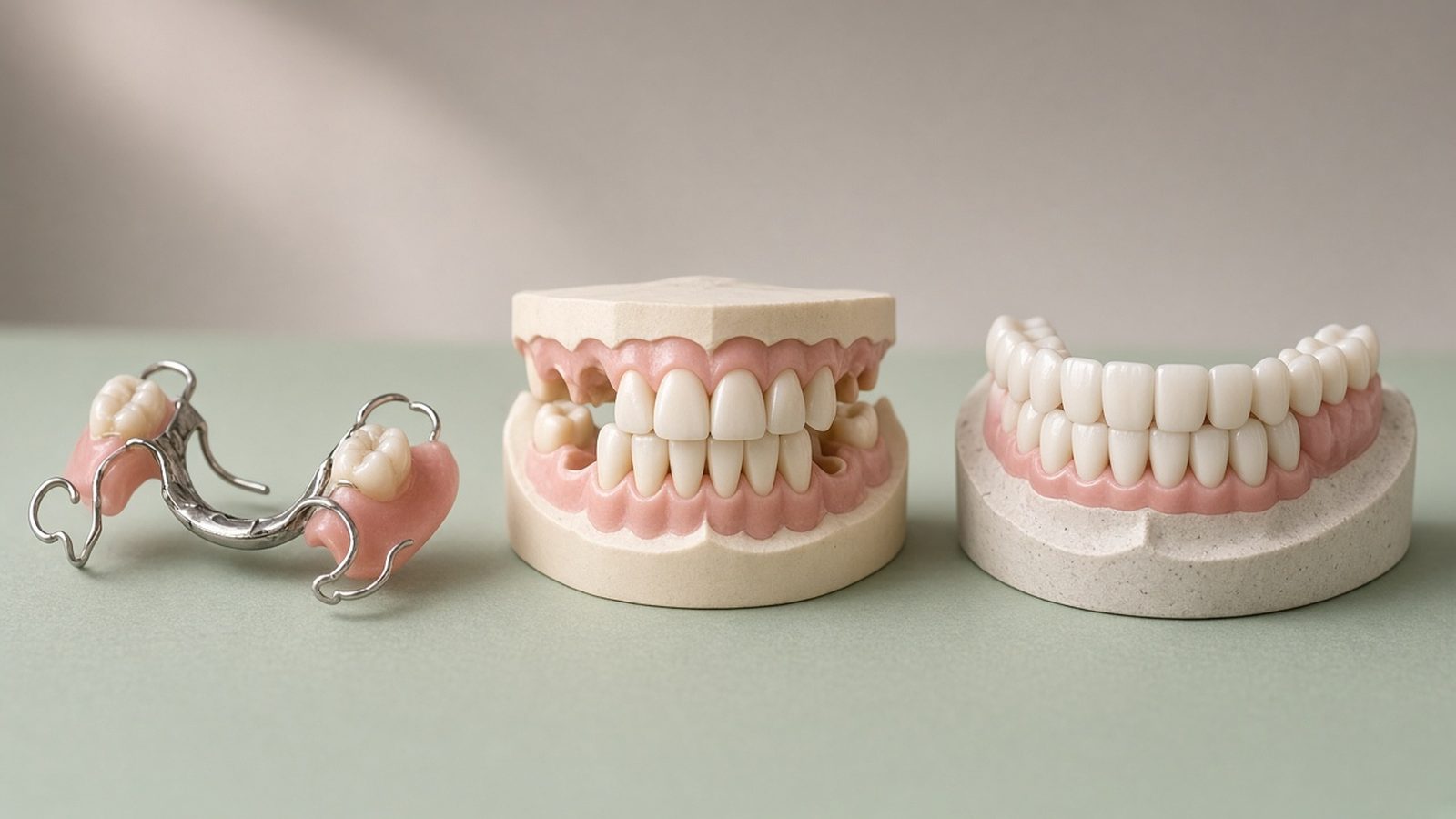
In your 50s or 60s, progressive tooth loss often looks like failing bridges and expanding partials. Here is when Austin-area patients should reconsider the next repair.
If you live in Austin, Round Rock, Pflugerville, Cedar Park, Georgetown, Hutto or a nearby community and you are in your 50s or 60s, progressive tooth loss rarely arrives as one dramatic event. It usually looks like a bridge that needs remaking, a partial that keeps growing, or "one more tooth" extracted every year or two. This guide is for that midlife cascade: when repairing individual teeth still sounds reasonable, but the pattern is pointing toward a full-arch, snap-on or denture decision. It is written for patients who can travel to our Hutto office. We do not have offices in Round Rock, Pflugerville, Georgetown, Cedar Park or Austin proper.
This is not a redo of our guides for full-arch implants in your 70s and 80s or dental implants for seniors in Austin. Those pieces focus on health-not-age candidacy later in life. This one stays with working-age and early-retirement patients who still have teeth, but keep losing them.
The short answer
When bridges, crowns and expanding partials keep failing on the same remaining teeth, the useful question is no longer "which tooth do we fix next?" It is whether the whole arch still has a reliable foundation - and whether a traditional denture, a snap-on implant overdenture or a fixed full-arch bridge is the clearer long-term plan.
A careful evaluation can still save teeth when they have a real future. It can also stop a cycle of short-term repairs that leave you chewing on a shrinking set of anchors. At Regional Implant Centers the consultation costs $25. It is not free, complimentary or no-cost.
What progressive tooth loss looks like in your 50s and 60s
Midlife tooth loss is often a series of "just one more" repairs that slowly remove the teeth holding everything else up.
Common patterns we hear from Austin-area patients:
- A multi-unit bridge that has already been remade once, with abutment teeth that are cracked, short-rooted or periodontally compromised.
- A removable partial that started with two or three teeth and now clasps onto fewer, weaker anchors every time another tooth is lost.
- Back teeth removed first for decay or fracture, then front teeth overloaded as they take the chewing force.
- Root canals, posts and crowns stacked on the same tooth until the foundation fails.
- Gum disease that was "managed" for years while mobility crept up.
The American Dental Association's MouthHealthy patient materials describe removable dentures and partials as appliances that replace missing teeth and restore smile and chewing function - and they note that tissues change after extractions, so a denture made early may need to be relined or remade as the mouth heals and the ridge changes. Cleveland Clinic similarly explains that partial dentures clasp to remaining natural teeth for stability, while full dentures rely on gums and bone, and that the average denture lasts about seven to 10 years with relines every one to two years when fit changes. Those facts matter in midlife because every lost abutment tooth changes the math for the next partial.
If your story is mainly advanced gum disease and loose teeth across the arch, see our related Austin piece on when full-arch implants become an option after gum disease. If the problem is old crowns and bridges that keep fracturing on a tooth-by-tooth path, see failing crowns and bridges for Austin patients. This article sits between those: the patient who is not yet fully edentulous, and not yet planning around age 75-plus health issues, but who can see the cascade.
Why the next bridge or bigger partial may not fix the pattern
A new bridge or a remade partial only works if the remaining teeth are strong enough to carry the load for years, not months.
Tooth-supported bridges and clasp partials transfer force to natural teeth. When those teeth already have large fillings, prior root canals, bone loss or cracks, each new prosthesis can accelerate the next failure. The American College of Prosthodontists (ACP) is direct about removable prostheses: complete and partial dentures are medical devices with limited lifespans, not permanent restorations. The ACP position statement on denture replacement says removable complete and partial dentures should be evaluated for replacement when, among other signs, the teeth supporting a removable partial or overdenture are lost, adhesives are needed to eat or keep the prosthesis in socially, the prosthesis is unstable or degraded, or it has been in function for more than five years.
In plain language for a 55- or 62-year-old in Round Rock or Cedar Park: if you are already on your second or third expansion of the same partial, or you are planning another bridge on teeth that felt "iffy" last time, you are not being cautious by waiting. You may be spending the next decade rebuilding a foundation that keeps shrinking.
That does not mean every midlife patient should extract remaining teeth. It means the plan should look at the arch as a system: bite, bone, gum health, which teeth have a fair prognosis, and what happens if two more abutments fail in the next three years.
A practical decision table for the midlife cascade
Use this table as a conversation starter with a clinical team, not as a self-diagnosis.
| Situation you recognize | What the next short repair often does | Broader options to compare |
|---|---|---|
| One failing crown on an otherwise stable arch | May restore chewing if the root and bone are sound | Single crown or implant after evaluation |
| Bridge abutments cracking or loosening | Adds load to already compromised teeth | New bridge only if abutments have a clear prognosis; otherwise rethink the span |
| Partial that needs another tooth added every year or two | Keeps you chewing on fewer anchors | Remake partial vs plan implant overdenture or fixed full-arch before the last abutments fail |
| Several back teeth gone; front teeth drifting or chipping | Front teeth take forces they were not built for | Stabilize remaining teeth if worth saving; plan posterior support or full-arch options |
| Adhesive, rocking or sore spots under a growing partial | Masks a misfit while bone and soft tissue keep changing | Exam for reline/remake vs transition to implant support (ACP replacement criteria apply) |
| Infection, recurrent abscesses or teeth that never calm down | Delays a durable plan while bone can be lost | Control infection first; then decide tooth-by-tooth vs arch-level replacement (chronic infection and implants) |
| You want to avoid a "final" decision until retirement | Waiting can mean less bone and fewer prosthetic choices later | Document a staged plan now even if surgery is later |
For patients already facing a full set of extractions, the pre-extraction fork between an immediate denture and a same-day implant temporary is covered separately in immediate dentures vs All-on-4. For people who already wear a loose complete denture, see loose denture options.
Signs it may be time to plan the whole arch
Plan the arch when the remaining teeth no longer form a reliable long-term foundation, even if some of them still look "usable" on a good day.
Warning patterns include:
- You can name which tooth will probably fail next.
- Your partial clasps have been redesigned more than once in a few years.
- Chewing has shifted to one side, or you avoid tougher foods without thinking about it.
- You schedule dental work as crisis care (broken tooth, swelling, lost crown) more often than as planned maintenance.
- X-rays or a prior CBCT already showed bone loss around key abutments.
- A dentist has said "we can keep patching" and also "eventually you will need a denture," without a written middle path.
FDA patient information on dental implants notes that when a tooth is lost, complications can include rapid bone loss, speech changes and chewing-pattern problems, and that replacing missing teeth with implants can support crowns, bridges or dentures. AAOMS explains that after implant placement, bone typically needs months to integrate with the implant (osseointegration), which is part of why implant-supported restorations can feel more stable than conventional removable partials and full dentures. Those points matter in your 50s and 60s because bone volume is still a planning variable, and waiting while infection or long-term absence of teeth continues can narrow options.
Diabetes can accelerate tooth loss and affect healing; if that is part of your history, read diabetes and tooth loss as a companion, then get a plan that includes medical coordination.
Three tooth-replacement paths both RIC offices discuss
At Regional Implant Centers, both the Hutto and Katy offices offer traditional dentures, snap-on implant overdentures and fixed full-arch implant teeth. The right path depends on bone, health, hygiene access, bite goals and what you want the teeth to do day to day.
Traditional dentures
A conventional full denture replaces an entire arch and relies on gums, saliva seal and, for many patients, adhesive. Cleveland Clinic notes average lifespans around seven to 10 years and relines every one to two years as fit changes. ADA MouthHealthy describes conventional dentures made after healing (which can take several months) and immediate dentures placed the same day teeth are removed, with the expectation that relines or remakes may follow as the ridge changes. Dentures can be the right answer for some midlife patients. They are also the option many people fear when they say they "do not want to end up in dentures," so the consult should separate myths from fit, speech and chewing realities.
Snap-on implant overdentures
An implant overdenture (often called a snap-on denture) uses implants for retention while remaining removable for cleaning. It is a common middle path when someone wants more stability than a conventional denture but is not ready for, or is not a candidate for, a fixed bridge. Both of our offices discuss this option. For the later step from snap-on to fixed teeth, see snap-on denture to fixed teeth.
Fixed full-arch implant teeth (All-on-X)
A fixed full-arch prosthesis is supported by implants and does not come out for daily cleaning the way a denture does (hygiene still matters under and around it). Implant count is individualized rather than fixed at four for every case. FDA materials list benefits such as restoring chewing and helping limit jawbone shrinkage from tooth loss, and they also list real risks: infection, nerve injury, sinus issues, implant looseness and the need for further surgery if an implant fails. Candidacy is individual. We do not promise that every case is treatable with fixed teeth.
A side-by-side of these three paths in Houston language lives at All-on-X vs implant dentures vs traditional dentures. Use it for product comparison; use this article for the midlife timing question.
What a Hutto evaluation should actually check
A useful midlife consult maps which teeth have a fair prognosis, what the bone and sinuses look like in 3D, and which prosthetic end point matches your health and goals.
At our Hutto office serving the Austin area, that typically includes:
- A tooth-by-tooth prognosis conversation (keep, restore, or remove as part of an arch plan).
- Discussion of bite collapse, drifting and which teeth are carrying unequal load.
- Mobile CBCT imaging when the clinical team determines 3D views of bone, nerve pathways and sinus position are appropriate. Both Hutto and Katy have mobile CBCT capability; learn more on our mobile cone beam CT page.
- Soft-tissue and hygiene access planning for whatever prosthesis you might wear for decades.
- Medical history review (medicines, smoking, blood sugar control, prior head/neck radiation, bone-density drugs and other factors that change surgical risk).
- A clear written plan that separates surgical steps from the temporary teeth and the final arch.
Hutto can include bone grafting and sinus work when clinically needed. Complex upper-jaw situations may involve zygomatic or pterygoid approaches with Dr. Enrique Tabarini when tilted conventional implants and grafting are not enough. Final smile refinement for many full-arch cases involves collaboration with the Katy in-house lab; the lab is at the Katy office, not claimed as a second Hutto lab floor.
Our RISE Protocol describes how a prosthodontist, imaging/planning team, oral surgeon and anesthesiologist, and lab technicians divide the work so one person is not improvising every role. For visit timing after you choose a fixed path, see the All-on-4 timeline for Austin-area patients.
How treatment usually unfolds if you choose implants
Every Regional Implant Centers full-arch implant patient leaves surgery with same-day temporary teeth. Final arches are full monolithic zirconia or titanium-reinforced zirconia, typically delivered in one to four months depending on healing and progress, across about four to five total visits in many cases.
That sequence is intentional:
- Consultation and imaging ($25 consult).
- Collaborative planning (restorative design before or with surgical planning).
- Surgery day with temporary teeth in place when the plan calls for immediate loading.
- Healing follow-ups while bone integrates and tissues settle.
- Final prosthesis delivery and maintenance enrollment.
Cleveland Clinic and FDA both emphasize that implant treatment is multi-step and that healing can take several months. ADA MouthHealthy notes that some patients wait for osseointegration before teeth are attached, while others can receive implants and replacement teeth in one visit when clinically appropriate. Your written plan should say which path applies to you.
Anesthesia options include local anesthesia, IV sedation and general anesthesia, with an anesthesiologist focused on safety and monitoring in a very safe surgical facility with the highest standards of care. We do not claim in this article which office has which anesthesia staffing model on a given day; that is confirmed at scheduling.
After finals, ask about the 1-year warranty and extended maintenance packages. Do not skip maintenance because midlife patients often keep working, traveling and chewing assertively - habits that reward a cleanable, well-supported prosthesis.
Insurance and payment notes without overpromises
Medical insurance, when it applies at all, is typically limited to surgical professional services such as extractions, bone grafting and alveoloplasty. Implants, temporary teeth and the prosthesis are generally billed to the patient. Only PPO plans are relevant for RIC's out-of-network oral surgery benefits pathway, and Federal Employee Program (FEP) Blue Cross Blue Shield plans cannot be billed. Please verify your own benefits.
There can be a strong chance or possible match worth checking for portions of the surgical professional services on some PPO plans. That is probability language, not a guarantee. Bring plan documents to the consult. Financing partners may be discussed at the office; this article does not list rates or payment examples.
Ten questions to bring to your consult
Write answers in your own words after the visit. If you cannot explain the plan, it is not finished.
- Which of my remaining teeth have a fair five-year prognosis, and which are short-term abutments only?
- If two more teeth fail, what happens to my current bridge or partial?
- Looking at my CBCT, where is bone adequate, thin or complicated by the sinus?
- Between a conventional denture, a snap-on overdenture and a fixed full-arch bridge, which fits my bone, hygiene ability and goals - and why?
- Will I leave surgery with temporary teeth, and what will I eat in the first weeks?
- What material will my final arch be (monolithic zirconia or titanium-reinforced), and roughly when would finals be delivered?
- Who designs the teeth, who places the implants, and who manages anesthesia?
- What grafting or sinus procedures, if any, are in the plan - and what is optional versus necessary?
- What does maintenance look like each year, and what does the 1-year warranty cover at a high level?
- For surgical professional services, what is worth checking with my PPO, and what should I assume is patient-billed? Please verify.
FAQ: Progressive tooth loss in your 50s and 60s near Austin
Is progressive tooth loss in my 50s normal, or a sign I should plan full-arch treatment?
Some tooth loss across adulthood is common, but a yearly pattern of failed bridges, expanding partials or crisis extractions is a planning signal. It does not automatically mean every remaining tooth must come out. It does mean you should stop treating each failure as an isolated event.
Can I keep my remaining teeth and only replace the ones that fail?
Sometimes yes, when the remaining teeth have solid bone support, controllable gum disease and a bite that will not overload them. When abutments are already failing in sequence, tooth-by-tooth replacement can become the more expensive and less stable path. Ask for a written prognosis for each key tooth.
Are snap-on dentures a better midlife step than going straight to fixed full-arch teeth?
They can be. Snap-on overdentures often improve retention compared with a conventional denture and remain removable for cleaning. Fixed full-arch teeth suit patients who want a non-removable prosthesis and who meet surgical and maintenance criteria. Neither is universally "better."
I am only 58. Am I too young for full-arch implants?
Age alone is not the deciding factor. Midlife patients often have enough healing capacity and enough remaining bone to plan carefully. The tradeoff is living many years with the result, so hygiene access, material choice and maintenance matter. Senior-specific guides cover the 70s and 80s health questions separately.
How do Austin-area patients start at Regional Implant Centers?
Book a $25 consultation for the Hutto office through schedule consultation (Austin) or the main schedule consultation page. Bring recent X-rays or CBCT files if you have them, a list of medicines, and photos or notes about which teeth have failed in the last five years. Call (832) 632-7037 with questions. The phone number is the same for both offices.
Talk with the Hutto team
If progressive tooth loss in your 50s or 60s is turning every dental visit into another repair on a shrinking foundation, get a full-arch-level opinion before the next emergency. Regional Implant Centers in Hutto evaluates traditional dentures, snap-on implant overdentures and fixed full-arch options with specialist collaboration, mobile CBCT when appropriate, and a clear temporary-to-final path.
Schedule your $25 consultation (not free or complimentary) for Austin-area patients at /schedule-consultation/austin, review the Hutto location, or call (832) 632-7037. Leadership context for how the centers are organized is on Jeffry Tobon's team page.
Sources & Resources
- U.S. Food and Drug Administration (FDA). Dental Implants: What You Should Know. https://www.fda.gov/medical-devices/dental-devices/dental-implants-what-you-should-know (tooth loss complications including bone loss; implants can support crowns, bridges or dentures; healing may take several months; candidacy and risks)
- American College of Prosthodontists (ACP). Position Statement: The Frequency of Denture Replacement (PDF). https://www.prosthodontics.org/assets/1/7/The_Frequency_of_Denture_Replacement_Position_Statement.pdf (complete and partial dentures are limited-lifespan devices; evaluate for replacement when supporting teeth are lost, adhesives are required to eat or retain the prosthesis, the prosthesis is degraded/unstable, or it has been in function more than 5 years)
- Cleveland Clinic. Dentures. https://my.clevelandclinic.org/health/treatments/10900-dentures (full, partial and implant-supported types; partials clasp to remaining teeth; average denture lifespan about 7-10 years; relines about every 1-2 years)
- Cleveland Clinic. Dental Implants. https://my.clevelandclinic.org/health/treatments/10903-dental-implants (multi-step process; several months of healing; bone grafting when bone is insufficient; implant-supported restorations)
- American Association of Oral and Maxillofacial Surgeons (AAOMS). Dental Implant Surgery. https://myoms.org/what-we-do/dental-implant-surgery/ (osseointegration usually takes several months; implant-supported restorations contrasted with conventional partial and full dentures; bone preservation themes)
- American Dental Association / MouthHealthy. Dentures. https://www.mouthhealthy.org/all-topics-a-z/dentures (conventional vs immediate dentures; healing may take several months; relines or remakes as tissues change; overdenture concepts)
Disclaimer
This article is for education only. It is not a diagnosis, treatment plan or promise that any specific option will work for every patient. Only a clinical examination and appropriate imaging can determine whether teeth can be saved, whether implants are appropriate, and which prosthesis fits your health and anatomy. Insurance language here is general; please verify your own benefits.
Ready to Learn What Is Possible?
Schedule a consultation with Regional Implant Centers.
Schedule ConsultationFrequently Asked Questions
Is progressive tooth loss in my 50s normal, or a sign I should plan full-arch treatment?
Some tooth loss across adulthood is common, but a yearly pattern of failed bridges, expanding partials or crisis extractions is a planning signal. It does not automatically mean every remaining tooth must come out. It does mean you should stop treating each failure as an isolated event.
Can I keep my remaining teeth and only replace the ones that fail?
Sometimes yes, when the remaining teeth have solid bone support, controllable gum disease and a bite that will not overload them. When abutments are already failing in sequence, tooth-by-tooth replacement can become the more expensive and less stable path. Ask for a written prognosis for each key tooth.
Are snap-on dentures a better midlife step than going straight to fixed full-arch teeth?
They can be. Snap-on overdentures often improve retention compared with a conventional denture and remain removable for cleaning. Fixed full-arch teeth suit patients who want a non-removable prosthesis and who meet surgical and maintenance criteria. Neither is universally better.
I am only 58. Am I too young for full-arch implants?
Age alone is not the deciding factor. Midlife patients often have enough healing capacity and enough remaining bone to plan carefully. The tradeoff is living many years with the result, so hygiene access, material choice and maintenance matter. Senior-specific guides cover the 70s and 80s health questions separately.
How do Austin-area patients start at Regional Implant Centers?
Book a $25 consultation for the Hutto office. Bring recent X-rays or CBCT files if you have them, a list of medicines, and notes about which teeth have failed in the last five years. Call (832) 632-7037 with questions. Consultations are never free, complimentary or no-cost.
This content is educational and not a substitute for a consultation.